-
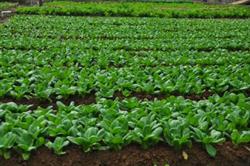
Foliar fertilizer spraying methods for vegetables vary by variety
Leafy vegetables such as Chinese cabbage, spinach, shepherd's purse, etc. need more nitrogen, so the fertilizer sprayed should mainly be urea and ammonium sulfate, with a urea spraying concentration of 1%-2% and ammonium sulfate of 1.5%, sprayed 2-4 times per season, preferably during the early growth stage. Fruiting vegetables such as chili peppers, eggplants, tomatoes, green beans and various melons have a...
-
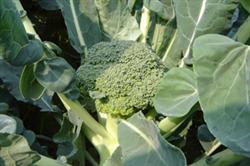
How do you judge whether phosphate fertilizer is good or bad? Here are a few practical identification methods
Topdressing with foliar fertilizer is one of the most commonly used, economical and fast-acting fertilization methods in vegetable cultivation. It involves mixing fertilizer into an aqueous solution of a certain concentration and spraying it directly onto crop leaves to make up for the insufficient nutrient supply caused by the weak nutrient uptake capacity of the roots. Extensive application has shown that topdressing with foliar fertilizer can improve vegetable yield and quality,...
-
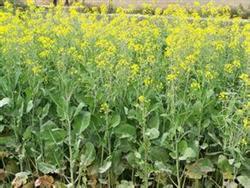
How is biogas humic acid phosphate fertilizer composted? Detailed method and steps
The uptake of phosphorus by rapeseed is greatest during the bolting and flowering stage, but as for the utilization of phosphorus and its yield-increasing effect, applying phosphorus at the seedling stage is best. Because phosphorus can be repeatedly utilized within the rapeseed plant, the earlier the absorption period, the greater the efficiency. Applying more phosphate fertilizer can promote an earlier growth period; generally, the seedling stage can be advanced by 2-4 days, the bolting and flowering stage by 2-6 days, and the maturity stage by 1-2...
-
Why is the seedling stage the key period for applying phosphate fertilizer to rapeseed?
Rapeseed is a crop with a relatively high boron requirement. When boron is deficient at the seedling stage, the root system stops growing, there are no root hairs or no lateral roots, and the growing point turns from brown to scorched and dies; applying rapeseed boron fertilizer in a timely manner plays an important role in achieving high yield and good quality in rapeseed. The specific method is: boron fertilizer applied as a base fertilizer is applied directly into the soil, and can be applied to rapeseed...
-
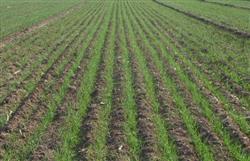
Why can't zinc fertilizer and phosphorus fertilizer be mixed and applied together?
Increasing the application of phosphorus fertilizer is very important for the high quality, high yield and enrichment of wheat. Why is this said? First, phosphorus plays a guaranteeing role in the high yield and high quality of wheat, while the content of available phosphorus in the soil of some cultivated land is on the low side; second, at present, the methods and ways of applying fertilizer are still not scientific enough in some places, so increasing the application of phosphorus fertilizer and adopting scientific...
-
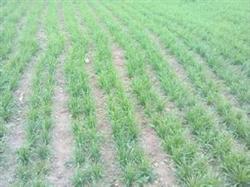
Methods and Techniques for Scientifically Applying Phosphate Fertilizer to Wheat
Wheat is a crop with a relatively high phosphorus requirement, and scientifically applying phosphate fertilizer is one of the key measures to improve phosphate fertilizer efficiency, reduce fertilization costs, and promote high-quality and high-yield wheat. 1. Apply after mixing and composting with organic fertilizer. Organic fertilizer is rich in organic matter, phosphoric acid, and various organic weak acids, which can turn insoluble phosphorus into soluble phosphorus...
-
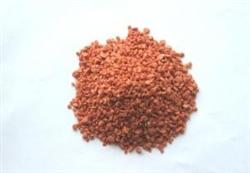
Potash fertilizer helps crops resist diseases
In recent years, increasing the application of potash fertilizer and continuously replenishing the depletion of soil potassium have become one of the effective measures for high and stable crop yields. It is not hard to understand that techniques that can make crops robust and grow well will certainly also improve the stress resistance of crops, including drought resistance, cold resistance, disease resistance and other characteristics. In 1998, China...
-
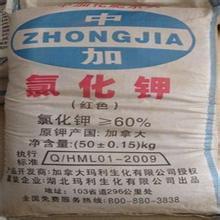
Five key points for efficient and scientific application of potassium fertilizer
Veteran vegetable grower Master Chang switched to growing tomatoes these past two years, and his yields and returns have remained good, because he pays close attention to soil testing and fertilization. When he tested his soil last year, the organic matter in his greenhouse soil reached 27.25g/kg. Because the soil organic matter content was relatively high, this spring he did not use organic fertilizer, but instead applied 40 kg of compound fertilizer per mu, 7...
-

Rational application methods and technical key points for potassium fertilizer
Strawberries bloom and bear fruit continuously, with many flowers and a large fruit load, and a long flowering and fruiting period, so they consume a lot of phosphorus and potassium fertilizer. Once phosphorus is deficient and potassium is low during the flowering and fruiting period, cold resistance will decrease, few flowers will form, flower buds will be weak, and flowering and fruiting will be affected. Not only will the fruit-setting rate be low and the fruit prone to deformities, but the coloring will also be poor, the sugar content will drop, and the taste will be bland, ...
-
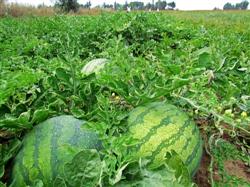
Why must potassium fertilizer be applied for watermelons to be sweet?
According to surveys, according to surveys, the problem of imbalanced nitrogen, phosphorus, and potassium content ratios in current watermelon field soil is relatively prominent. Watermelon is a crop that needs potassium. Increasing potassium fertilizer application can raise the sugar content of the fruit. When applying potassium fertilizer to watermelons, generally 12-18 kg of potassium sulfate can be applied per mu, that is, 2-3 kg per mu as base fertilizer, 6-8 kg as topdressing at the seedling stage, ...
条件筛选