The Benefits of Deep Fertilizer Application and the Correct Application Methods
In recent years, production practice has proven that deep fertilizer application is a technical measure for improving fertilizer efficiency, reducing costs and increasing yields. I. Main forms of deep fertilizer application technology 1.1 Deep application of base fertilizer Use a fertilizing and soil-preparation machine, or add a fertilizer box and fertilizer-discharging device to a moldboard plow or paddy field tillage machine, so that while turning the soil it applies...
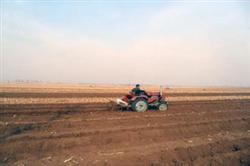
In recent years, production practice has proven that deep fertilizer application is a technical measure for improving fertilizer efficiency, reducing costs and increasing yields.
I. Main forms of deep fertilizer application technology
1.1 Deep application of base fertilizer Use a fertilizing and soil-preparation machine, or add a fertilizer box and fertilizer-discharging device to a moldboard plow or paddy field tillage machine, so that while turning the soil, the fertilizer is applied deep into the soil layer.
1.2 Deep fertilizer application at the same time as sowing Use a tractor-drawn seeder equipped with a fertilizing device to simultaneously complete fertilization, sowing, covering, compacting and other operations, applying the fertilizer below or to the side and below the seed, with a 3~5 cm thick soil isolation layer between the fertilizer and the seed to prevent the fertilizer from burning the seed.
1.3 Deep application of topdressing In the middle growth stage of crops, use mechanical or semi-mechanical cultivating-fertilizing machines or hand tools to apply the fertilizer deep into the soil.
II. Advantages of deep fertilizer application technology
2.1 Improving fertilizer use efficiency Deep fertilizer application can reduce the loss and waste of fertilizer. According to isotope tracer tests by the Institute of Soil and Fertilizer of the Chinese Academy of Agricultural Sciences, when ammonium bicarbonate and urea are applied deep into the 6~10 cm soil layer below the surface, compared with surface broadcasting, the nitrogen use efficiency can be increased from 27% and 37% to 58% and 50% respectively; compared with surface application, the use efficiency of deep application is relatively increased by 115% and 35%. After large-scale application of mechanized deep fertilizer application technology, the average use efficiency of nitrogen fertilizer can be increased from 30% to more than 40%. Deep application of phosphorus, potassium and other fertilizers can also reduce losses from wind erosion, promote crop uptake and prolong fertilizer effectiveness, thereby improving fertilizer use efficiency.
2.2 Increasing crop yields Deep fertilizer application can promote root development, enhance the crop's ability to absorb nutrients and water and its drought resistance, and benefit plant growth, thereby increasing crop yields. Comparative test results show that under the same conditions, compared with surface broadcasting, deep application can increase the yield of wheat and corn by 225~675 kg/hm2, cotton (lint cotton) by 75~120 kg/hm2, and soybean by 225~375 kg/hm2, with an average yield increase of 5%~15%.
III. Key points for implementing deep fertilizer application technology
3.1 Deep application of base fertilizer
3.1.1 Deep application method of first spreading fertilizer and then plowing. The time during which the fertilizer is exposed on the soil surface should be shortened as much as possible, especially for fertilizers such as ammonium bicarbonate that volatilize easily in the air; spreading and plowing under should be done one after the other so the fertilizer is buried in the soil. For this fertilization method, a spreading device can be added in front of the plow, or a dedicated fertilizer spreader can be used; the fertilizer band width should basically be equivalent to the subsequent plowing width. Operating requirements for first spreading fertilizer and then plowing: the fertilizer is spread evenly, the application rate meets the agronomic requirements of crop cultivation, after plowing the fertilizer is buried to a soil depth greater than 6 cm, and no visible granules remain on the soil surface.[
3.1.2 Method of fertilizing while plowing. This can basically achieve simultaneous plowing and fertilizing operations, avoiding volatilization losses caused by fertilizer being left in the open. Generally, the existing plow can be modified by adding a fertilizer-discharging device; usually the fertilizer discharge pipe is installed behind the moldboard, and as the moldboard turns the furrow slice, the fertilizer is applied to the bottom of the furrow (adjusting the depth of base fertilizer according to local agronomic requirements), and then the moldboard turns the furrow slice to cover it, achieving the purpose of deep fertilization. In many places this method is customarily called furrow fertilization. Operating requirements for applying base fertilizer while plowing: fertilization depth greater than 6 cm, fertilizer band width 3~5 cm, fertilizer discharge uniform and continuous with no obvious breaks, and the application rate meets the agronomic requirements of crop cultivation.
3.2 Deep application of seed fertilizer Seed fertilizer must be applied deeply at the same time as sowing, which can be accomplished by installing a fertilizer box and fertilizer-discharging device on the seeder. The requirements for the machinery are not only that it can, in fairly strict accordance with agronomic requirements, ensure the sowing rate, depth, plant spacing and row spacing of fertilizer and seed, but also that a certain thickness of soil isolation layer (generally more than 3 cm) can be formed between the seed and fertilizer, so as to meet the crop seedling stage's demand for nutrients while avoiding seed burning and seedling burning caused by mixing fertilizer and seed. Applying this technology places relatively high requirements on field soil treatment; it should ensure consistent plowing depth, no missed plowing, broken-up soil and level fields, and appropriate soil firmness. According to the positions of fertilizer and seed, there are two forms: side-position deep application and central-position deep application (commonly known as fertilizer and seed layering). The technical requirements are as follows:
3.2.1 Side-position deep application of seed fertilizer. The fertilizer is applied to the side and below the seed. For wheat seed fertilizer, it is generally 2.5~4 cm to each side and below the seed; for corn seed fertilizer, the application depth is generally 5.5 cm; the fertilizer band width should be more than 3 cm, and the fertilizer strip should be uniform and continuous with no obvious breaks or missed application.
3.2.2 Central-position deep application of seed fertilizer. The seed fertilizer is applied directly below the seedbed, and the soil isolation layer between the fertilizer layer and the seed is more than 3 cm; the depth of seed and fertilizer should be consistent, the fertilizer strip should be uniform and continuous, and the fertilizer band width should be slightly larger than the sowing width. Note that when applying fertilizer into the soil at one time together with sowing, the distance between seed and fertilizer should be determined according to the fertilizer type, application rate, etc.; prevent the seed and fertilizer from being too close, which can cause seed burning and seedling burning.
3.3 Deep application of topdressing According to the agronomic requirements for topdressing rate, depth and position, use topdressing machinery to complete topdressing operations including furrowing, fertilizer discharge, soil covering and compacting and other procedures. Compared with manual surface broadcasting and deep topdressing with hand tools, it can significantly improve fertilizer use efficiency and operation efficiency. The topdressing machinery should have good inter-row passage performance and have no obvious adverse effects on the later growth of crops (such as root damage, seedling damage and lodging, etc.). The topdressing depth (based on the point where the crop plant meets the ground) should be 6~10 cm. The topdressing position should be between 10~20 cm on both sides of the crop row (depending on the crop variety), the fertilizer band width should be greater than 3 cm, with no obvious breaks, and the soil should be covered tightly after fertilization.