When grape thinning of flowers and fruit is done well, the yield is naturally high
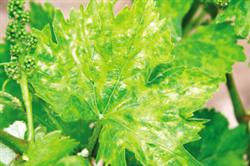
First, pay attention to strengthening the management of fertilizer and water; second, keep the damaged leaves on the plant appropriately for a period of time. It takes about one month for new lateral branches to grow. The leaves of the new lateral branches can replace the diseased leaves in photosynthesis, alleviating the phytotoxicity. After spraying grapes, observe in the orchard at any time, and if abnormal patches and plants are found...
 Doing a good job of flower and fruit thinning at the right time and in the right amount is one of the important measures to overcome alternate bearing in grapes and achieve stable, high and quality yields. The specific methods are:
1. Thinning inflorescences
Remove the inflorescences on the fruiting canes entirely. When the plant load is relatively large and there are too many inflorescences, thinning inflorescences is needed. Remove poorly developed weak small inflorescences and those that are densely distributed or improperly positioned, so that nutrients are concentrated and supplied to the superior inflorescences that are retained. According to domestic and foreign experience, the principle of "2 for strong, 1 for medium, none for weak" can be used as a reference for thinning inflorescences. That is, strong fruiting canes can retain 2 clusters, medium fruiting canes retain 1 cluster, and weak fruiting canes should retain no inflorescences as far as possible. In addition, inflorescence thinning can also be carried out on the basis of shoot removal, from before flowering to the flowering stage.
2. Pinching the tips of clusters and shaping the inflorescences
Because a single grape inflorescence may have 300-1500 flowers, most of the flowers will drop during the fruit-setting period. Therefore, thinning the inflorescences retained on the fruiting canes and removing part of the flower buds and flowers can strengthen the development of the remaining flowers. Flower thinning of inflorescences is generally achieved by pinching the tips of the clusters and shaping the inflorescences. Usually it is not individual flowers that are removed, but the branch axes at various levels within the inflorescence (spikelets). Pinching the tips of the clusters and shaping the inflorescences should preferably be done together before flowering; if too late, the fruit-setting effect is poor, and if too early, the inflorescences are not extended enough and shaping is not very convenient. The degree of pinching the tips of the clusters is generally to pinch off about 1/4-1/5 of the length of the inflorescence. After pinching the tips of the clusters, not only is the purpose of thinning part of the flowers achieved, but the risk of soft tips or water pot disease at the tips of the clusters is also reduced.
3. Fruit thinning
After pinching the tips of the clusters and shaping the inflorescences, the number of berries set in the inflorescence is generally greatly reduced, but sometimes in order to produce grapes with neat clusters and large berries, excess berries still need to be removed. After fruit thinning, the weight of a single berry should be maintained at 10-20 grams, and the weight of a single cluster should be maintained at 500-600. Fruit thinning is best done once when the berries are the size of mung beans, and after the fruit has set (when the berries reach the size of soybeans (4458, -23.00, -0.51%)), a second fruit thinning (final fruit set) is carried out. Fruit thinning can be carried out together with pinching the tips of the clusters and shaping the inflorescences, so that the ideal effect can be achieved.