-
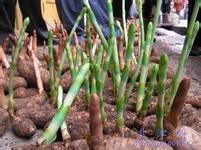
Detailed Explanation of the Low-Altitude Substitute-Material Cultivation Method for Gastrodia elata
Gastrodia elata is a rare and precious traditional Chinese medicine. In the past it relied on wild sources, growing in mountain forests above 500 m in elevation, and was very scarce and difficult to dig up; it now faces extinction. The development of artificial cultivation of Gastrodia elata has saved this precious species, but technically it still cannot escape high-altitude cultivation, and the raw material cannot be separated from log wood (...
-
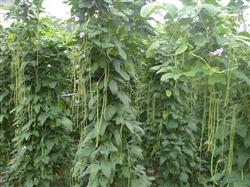
What are the methods for controlling cowpea rust in autumn?
How do you control rust when growing cowpeas in autumn? Here is an introduction to the control methods. The growing environment for autumn-planted cowpeas has high temperatures and relatively high rainfall, and in addition the inoculum (urediniospores) left behind in the field from spring-planted cowpeas is abundant. Therefore, autumn-planted cowpeas are prone to rust, and farmers should carry out integrated control early. 1. Main symptoms: the whole...
-
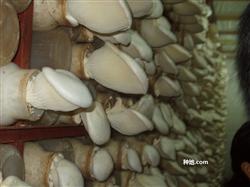
How to mix the substrate for white beech mushroom (Pleurotus nebrodensis)? Detailed method explained
How to mix the substrate for white beech mushroom (Pleurotus nebrodensis)? What should be noted? The white beech mushroom is a newly emerging mushroom species, and there are still many problems in its cultivation technology, especially the yield, which has been difficult to increase. Practice has found that the nutritional ratio of the substrate plays a vital role in increasing the yield of white beech mushroom. The nutrients added to the substrate...
-
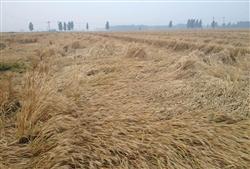
How to harvest wheat after it lodges? These methods you need to master
How to harvest lodged wheat? Here are the methods. When wheat is affected by wind and rain or improper fertilization, lodging at maturity occurs every year. If harvested by conventional methods, it will cause about 13% grain loss. So how do you harvest lodged wheat: 1. Install lifter guards. Some harvesters are already equipped with lifter guards at the factory...
-
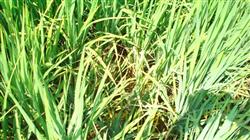
What are the control methods for rice viral diseases?
How do you control rice viral diseases? Please explain the methods. Rice viral diseases occur in explosive, intermittent and migratory patterns. The severity of rice viral diseases is closely related to the cropping system, the population size and migration patterns of transmission vectors, climatic conditions and cultivation management measures. Control should implement the plant protection policy of "prevention first, integrated control"...
-
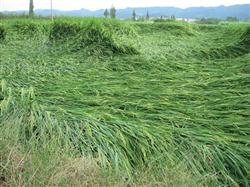
What are the control methods for rice lodging and weed damage?
How to control lodging and weed damage in rice? Please introduce the control methods. Rice is prone to lodging and susceptible to weed damage, and the following countermeasures should be taken: Choose suitable varieties. When selecting direct-seeded rice varieties, besides having good quality, high yield and multiple resistance, they should also have the characteristics of fertilizer tolerance, short stature and moderate tillering. For early rice, medium-maturing varieties should be chosen...
-
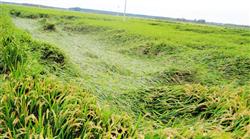
Detailed Explanation of the Causes of Rice Lodging and Control Methods
Why does rice lodge? How should it be prevented and controlled? Please give an introduction. The earlier rice lodging occurs, the greater the impact on yield; in severe plots, yield can be reduced by more than 50%, or even cause total crop failure. Lodging also has a great impact on rice quality, and at the same time increases harvest difficulty. Although rice lodging is related to windy and rainy weather, the main...
-
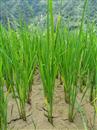
What is the correct method and purpose of draining paddy fields for rice?
How do you drain a paddy field for rice? What does it do? Please explain the field-draining method. Draining paddy fields is one of the main technical measures for increasing rice yields and promoting early ripening. 1. Main purposes of field draining. 1) Control ineffective tillering and consolidate effective tillering. When rice tillering has reached a certain number, that is, once there are enough seedlings, in our province, in terms of time, the effective tillering termination period is around the end of June. Early tillers can form panicles, while tillers after the termination period cannot form panicles or only form small panicles. In production, by draining the field, the young tiller buds at higher positions cannot get water and fertilizer and stop growing, reducing nutrient consumption, so that the main stem and large tillers receive more nutrient supply, laying a foundation for strong stems and large panicles.
-
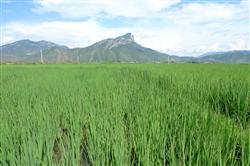
What are the correct methods and precautions for draining and drying rice fields?
How to dry a rice field properly? An introduction. Draining and drying a rice field is an important measure for improving paddy soil structure, promoting rice seedling roots to grow downward, enhancing rice root vigor, increasing rice stalk toughness and lodging resistance, controlling ineffective tillering, raising the percentage of productive tillers, improving the field microclimate, and reducing the occurrence of rice diseases and insect pests. But...
-
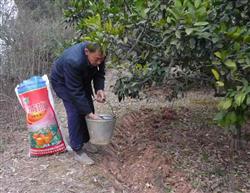
What are the citrus fertilization methods? A must-read for growers
What fertilization methods are there for growing citrus? Please explain. You can refer to the following fertilization methods for growing citrus: (1) Root application: Most citrus roots are distributed in the soil layer at the drip line along the outer edge of the canopy. When applying fertilizer to the roots, the fertilizer should be placed in the soil within the drip line around the outer edge of the canopy. The fertilization depth is generally best at 20-40 cm...
条件筛选