How to harvest wheat after it lodges? These methods you need to master
How to harvest lodged wheat? Here are the methods. When wheat is affected by wind and rain or improper fertilization, lodging at maturity occurs every year. If harvested by conventional methods, it will cause about 13% grain loss. So how do you harvest lodged wheat: 1. Install lifter guards. Some harvesters are already equipped with lifter guards at the factory...
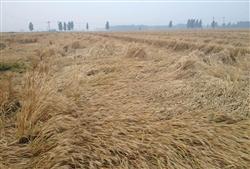
How to harvest lodged wheat? Here are the methods
When wheat is affected by wind and rain or improper fertilization, lodging at maturity occurs every year. If harvested by conventional methods, it will cause about 13% grain loss. So how do you harvest lodged wheat:
1. Install lifter guards. Some harvesters are already equipped with lifter guards at the factory. Those not equipped should have them installed before the summer harvest. The lifter guards should be mounted at the front of the cutter guards; during operation they can lift and straighten the lodged stalks. When working, the harvester should drive in as straight a line as possible, avoiding swinging left and right, to prevent the lifter guards from crushing more wheat plants and causing losses.
2. Install dividers. Lodged wheat stalks are often tangled together. If the two ends of the header cannot divide the crop effectively, some heads will scatter on the ground after cutting, causing about 1.2% loss.
3. Adjust correctly. When harvesting lodged wheat, the reel should be adjusted forward and downward so that the tines, at their lowest position, are as close to the ground as possible but not touching it, so as to pick up the stalks. The reel tines generally have 4 positions, namely tilted forward 15 degrees, vertical downward and tilted backward 15 degrees; according to the lodging situation, they can be adjusted to tilt backward 15 or 30 degrees, so that the tines can pick up the crop from the ground and feed it into the header. When harvesting lodged crops, the reel battens should be removed. If the reel and tines are adjusted properly, losses can be reduced by 3.2%.
4. Lower the stubble height. When wheat lodging is severe and there are no lifter guards, a flexible cutterbar header can be used instead, lowering the stubble height as much as possible, and paired with torpedo-style dividers, with the reel position and tine angle properly adjusted; this can also reduce losses.
5. Reduce forward speed. During harvesting, strive for accurate operation to reduce losses. In addition, when harvesting lodged wheat, because the stubble is low, the feed volume increases and the plants are wetter, making separation more difficult; therefore, appropriately increase the air volume, and adjust the wind direction and the sieve opening until no grain is carried out with the chaff.
Click to get more wheat cultivation techniques
Click to get more grain cultivation techniques