What are the control methods for rice lodging and weed damage?
How to control lodging and weed damage in rice? Please introduce the control methods. Rice is prone to lodging and susceptible to weed damage, and the following countermeasures should be taken: Choose suitable varieties. When selecting direct-seeded rice varieties, besides having good quality, high yield and multiple resistance, they should also have the characteristics of fertilizer tolerance, short stature and moderate tillering. For early rice, medium-maturing varieties should be chosen...
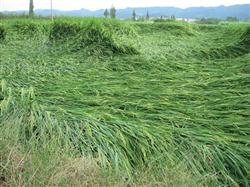
How to control lodging and weed damage in rice? Please introduce the control methods
Rice is prone to lodging and susceptible to weed damage, and the following countermeasures should be taken:
Choose suitable varieties. When selecting direct-seeded rice varieties, besides having good quality, high yield and multiple resistance, they should also have the characteristics of fertilizer tolerance, short stature and moderate tillering. For early rice, medium-maturing varieties should be chosen to avoid choosing early-maturing varieties for direct seeding, which would further shorten the growth period and result in low yield.
Control nitrogen, supplement phosphorus and increase potassium. The fertilization principle for direct-seeded rice is "control nitrogen, supplement phosphorus and increase potassium", "sufficient at the front, controlled in the middle, supplemented at the end", and the fertilization method should preferably be "one basal application and three topdressings". Basal fertilizer accounts for 40% of the fertilization amount, and topdressing accounts for 60%. Nitrogen fertilizer should be split equally between basal application and topdressing, phosphorus fertilizer should be applied as basal fertilizer, and it should be especially emphasized that potassium fertilizer should be applied at the second topdressing, which gives a more significant lodging-resistant effect.
Early field drying. Direct-seeded rice has many tillers and a large population, so field drying should be done early to reduce ineffective tillers, increase the earing rate, promote downward root growth and prevent lodging. When the number of stems and tillers in the field reaches 80% of the expected panicle number, field drying should begin. Because direct-seeded rice has a shallow root system, it is advisable to use multiple light dryings so that the roots gradually extend deeper.
Chemical regulation. Applying paclobutrazol once each at the late tillering stage and early panicle-breaking stage of direct-seeded rice has a significant effect on controlling growth, preventing lodging and increasing grain weight. Drying the field at the rice jointing stage, combined with the application of uniconazole and potassium fertilizer, also has an obvious lodging-prevention effect.
Weed control is the key to high yield in direct-seeded rice. The principle of "remove early, remove small, remove completely" should be adhered to.
Before sowing, for fields with many and large weeds, use 1 kg of 10% glyphosate per 667 sq m, 7-10 days before sowing, on a sunny day when the field has no water, add 50 kg of water and spray; or 7 days before sowing, after preparing the field, irrigate with about 3.3 cm of water, then use 100 ml of 60% butachlor per 667 sq m, add water and spray.
On the day of sowing after soil settling and up to the 3rd day, use 200 g of 17.2% Youhebao wettable powder per 667 sq m, mix with water and spray; or 3-5 days after sowing, use 100 ml of 30% saflufenacil emulsifiable concentrate per 667 sq m and spray evenly. In fields of direct-seeded rice from the five-leaf stage to the late tillering stage with many broadleaf weeds, the field water should be drained, then use 200 ml of 20% MCPA per 677 sq m, add 50 kg of water and spray. After one day, irrigate with 4 cm-5 cm of water, keep it for 7-10 days and then let it dry naturally.
Click to get more rice cultivation techniques
Click to get more food crop cultivation techniques