-
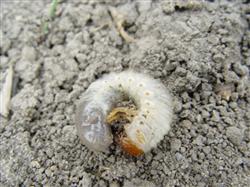
What are the control methods for ginseng white grubs?
White grubs are the larvae of large scarab beetles. They are voracious pests that can cause damage continuously. In spring, they begin activity when the soil temperature at 10 cm below the surface reaches 5°C; the optimal average soil temperature for activity is 13-18°C. Above 23°C they gradually move to deeper soil layers, and when the soil temperature drops in autumn to their suitable activity temperature, they move back up to the upper soil layers. Daily life...
-
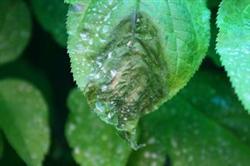
Detailed Explanation of the Occurrence and Control Methods of Ginseng Phytophthora Blight
This year the rainfall has been heavy, and the high temperature and high humidity are very suitable for the reproduction of the ginseng Phytophthora blight pathogen. The suitable temperature for the onset of ginseng Phytophthora blight is induced under soil temperatures of 10-30°C; soil temperatures of 20-26°C are most suitable for the disease to occur, while below 5°C and above 30°C the disease stops occurring. The main pathogen causing ginseng Phytophthora blight is the fungus of the genus Phytophthora in the subdivision Mastigomycotina...
-
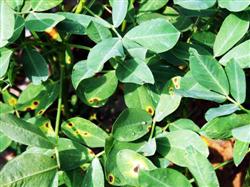
How to prevent premature senescence in peanuts? Master the control methods
How to prevent premature senescence in peanuts? Please advise: to prevent premature senescence in peanuts, the following points should be followed: 1. Site selection. Choose fields with relatively high fertility, and apply sufficient base fertilizer, plow deeply 25-30 cm early, and sun the ridges. Apply 2000 kg of rotted barnyard manure or 25-35 kg of cake fertilizer, 50 kg of ternary compound fertilizer, 50 kg of phosphate fertilizer, zinc fertilizer... per mu.
-
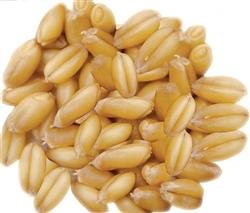
How should wheat be stored? These grain storage methods are worth mastering
How should wheat be stored? What pests should be prevented? This is because wheat storage involves the following factors: Strong moisture absorbency: the wheat seed coat is relatively thin, its tissue structure is loose, and its moisture-absorbing capacity is relatively strong. Long after-ripening period: wheat has a relatively long after-ripening period. Different varieties have different after-ripening periods. For most varieties, the after-ripening period ranges from two weeks to...
-
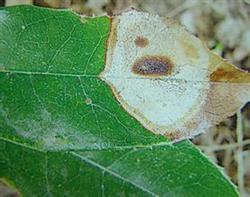
What are the control methods for Osmanthus brown spot disease?
Brief introduction Osmanthus brown spot disease is a very common disease; in severe cases it causes the whole plant to drop its leaves, affecting flowering and ornamental value. It has long been reported in countries such as the UK, the US and Japan. It also occurs frequently in Shanghai, Nanjing, Hangzhou, Jinan, Beijing, Fuzhou, Guilin, Xiamen, Guangzhou, Taiwan, China and other provinces and cities in China. Symptoms The pathogen mainly infects the leaves...
-
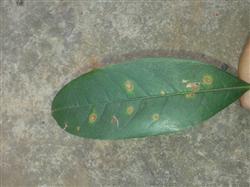
How to prevent and control Osmanthus brown spot disease? These methods you need to know
Osmanthus brown spot disease is a common disease of osmanthus, caused by infection with fungi of the subphylum Deuteromycotina. It occurs in both field-planted and potted osmanthus plants. When it strikes, mild cases affect the ornamental effect, while severe cases cause plant death. Symptoms mostly occur on leaves, mostly spreading from the leaf tip and leaf margin toward the entire leaf. In the early stage, the lesions are light...
-
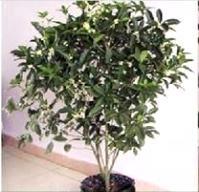
How to grow osmanthus in an apartment building? Remember these care methods
In winter, osmanthus grows slowly and is in a relatively dormant period, but its internal tissues are growing vigorously, mainly carrying out flower bud differentiation, so that when the temperature rises in spring, it can produce flower buds and bloom. Therefore, the focus of winter care is to protect the plant and ensure that flower bud differentiation proceeds smoothly. The specific care techniques are as follows: 1. ...
-
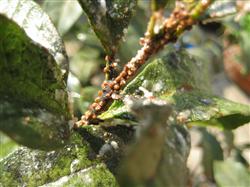
What are the control methods for scale insects on osmanthus?
Adults and nymphs often settle on osmanthus branches, suck sap, causing branches and leaves to wither, and in severe cases the whole plant dies. They often secrete large amounts of honeydew, which leads to sooty mold. Leaves and stems become covered with a black, sticky substance, hindering photosynthesis and affecting ornamental value. The main species are the cottony cushion scale and the white peach scale. Control methods: strictly prohibit the use of seedlings carrying the pest...
-
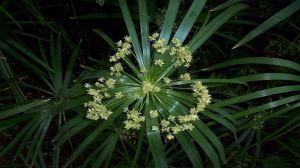
How do you grow Umbrella Papyrus so it thrives? Master these care methods
Umbrella Papyrus can be grown in water or in soil. If growing in water, pay attention to changing the water regularly, watch the water quality, and use some nutrient solution. Also, do not place it where a TV or fan blows on it often. If growing in soil, choose soil that is as nutrient-rich as possible, and provide an appropriate amount of fertilizer, plenty of water, and a certain amount of light.
-
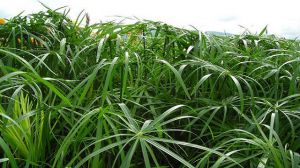
What kind of water is best for growing Cyperus alternifolius (umbrella papyrus)? A detailed guide to the correct method of choosing water
Cyperus alternifolius requires that the water quality must be acidic. There are many types to choose from, such as lake water, river water, well water, and so on. Tap water can also be used, but it needs to be left to stand for a period of time, or used after being exposed to the sun. It is best not to use mineral water. Among all waters, the best is electrolyzed ionized water.
条件筛选