Detailed Explanation of the Causes of Rice Lodging and Control Methods
Why does rice lodge? How should it be prevented and controlled? Please give an introduction. The earlier rice lodging occurs, the greater the impact on yield; in severe plots, yield can be reduced by more than 50%, or even cause total crop failure. Lodging also has a great impact on rice quality, and at the same time increases harvest difficulty. Although rice lodging is related to windy and rainy weather, the main...
Why does rice lodge? How should it be prevented and controlled? Please give an introduction
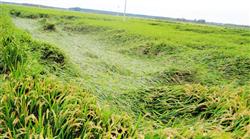
The earlier rice lodging occurs, the greater the impact on yield; in severe plots, yield can be reduced by more than 50%, or even cause total crop failure. Lodging also has a great impact on rice quality, and at the same time increases harvest difficulty. Although rice lodging is related to windy and rainy weather, it is mainly caused by the relatively poor lodging resistance of rice itself, such as weak lodging resistance of the variety, excessive population density in the early growth period, overly long basal internodes of rice, and poor development of the rice root system. Different causes of rice lodging also lead to differences in lodging form. In production, the cause of lodging can be identified according to the form of lodging, and then corresponding preventive countermeasures can be taken. Rice lodging can be divided into three types: "stem bending lodging," "stem breaking lodging," and "shallow root lodging."
Stem bending lodging
After heading, as grain filling increases panicle weight, when the panicle weight exceeds the bearing capacity of the stem, rice bends and tilts to varying degrees, until it lies prostrate on the ground. The greater the degree of stem bending and tilting, the greater the adverse effect on rice. When the panicle touches the ground, the degree of loss increases significantly. When rice enters the late filling and maturity stage, nutrients from leaf sheaths and stems are transferred to the grains, the supporting capacity declines, and lodging occurs more frequently in the late filling stage. This type of lodging is mainly related to excessive panicle number per unit area, relatively large panicles, and excessive fertilization in the middle and late growth periods.
Stem breaking lodging
This is the type of lodging that causes the most severe losses in production. Once stem breaking lodging occurs, the base of the stem breaks, and normal grain filling of the rice panicle almost stops. It is related to poor drainage conditions in the paddy field, poor soil aeration, relatively shallow soil plow layer, small root growth amount, thin and weak stems that are not fully developed, and relatively low stem elasticity and brittleness. It is prone to occur when nitrogen fertilizer is applied heavily in the early stage, deep-water irrigation is used, the rice population density is relatively large, and especially when the basal internodes are relatively long.
Shallow root lodging
Rice has poor soil-fixing capacity by the roots, and lodging formed by tilting from the stem base is shallow root lodging. In mild cases, the stems tilt; in severe cases, they lie prostrate on the ground. It generally occurs relatively early, and the yield reduction is also relatively large. If rice seedling roots enter the soil too shallowly, floating roots are produced, and the ability to support the rice plants is weak, which not only affects the normal growth of rice but also makes lodging likely. Rice grown by seedling throwing and direct seeding produces many floating roots and takes root relatively shallowly, so shallow root lodging is likely to occur. In poorly drained muddy fields and rice fields with relatively heavy salinity and alkalinity, rice roots are shallow and the soil-fixing capacity is weak, so shallow root lodging is also likely to occur.
Click to get more rice planting techniques
Click to get more grain crop planting techniques