-
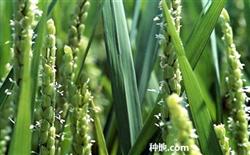
What is the correct application method for rice flower-promoting fertilizer?
How should rice flower-promoting fertilizer be applied? Please guide. Rice flower-promoting fertilizer and flower-preserving fertilizer are collectively called ear fertilizer. Flower-promoting fertilizer is generally applied from the 4th leaf from the top to the 3rd leaf from the top stage of rice. The 4th leaf from the top to the 3rd leaf from the top stage is a reverse leaf age stage. For early-maturing late japonica rice, it is generally applied when the first internode has reached its final length and the second internode is elongating. Flower-promoting fertilizer should be applied according to the seedlings. High-yield fields generally do not apply flower-promoting fertilizer. Only fields with small population growth and obvious yellowing at the early stage of jointing and ear elongation should be topdressed with an appropriate amount. Fields with little base fertilizer, a small population, and obviously faded leaf color should be applied early; fields with sufficient base fertilizer, a large population, and no yellowing of leaf color should be applied less or not at all.
-

How to sprout rice seeds well? Mastering the correct method is key
How to sprout rice seeds well? Introducing a new method for sprouting rice seeds can solve this problem. The main advantages of this method are: first, it can increase the sprouting rate to above 95%, with strong sprouts and short roots, and it is safe and reliable; second, it shortens the seed soaking and sprouting time. From soaking to standard sprouts, it generally takes only about 48 hours,...
-
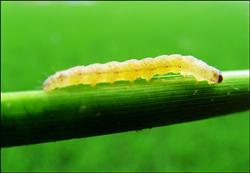
What are the control methods for the rice stem borer (Chilo suppressalis)?
How to control the rice stem borer (Chilo suppressalis) in rice? Please advise. The rice stem borer is one of the main pests on rice in our county. Its larvae mainly bore into the stems and cause dead hearts; when they attack during the booting and heading stages of rice, they form half-blighted panicles, dead booting panicles and white heads, seriously affecting rice yield. In our county, the control of the first generation of the rice stem borer was very uneven this year...
-
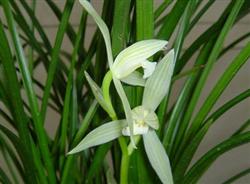
How to control orchid pests? Mastering these methods is enough
1. Orchid scale insect, commonly known as orchid louse, is one of the most common and widespread pests harming orchids. This scale insect is covered with a flat, round, earthy-brown waxy shell, about 0.1 cm in diameter, shaped like a flea, attaching to both sides of the leaves or inside and outside the leaf sheaths. The insect uses its thread-like mouthparts to suck the nutrient fluid from within the leaves. After scraping off the insect bodies, pale yellow marks appear on the leaf surface. If they cluster densely, the affected parts gradually turn yellow, growth vigor weakens, and in severe cases the plant progressively shrivels and dies.
-
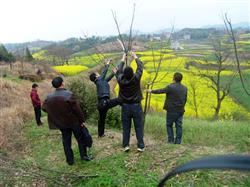
How to prune a chestnut tree? Teach you the correct pruning method
How to prune a chestnut tree? Please give guidance. A chestnut tree can be pruned by referring to the following methods: 1. Pruning of young trees. The tree forms of chestnut are mainly two types: the natural open-center form and the central-leader layered form. 1. Natural open-center form: This form has no central leader, only 3-4 main branches, and the natural trunk grows outward at an angle. The canopy is short and spreading...
-
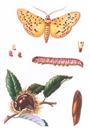
What are the control methods for the peach pyralid moth on Chinese chestnut?
How do you control the peach pyralid moth on Chinese chestnut? Please give guidance. The peach pyralid moth belongs to the order Lepidoptera, family Pyralidae. The larvae bore into and feed on the chestnut kernels, filling the seeds with frass and making them unfit to eat, and causing fruit drop, greatly affecting yield and quality. Its hosts also include peach, plum, and pear fruits, sunflower heads, corn stalks, and so on. Morphology...
-
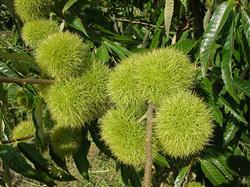
What are the scientific fertilization methods for chestnut trees?
How do you fertilize chestnut trees scientifically? Please give a detailed introduction. Chestnut, like other fruit trees, has the same fertilizer requirements, except that in addition to the three major elements of nitrogen, phosphorus and potassium, it is especially sensitive to the secondary element magnesium and the trace elements manganese and boron. If these are lacking or insufficient, serious physiological disorders occur that affect growth and development. According to measurements...
-
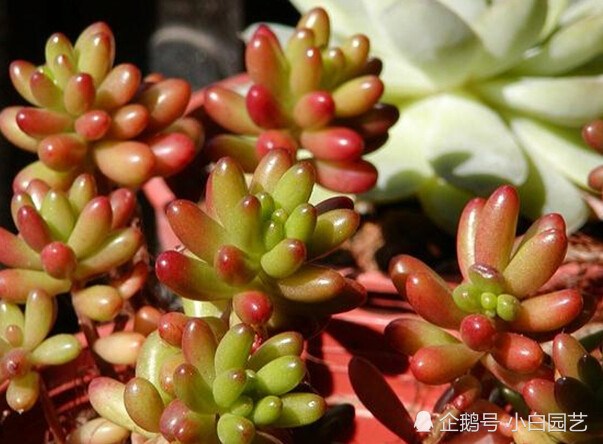
How to Grow Sedum rubrotinctum (Jelly Bean Plant)? A Detailed Guide to the Latest Care Methods
Sedum rubrotinctum is also called Christmas Cheer and Earring Grass. Because its leaves are red and green interspersed with bright colors, like a rainbow and like jade, it is named Hongzhiyu (Rainbow Jade). It has a cute appearance, is easy to care for, and is loved by everyone. It can be said to be a truly beautiful common variety, but it is also...
-
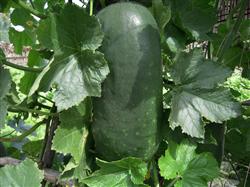
What are the cultivation and management methods for black-skinned winter melon?
How do you manage the cultivation of black-skinned winter melon? What are the special points to note? For growing black-skinned winter melon, you can refer to the following methods for management: Fertilizing: After planting, fertilize once every 7 to 10 days on sunny days (10% to 15% human manure and urine, or 0.5% to 1% urea), applying lightly in the early stage and heavily in the later stage. The key topdressing for winter melon...
-
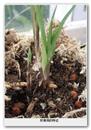
Detailed Explanation of the Harm and Control Methods of Soft Rot in Orchids
Generally speaking, if an orchid grows very robustly and its root system is very well developed, its disease resistance is relatively strong. If the orchid does not grow well and, on top of that, care is not adequate, then it becomes very prone to disease. In the current season, if ventilation is poor, orchids are very likely to develop soft rot. Soft rot is seriously harmful...
条件筛选