-
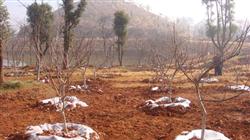
What are the methods for planting and managing persimmon trees?
How do you plant and manage persimmon trees? Please give an introduction. The methods for planting and managing persimmon trees can refer to the following methods: 1. Planting persimmon trees. 1. Choose the site and build the persimmon orchard. Choose a leeward, shady site with deep soil, fertile and loose soil, and a low groundwater table. 2. Dig holes and apply base fertilizer. Follow the mountain contour to cut horizontal terraces, and build them into mountain orchards with a front ridge and back ditch, reverse-sloping terrace surfaces, or a "fish-scale pit" style. Plant at a row spacing of 6 x 5.5 m, with 20 trees or 50 trees (close planting) per mu. The hole surface width, bottom width, and depth of the planting hole should reach 1 m, 0.8 m, and 0.6 m respectively. First allow weathering, then backfill the planting hole with weeds and topsoil to 80% full, and at the same time backfill a corresponding amount of organic fertilizer as base fertilizer, with the hole position 20 cm above the terrace surface. When planting, spread 1-1.5 kg of calcium magnesium phosphate fertilizer in each hole to improve planting quality and growth.
-
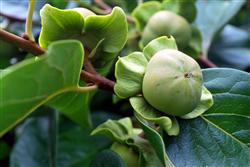
How to Improve the Fruit Set Rate of Persimmon Trees? A Detailed Guide to Practical Methods
What methods can improve the fruit set rate of persimmon trees? Please give guidance. For persimmon trees, the following methods can be used to improve the fruit set rate: 1. Control of the persimmon fruit borer. 7-8 days after the persimmon tree begins to bloom (based on 1 flower opening in the persimmon orchard), you can choose 2.5% fenpropathrin 2500x solution, 21% fenvalerate 2500x solution, 10% duolaibao susp...
-
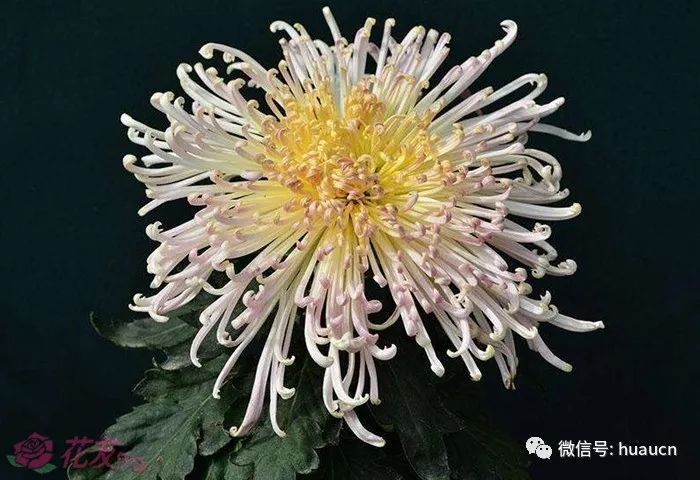
Chrysanthemums, jasmine, and Chinese roses easily attract three kinds of pests: flower pest and disease prevention and control methods
Many people like to grow some flowers and plants indoors, which both greets the environment and cultivates their interests. But flowers and plants are not only somewhat delicate to grow, they are also very easily "favored" by small insects, which is annoying and also quite frustrating. Let me introduce to flower lovers several kinds of flower...
-
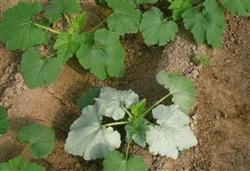
What are the control methods for silverleaf disease in zucchini?
How do you control silverleaf disease in zucchini? What does silverleaf disease look like? Affected zucchini plants show weak growth, a shorter plant type, drooping leaves, wrinkled leaves at the growing point, and a semi-dormant state, with shortened internodes on the upper stem; the stems, young leaves, and petioles of functional leaves become chlorotic, leaf chlorophyll content decreases, and leaves initially appe...
-
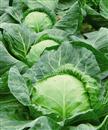
How to top-dress head cabbage properly? Detailed explanation of the correct method
How should you top-dress head cabbage when growing it? Please explain the method. Head cabbage's fertilizer requirements are mainly nitrogen and potassium, with a suitable amount of phosphate fertilizer. Throughout the entire growth process, the combined ratio of the three major elements N:P:K is 3:1:4. Analyzing by growth stage, the seedling stage needs more chlorine, reaching a peak at the rosette stage. By...
-
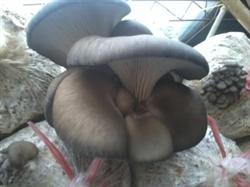
What types of deformed oyster mushrooms are there? Detailed explanation of prevention and control methods
Deformed mushrooms are a relatively common physiological disorder in oyster mushroom production, seriously affecting the yield and quality of oyster mushrooms, and even causing them to completely lose their commercial value. This disorder is mainly caused by improper management, and in a few cases by spawn degeneration, mutation, or viral infection. The main types of deformed mushrooms include: 1. Tall-stemmed mushroom, with a small cap...
-
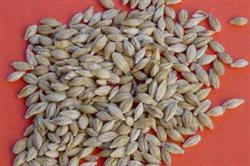
How can wheat seed purity be improved? These methods are very practical
How can wheat seed purity be improved? Are there any methods? Please explain. The mixing and disorder of too many wheat varieties is the main obstacle restricting stable and high wheat yields. Improving the purity of wheat seed production and accelerating unified wheat propagation and supply are important measures for increasing yields. Adhere to one variety per village and uniformly replace varieties. Follow the path of specialized seed...
-
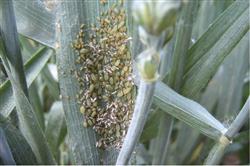
What are the methods for controlling wheat pests and diseases?
What methods are used to control wheat pests and diseases? Please advise. Wheat pests and diseases can be controlled by referring to the following methods: For wheat take-all, from the greening stage to before jointing, use 100 g of 20% triadimefon EC per mu, or 150 g of 15% triadimefon wettable powder, mixed with 50-70 kg of water, and use a sprayer with the swirl plate removed to spray along the rows...
-
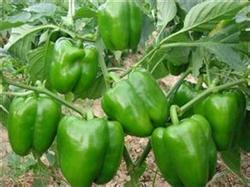
What are the control methods for sweet pepper plant death
What controls sweet pepper plant death? Please introduce the control methods. 1. Main causes of sweet pepper plant death: First, the soil temperature is too high within 0-15 cm of the topsoil near the root system; second, the soil moisture is too heavy within 0-20 cm of the topsoil near the root system. As long as one condition is met, a small number of plants will die; if both...
-
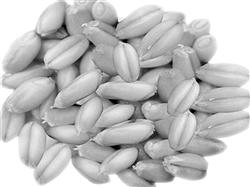
What are the methods for disease and pest control in wheat seeds?
How are disease and pest control carried out on wheat seeds? Please give guidance. For disease and pest control in wheat seeds, you can refer to the following methods: 1. Seed dressing with Shimai Dan: Shimai Dan is a seed coating agent produced by Syngenta Crop Protection AG of Switzerland, with active ingredients 2.4% difenoconazole and 2.4% fludioxonil, registered for the control of wheat loose smut. For every 10 ml of the agent, mix with 10 kg of seed. After diluting the liquid with water, thoroughly stir the slurry and seed at a ratio of 1:50-100 until the slurry is evenly distributed on the seed surface. Let it dry and then sow. This agent has systemic translocation properties; after dressing, the agent can be absorbed by wheat seeds and seedlings, has a long lasting effect, provides good disease control and seedling protection, and can promote robust wheat growth.
条件筛选