-

How serious is the harm caused by soybean sclerotinia stem rot?
What harm does soybean sclerotinia stem rot cause? How do you prevent and control soybean sclerotinia stem rot? Readers, please help share this. Zhongdiwang has compiled the harm caused by soybean sclerotinia stem rot and its prevention and control methods, listed below for readers' reference. Harm caused by soybean sclerotinia stem rot: soybean sclerotinia stem rot mainly infects the stems. It generally begins to develop in late July...
-
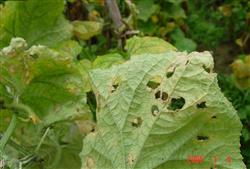
What are the harmful symptoms of cucumber anthracnose?
What harm does cucumber anthracnose cause? What methods can prevent and control cucumber anthracnose? We also ask fellow gardeners to share their guidance. The harm and control methods of cucumber anthracnose can refer to the following introduction: Harm of cucumber anthracnose: Anthracnose can occur at the seedling stage and on mature plants. When it occurs at the cotyledon stage, yellow-brown semicircular lesions appear on the edges of the cotyledons...
-
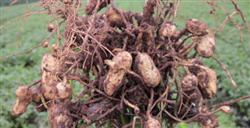
What are the harms of continuous peanut cropping? A detailed guide
What are the harms of continuous peanut cropping? Please note that continuous peanut cropping has the following harms: 1. It causes severe soil nutrient deficiency. Because peanut roots have a large number of rhizobia, they are not very sensitive to nitrogen. Continuous cropping leads to soil nutrient deficiency that cannot meet the nutrients needed by peanuts, thereby affecting the normal growth and development of peanuts. The longer the continuous cropping...
-
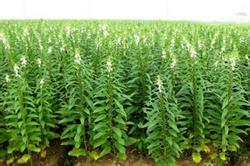
Why Are Sesame Plants Afraid of Continuous Cropping? An Analysis of the Causes of Continuous Cropping Harm
1. The key lies in timely topping. Usually, spring sesame retains the first pair of true leaves, and summer sesame retains the second pair of true leaves. Experiments have shown that this is the best time for topping, inducing a double-stem rate of 100%. The specific timing is: when the second pair of true leaves of spring sesame is half-unfolded, and when the third pair of true leaves of summer sesame is half-unfolded, with an interval of about one week...
-
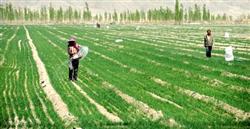
Spring management of wheat: focus on preventing and controlling the four major harms
How to manage the first spring irrigation and fertilization of wheat? The first spring irrigation and spring fertilization have a great impact on wheat yield. For example: if the wheat is too dense, too sparse, or lodging occurs in the later growth stage, it indicates that the timing of the first spring fertilization and irrigation was problematic. Another example: if the wheat stays green and ripens late, and the grains are shriveled and thin, that indicates your spring water and fertilizer use...
-
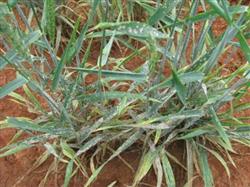
A Complete Analysis of the Harm and Control Measures of Wheat Powdery Mildew
The disease can attack all aboveground organs of the wheat plant, but mainly the leaves and leaf sheaths; in severe cases, the glumes and awns can also be affected. At the initial stage of the disease, white mildew spots of 1-2mm appear on the leaf surface, which then gradually expand into nearly circular to oval white mildew patches. The surface of the mildew patches has a layer of white powder that disperses immediately upon external force or vibration. This...
-
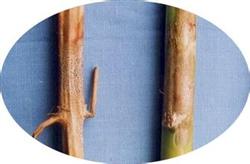
Detailed Explanation of the Harm and Control Methods of Asparagus Pests and Diseases
In recent years, the asparagus planting area has been continuously expanding, and the degree of damage from its diseases has also increased accordingly, causing considerable losses to the vast number of asparagus growers. The main asparagus diseases include: stem blight, root rot, brown spot, damping-off, and tip blight. The common diseases in the growth process of asparagus and their control measures are introduced as follows: 1. ...
-

What are the harms of excessive wheat growth? Growers should pay attention
The harms of excessive wheat growth
-
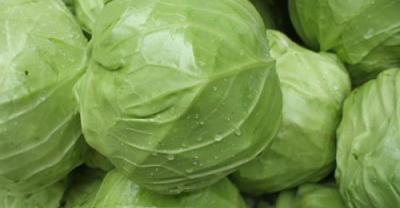
How serious is the harm of pesticide residues in vegetables?
Everyone knows that pesticide residues in vegetables are harmful to health, but exactly how serious is the harm of pesticide residues in vegetables? Let's take a look together below. Agri...
-

The Harm of Low-Temperature and Low-Light Weather to Greenhouse Vegetables and Countermeasures
In recent years, due to the emergence of haze weather, low-temperature and low-light weather in winter has gradually increased, generally occurring from late November to mid-February of the following year, which is the period of the year with...
条件筛选