Why Are Sesame Plants Afraid of Continuous Cropping? An Analysis of the Causes of Continuous Cropping Harm
1. The key lies in timely topping. Usually, spring sesame retains the first pair of true leaves, and summer sesame retains the second pair of true leaves. Experiments have shown that this is the best time for topping, inducing a double-stem rate of 100%. The specific timing is: when the second pair of true leaves of spring sesame is half-unfolded, and when the third pair of true leaves of summer sesame is half-unfolded, with an interval of about one week...
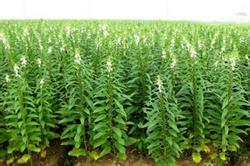 "Sesame fears continuous cropping, and nine out of ten years it fails" and "Rotating crops is like applying fertilizer." It can be seen that sesame is most averse to continuous cropping. Generally, a three-year crop rotation system is implemented, with the previous crop ideally being sorghum, corn, wheat, or millet.
There are mainly two reasons why sesame cannot be continuously cropped: One reason is that continuous cropping of sesame will worsen diseases. In the process of sesame production, many pathogenic fungi such as stem spot blight, bacterial wilt, and phytophthora blight overwinter in the soil after the sesame harvest. If sesame is continuously cropped the following year, these pathogens will become the source of infection for the continuously cropped sesame. The longer the continuous cropping period, the more pathogens in the soil, and the more severe the sesame diseases will become. Infected by diseases, sesame plants will show symptoms such as poor development, short individual plants, and fewer flowers and capsules, and in severe cases, large areas may wither and die. The second reason is that sesame is a crop with high fertilizer demand, and continuous cropping will lead to nutrient imbalance, disrupting the soil fertility balance, causing nitrogen and potassium deficiency, making it difficult to increase sesame yield. Therefore, continuous cropping of sesame is unscientific and should be avoided.