The Harm of Low-Temperature and Low-Light Weather to Greenhouse Vegetables and Countermeasures
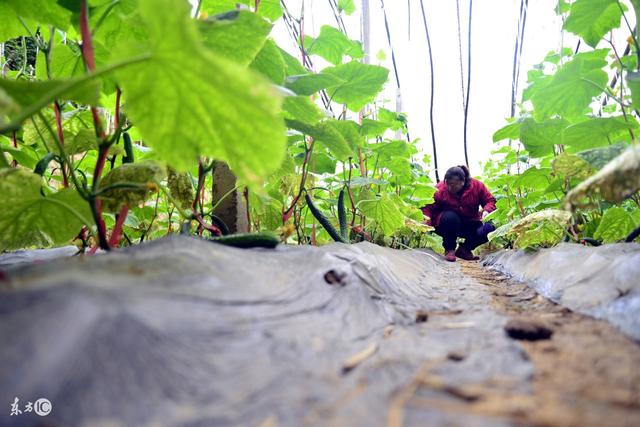
In recent years, due to the emergence of haze weather, low-temperature and low-light weather in winter has gradually increased, generally occurring from late November to mid-February of the following year. This is the season with the lowest temperatures and the shortest sunshine hours of the year, and low-temperature and low-light weather has had a considerable impact on greenhouse vegetable production. By analyzing the harm of low-temperature and low-light weather and combining it with agricultural production practices, this paper proposes countermeasures and management measures to provide reference for doing a good job in winter greenhouse vegetable production.
1 Definition of low-temperature and low-light
Low-temperature and low-light refers to a weather process from late autumn to early spring in which, due to continuous cloudy snow or haze weather, external sunshine is insufficient or absent, causing the temperature inside greenhouses to drop below the lower limit temperature required for the growth and development stage of vegetables and other crops at that time, and the lack of sunlight cannot satisfy crop photosynthesis. At this time, when vegetable respiration is strengthened and exceeds photosynthesis, crop life begins to show signs of decline. In agricultural production, it is defined as a disaster. The harm of low-temperature and low-light depends on its intensity and duration. When the duration reaches more than 7 d, crop diseases are difficult to control, causing agricultural yield reduction.
2 Harm
Low-light weather leads to insufficient greenhouse lighting, low temperature, and high relative air humidity. Vegetable photosynthetic efficiency declines, and phenomena such as flower drop, bud drop, and difficulty in fruit setting are prone to occur. At the same time, vegetable root growth is inhibited, affecting the absorption of water and nutrients. Vegetable stems and leaves turn yellow, and comprehensive stress resistance declines significantly. According to research and production practice, the harm can be divided into 3 levels.
2.1 Mild.
No sunshine for 3 consecutive d; or no sunshine on 3 of 4 consecutive d, with sunshine duration on the other 1 d less than 3 h. At this time, plant growth slows down, flower drop and fruit drop begin, and late blight and downy mildew begin to appear in fruit vegetables such as cucumber and tomato.
2.2 Moderate.
No sunshine for 4~7 consecutive d; or sunshine duration <=3 h for more than 7 consecutive d; or 2 occurrences of mild low-light within 1 month. At this time, some plants show physiological drought and wilting, some flowers and fruits drop, plant growth stops, and diseases of cucumber, tomato, pepper, etc. occur commonly, but they can still be controlled through measures such as chemical control.
2.3 Severe.
Consecutive days without sunshine >=7 d; or sunshine duration <=3 h for more than 10 consecutive d; or 2 occurrences of moderate low-light within 1 month. At this time, some plants show cold injury, leaves begin to dehydrate, and in severe cases the plants die. At the same time, 10%~20% of diseases are difficult to control, most experience yield reduction, and it continues to develop.
3 Countermeasures
Eradicating haze weather is a long-term task, but in response to disasters caused by low-temperature and low-light weather, vegetable management techniques should currently be strengthened. The following measures are recommended for prevention:
3.1 Pay attention to heat preservation and warming.
In particular, attention should be paid to nighttime heat preservation work. Cover the greenhouse surface with straw mats (straw curtains) to protect the film. On nights with cloudy snow weather, cover the outside of the straw mats (straw curtains) with a layer of cold-proof plastic film, or hang a second curtain inside the greenhouse for covering, and set up small arched sheds. As the temperature drops further, temporary heating and warming measures can be taken, such as using coal stoves, gas stoves, etc., and smokeless charcoal braziers can also be placed. However, care should be taken not to raise the greenhouse temperature too quickly or too high. At the same time, attention should be paid to ensuring that the flue is tightly sealed to strictly prevent smoke from filling the greenhouse and harming the vegetables.
3.2 Increase lighting.
If there is accumulated snow, it should be cleared promptly. The straw mats used for covering should be removed as early as possible and put back as late as possible. On cloudy days when the temperature is not very low, the straw mats should also be removed to increase lighting. At the same time, the greenhouse film should be cleaned frequently to maintain a relatively high light transmittance. A reflective film can also be hung on the back wall of the greenhouse to increase light intensity, but note that the thermal insulation curtain inside the greenhouse should be opened during the day. If the lighting time is too low, artificial warming and supplemental lighting measures can be adopted, using stoves, hot-air furnaces, electric heating wires, electric heating fans, turning on boiler heating, etc. for artificial warming, while installing incandescent lamps, fluorescent lamps, high-pressure mercury lamps, biogas lamps, etc. for artificial supplemental lighting, turning on the lamps in the morning and evening for about 3 h each time. Note that about 8 h of darkness should be ensured at night to maintain the basic conditions for plant growth and development.
3.3 Adjust greenhouse humidity.
Continuous cloudy days are not conducive to ventilation and moisture removal, nor to disease control. Therefore, humidity inside the greenhouse should be controlled, watering should be minimized or avoided, and increases in air humidity should be avoided. If humidity is high, plant ash or wheat straw can be scattered in the paths between beds to absorb moisture and reduce humidity. Also pay attention to timely and brief ventilation to reduce humidity. At the same time, attention should be paid to air quality inside the greenhouse. Carbon dioxide fertilization techniques can be used, such as smoke fumigation and the reaction of sulfuric acid with ammonium bicarbonate, to adjust the air composition inside the greenhouse, supplement carbon dioxide content, and enhance the cold resistance of vegetable plants.
3.4 Strengthen field management during periods of low temperature and low light.
Pay attention to moderate flower and fruit thinning, reduce fruit setting, lower nutrient consumption, and improve the resistance of plants to low temperature and low light. After the weather turns cold, do not arbitrarily apply excessive chemical fertilizers, especially nitrogen fertilizers, otherwise it will cause the ground temperature inside the greenhouse to drop and affect the normal growth of vegetables. However, pest and disease prevention should be strengthened, using smoke agents or dust formulations as much as possible, and spraying fertilizer solution on the leaves.
3.5 Management after the low-temperature and low-light period.
Straw mats should be removed reasonably according to the weather. Do not immediately remove all the straw mats; they should be removed gradually at intervals and alternately (thermal insulation quilts) to let light through. After sudden clearing, cover the mats back to prevent strong light and avoid the phenomenon of light damage to seedlings. Continuous cloudy weather has lower air temperature and correspondingly lower ground temperature, and the ability of vegetables to absorb water and fertilizer is weakened. After low-temperature and low-light weather, foliar fertilizers such as potassium dihydrogen phosphate and urea can be sprayed to supplement the nutritional deficiency of vegetable plants, increase the hardness and sugar content of leaf flesh, thereby improving the cold resistance of vegetables and alleviating the degree of freezing injury.
Source: Modern Rural Science and Technology2017 Issue 08
Author: Wang Dongxia