What are the harms of continuous peanut cropping? A detailed guide
What are the harms of continuous peanut cropping? Please note that continuous peanut cropping has the following harms: 1. It causes severe soil nutrient deficiency. Because peanut roots have a large number of rhizobia, they are not very sensitive to nitrogen. Continuous cropping leads to soil nutrient deficiency that cannot meet the nutrients needed by peanuts, thereby affecting the normal growth and development of peanuts. The longer the continuous cropping...
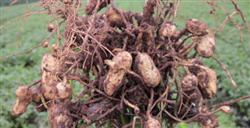
What are the harms of continuous peanut cropping? Please explain
Continuous peanut cropping has the following harms:
1. It causes severe soil nutrient deficiency. Because peanut roots have a large number of rhizobia, they are not very sensitive to nitrogen. Continuous cropping leads to soil nutrient deficiency that cannot meet the nutrients needed by peanuts, thereby affecting the normal growth and development of peanuts. The longer the continuous cropping period, the more severe the nutrient deficiency symptoms become. However, nutrient deficiency symptoms generally do not occur in newly planted fields.
2. It leads to severe pest and disease damage. Peanut bacterial wilt, viral diseases, root-knot nematode disease, leaf spot disease, and others are mostly spread through soil-borne pathogens. The longer the continuous cropping period, the more diseased plant residues accumulate in the soil, and the higher the probability that later peanuts will become infected. Peanuts planted in new fields, however, show mild or no disease.
3. It affects the crop's own nutrient uptake. During the growth and development of peanuts, their root systems continuously secrete relatively large amounts of organic acids. Although these organic acids can dissolve minerals in the soil, continuous cropping inevitably leads to excessive accumulation of organic acids in the soil, creating a soil environment extremely unfavorable to the development of the peanut root system. This affects the ability of the peanut root system to absorb nutrients, resulting in short plants and poor disease resistance.
4. It causes poor peanut quality and low yield. Due to continuous cropping, peanuts have a low fruit-setting rate and few filled pods, and the peanut kernels are small or even shriveled, thus affecting yield and quality. Experiments show that after two years of continuous peanut cropping, yield decreases by 8%-10%; after three years of continuous cropping, yield decreases by 25%-30%; and after more than four years of continuous cropping, yield decreases by more than 50%. Therefore, to achieve high yield and improved quality in peanuts, farmers should practice crop rotation rather than continuous cropping, creating the basic conditions for normal peanut growth.
Click to get more peanut cultivation techniques
Click to get more grain and oil crop cultivation techniques