-
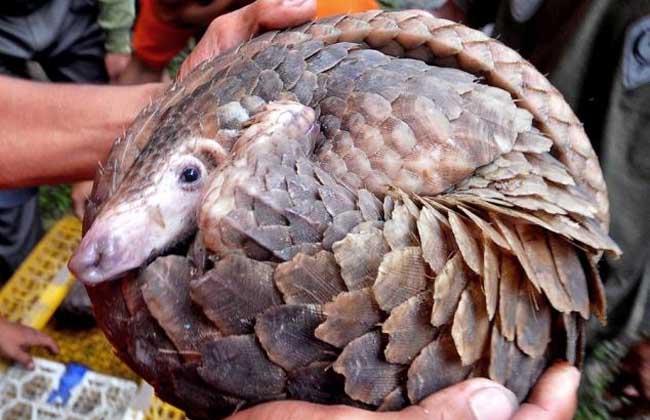
Pangolin: Benefits and Uses, Scale Prices and Breeding Techniques Explained
Pangolin Benefits and Uses_ Pangolin Scale Prices_ Pangolin Breeding Techniques
-
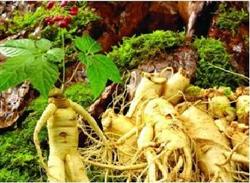
Detailed explanation of cultivation techniques for transitioning wild Panax japonicus to domestic cultivation
(1) Propagation generally uses cuttings. Take mature branches and cut them into cuttings about 15 cm long with 5-7 leaves, and insert them into a sand bed. Plant spacing is 4 cm x 10 cm. Keep the sand bed moist; roots can grow in about 20 days for transplanting. Cuttings can be taken throughout the year, but rooting is easiest in spring and autumn. In summer, choose a shady area for the seedbed...
-
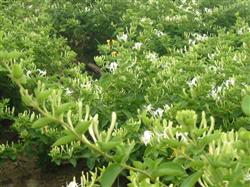
Honeysuckle Propagation Methods and Key Points of High-Yield Cultivation Techniques
Honeysuckle (Lonicera japonica Thunb.), also known as Japanese honeysuckle, Erhua, honeysuckle vine or mandarin duck vine, is a semi-evergreen twining liana of the genus Lonicera in the Caprifoliaceae family. Young branches are densely covered with coarse hairs and glandular hairs; leaves are opposite, ovate or ovate-lanceolate, 3-50n long, entire, with coarse hairs on both surfaces when young. Flowers are borne in pairs in leaf axils, corolla tubular, ...
-
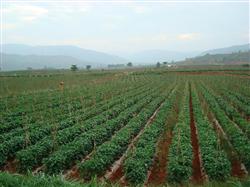
Pepper Summer Planting Methods and Management Techniques
How to plant peppers in summer? Here is an introduction to the planting methods. For summer pepper planting, you can refer to the following methods for cultivation: Grow strong seedlings. Choose a plot with high terrain that has not grown solanaceous crops in the past two years, and build a seedling shed that is high in the north and low in the south. The south wall of the seedling shed is 0.6 m high, the north wall is 1.2 m high, the width is 1.5 m, and the shed length depends...
-
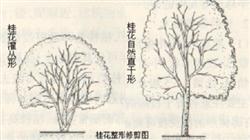
How to Propagate Osmanthus? Detailed Guide to Common Propagation Methods and Techniques
When cultivating osmanthus, if pruning and shaping are neglected over a long period, the tree will grow deformed. For such trees, targeted pruning should be carried out. (1) For plants that have grown very tall with sparse branches and leaves on the lower part, the upper 2/3 or 3/4 of the main trunk can be cut off to encourage the lower trunk to send out new branches. In the following year, if water sprouts and mispositioned...
-
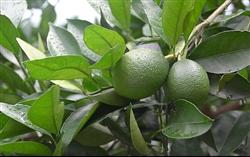
Detailed Explanation of Key Citrus Management Techniques for June
How should citrus be managed in June? Please give an introduction. In June, citrus can be managed by referring to the following methods: (1) Continue fruit retention. The second physiological fruit drop period (also called June drop) begins in mid-to-late May. Unlike the first physiological fruit drop period, the dropped fruit does not have a fruit stalk. For trees whose fruit in the canopy is not obviously different in size and mostly small, in order to reduce fruit drop, foliar topdressing should be strengthened, spraying 0.2% urea plus 0.3% monopotassium phosphate or nutrient solution fertilizer at intervals of about 10 days, and adding 0.2% borax spray in mountain citrus orchards. For young bearing trees and vigorous trees prone to fruit drop, remove summer shoots once every 7-10 days to help retain fruit. In view of the relatively intense competition for nutrients between shoots and fruit, which easily aggravates fruit drop, for vigorous trees that have already undergone girdling (girdling width 2-3 mm), another check should be made before early June, and the healing tissue should be wiped off again from girdling cuts that have healed early.
-
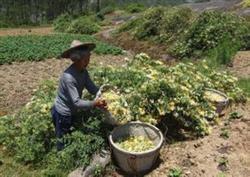
Detailed Explanation of Harvesting and Processing Techniques for Honeysuckle (Jinyinhua) Medicinal Material
1. Flower-picking time: The picking time is from 9 to 12 o'clock in the previous year; it is not suitable to pick when there is dew or on rainy days, but it can also be picked if there is drying equipment. Flowers picked in the morning are blue-white, heavy, easy to dry, have a strong fragrance, a high rate of commercial product output, and good quality. Flowers picked after noon and on cloudy days are poorer in quality and have a low processing rate. From the flower's development process...
-
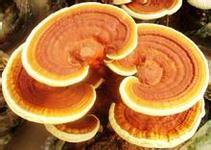
Understanding the Medicinal Value and Cultivation Techniques of Reishi Mushroom in One Article
Reishi mushroom, also known as divine grass, ten-thousand-year grass, red reishi, crimson reishi, wood reishi, etc. There are more than 40 species in China, with the more common and well-known ones being purple reishi, pine-fir reishi, black reishi, purple-glow reishi, etc. Reishi mushroom has a medicinal history of over two thousand years in China. In addition to containing minerals such as potassium, phosphorus, magnesium, calcium, iron, and manganese...
-

Detailed Explanation of the Key Points of Standardized Cultivation Techniques for Gastrodia elata
Gastrodia elata, also known as Dingfengcao, is an orchid family plant and a traditional precious Chinese medicinal herb. Its tuber is used as medicine, and it has the effects of tonifying qi and relieving spasms, calming the liver and extinguishing wind, and settling fright and dispelling dampness. It can treat dizziness, numbness of the limbs, epilepsy, infantile convulsions, hypertension, otogenic vertigo, and other conditions. Gastrodia elata is mainly produced in Guizhou, and is also produced in Yunnan, Sichuan, Guang...
-
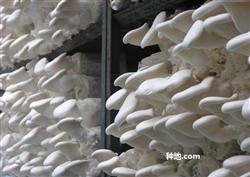
What should be noted when cultivating white king oyster mushrooms? Detailed explanation of key cultivation techniques
What should be noted during the cultivation of white king oyster mushrooms? White king oyster mushrooms, due to their unique edible and medicinal value, have seen a year-on-year increase in spawn input in northern China in recent years, and have shown a promising prospect of both good production and sales. They are one of the preferred mushroom types for novice mushroom growers to develop edible fungus production. At present, in white king oyster mushroom production there exist...
条件筛选