-
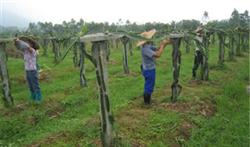
How to prune a dragon fruit tree properly? Practical pruning methods and techniques
How should a dragon fruit tree be pruned properly? Please explain the methods. Shaping and pruning a dragon fruit tree can adjust the structure of each part of the population and the individual, improving conditions for light energy use; using the dynamic balance between the aboveground and belowground parts to regulate the overall growth of the fruit tree; adjusting the quantity, quality and rhythm of organ formation. Coordinating growth...
-
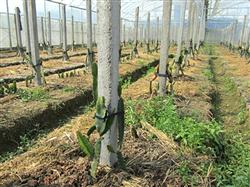
Detailed Guide to Dragon Fruit Planting Methods and Management Techniques
How to plant and manage dragon fruit? Please provide guidance. The reference for dragon fruit planting and management is as follows: 1. Site selection and soil requirements. The suitable growth temperature for dragon fruit is 25-35°C, and it can be planted anywhere south of the Tropic of Cancer. For planting, choose loose, fertile sandy loam soil with good granular structure, pH 6-7....
-
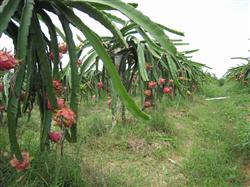
Detailed Explanation of Key Points in Dragon Fruit Cultivation and Management Techniques
How to manage dragon fruit well after planting? Please provide an introduction to management methods. Dragon fruit begins to flower and bear fruit about 12-14 months after planting, can flower 12-15 times per year, with the fruiting period from April to November, can be harvested 30-40 days after flowering, and individual fruit weight is generally 500-1000 grams. In the second year after planting, each column produces more than 20 fruits...
-
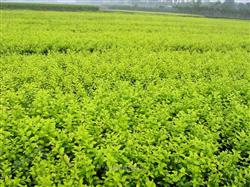
Detailed Explanation of Key Management Techniques for Lycium barbarum (Goji Berry) Cutting Seedlings
Lycium barbarum (goji berry) is a perennial deciduous small shrub in the Solanaceae family, about 2 m tall, with angular and thorny branches; leaves are simple, alternate or clustered on short shoots, lanceolate or rhombic, with entire margins; flowers are purple-red; the fruit is a berry, orange-red, ovate or oblong. Lycium barbarum prefers cool, moist, fertile soil, is cold-resistant, drought-resistant, and resistant to wind and rain, but is not tolerant of high temperatures, and in poor...
-
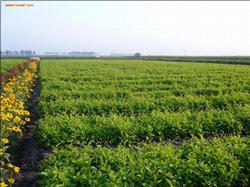
Detailed Explanation of the Techniques and Methods for Establishing Fast-Growing Goji (Wolfberry) Plantations
Goji has strong adaptability and can tolerate cold, drought, and salinity-alkalinity. It can grow in sandy loam, loam, loess, and sandy wasteland saline-alkali soils alike. Goji prefers a cool climate; it loves light and loves fertilizer. II. Propagation Methods. Goji flowers are solitary or several clustered in the leaf axils, with a pink or pale purple-red corolla bearing dark purple vein patterns; the pedicels are slender...
-
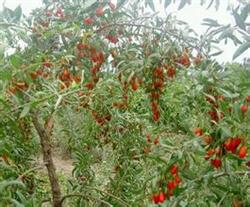
Detailed Explanation of Key Techniques for Soil and Fertilizer Management in Goji Berry Cultivation
Throughout the entire growth and development period of goji berries from seedling cultivation to harvest, the cultivator must carry out a series of technical management measures in the field, collectively known as field management. Field management is divided, according to the effective production cycle of pollution-free goji berry plants, into the young age period (1-4 years) and the mature age period (over 5 years). Field management begins with soil...
-
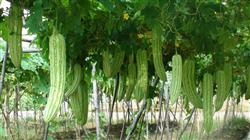
What are the key points of topdressing and irrigation techniques for bitter melon?
How should bitter melon be topdressed and irrigated? Please provide an introduction to the methods. Bitter melon bears fruit in many successive rounds and has a long harvest period, consuming large amounts of water and fertilizer over its lifetime. Therefore, strengthening fertilizer and water management is an important guarantee for achieving high yields. In addition to applying sufficient base fertilizer, heavy topdressing is generally applied during vine growth, flowering and fruiting, while less topdressing is needed at the seedling stage. The first topdressing...
-
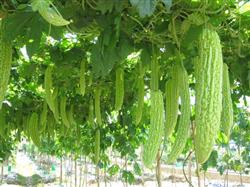
What are the key points of bitter melon cultivation and management techniques?
How do you manage bitter melon cultivation well? Please guide the management methods. Bitter melon cultivation can be managed by referring to the following methods: 1. Select good varieties. Choose varieties that are tolerant to fertilizer, heat, and storage and transport, with large fruit, thick flesh, high yield, and good quality, such as Zaofeng No. 3, Cuilu No. 1, Suiyou, Emerald, Dading bitter melon, Jiangmen...
-
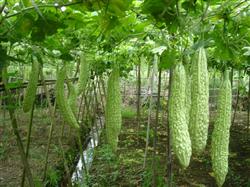
Key management techniques for bitter melon in the mid-to-late cultivation period
How should bitter melon be managed in the mid-to-late cultivation period? Please explain the management methods. The following methods can be used for managing bitter melon in the mid-to-late cultivation period: 1. Intertillage, weed control and hilling. From the seedling stage onward, bitter melon should be intertilled, weeded and hilled in a timely manner to prevent the soil around the vines from crusting. Generally, after transplanting and watering to help the seedlings establish, ...
-
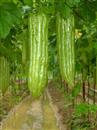
Key Management Techniques for Bitter Gourd at the Mid-Season Stage
How should bitter gourd be managed at the mid-season stage? Please explain the management methods. The mid-season stage of bitter gourd is the peak fruiting period, and how to obtain the largest harvest in a limited time is the issue vegetable growers care about most. You can refer to the following methods for management: 1. Topdressing is similar to that for cucumber; bitter gourd likes potassium fertilizer. Now that the weather is getting colder, ...
条件筛选