-
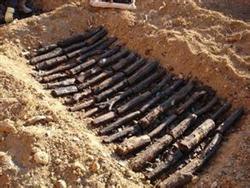
A Comprehensive Analysis of the Key Points of Gastrodia elata Cultivation Techniques
Summer and autumn are the seasons when Gastrodia elata enters vigorous growth and maturity, and they are also the critical period for Gastrodia elata production management. If it is left unattended or managed improperly, the yield and quality of Gastrodia elata will be seriously affected. 1. Drainage ditches for removing moisture. When Gastrodia elata enters the vigorous growth period, it is time to begin checking whether the drainage ditches at the cultivation site have standing water...
-
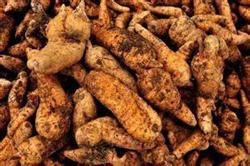
Detailed explanation of asexual propagation techniques for Gastrodia elata, cultivation methods for Chinese medicinal herbs
Cultivation techniques for Gastrodia elata f. glauca. Gastrodia elata f. glauca has good morphology, a high dry-to-fresh ratio (3 jin of fresh product dries into 1 jin of dried product), and excellent quality, and its price is three to four times higher than that of Gastrodia elata f. elata and Gastrodia elata f. viridis. The reason the price of Gastrodia elata f. glauca is high is also because, whether under artificial cultivation or in the wild, the regions and quantities of its distribution are very few. Therefore, artificial...
-

Identification and Control Techniques for Diseases and Pests of Atractylodes macrocephala
Southern blight: Also known as "white sugar rot", it damages the rhizome of Atractylodes macrocephala, with no obvious symptoms on the aboveground parts in the early stage of the disease. Later, as temperature and humidity rise, the mycelium penetrates through the soil surface, and white mycelium densely covers the rhizome and the surrounding soil surface. The top shoots of the affected plants wilt, droop, and eventually the entire plant dies. Disease characteristics: soil and planting material are...
-
New high-yield techniques for Atractylodes macrocephala: scientific cultivation boosts production
Cultivation techniques and seedling raising (1) Preparing the seedbed: For Atractylodes macrocephala, one month before sowing, turn the soil, cover it with a 30 cm thick layer of weeds, and burn the soil to sterilize it and prevent pests and diseases; immediately after burning, turn the grass ash into the soil. If the soil is not burned, the soil can be turned in the winter of the previous year so that it is fully weathered by freezing. The soil...
-
What are the key field management techniques for summer soybeans?
How should summer soybeans be managed? Please provide guidance methods. During the growth period of summer soybeans, intermittent rainfall is relatively heavy, causing most fields to suffer from waterlogging and waterlogging damage. In view of problems in production such as poor field drainage systems, insufficient attention to field management, and inadequate investment, all localities must unify their thinking, raise awareness, and quickly launch a surge in field management...
-
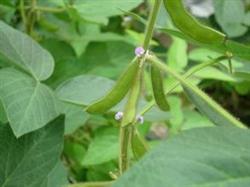
Management Techniques for Summer Soybean During the Flowering and Podding Stage
How should summer soybeans be managed during the flowering and podding stage? Please provide an introduction. During the flowering and podding stage of summer soybeans, the main goal is to achieve more flowers, earlier flowers, and uniform flowering, and to prevent flower and pod drop while increasing flowers and pods. This is the central task of management during this period. Management should be based on observing the seedlings, combining preservation and control. For high-yield fields, control should be the main approach, avoiding early canopy closure, and reaching...
-

What are the key management techniques for summer soybean in the mid-to-late growth stage?
How should summer soybean be managed in the mid-to-late growth stage? Please give an introduction. During the flowering and pod-setting stage, soybean growth enters a vigorous period, and vegetative growth gradually reaches its peak; this is the period when soybean needs the most fertilizer and water in its entire life cycle. Sufficient fertilizer and water, strong light and enough carbon dioxide help promote soybean flowering and pod-setting. The high yield of soybean...
-
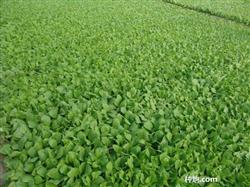
How to grow tobacco seedlings without soil? Key techniques explained
How to grow tobacco seedlings without soil? With the gradual application of soilless cultivation techniques in production, the tobacco soilless seedling technique - direct-sowing nutrient solution floating seedling cultivation (soilless seedling cultivation for short) - has been widely promoted in flue-cured tobacco production. Practice has shown that the new tobacco soilless seedling technique has the advantages of improving tobacco seedling quality, shortening the seedling period, extending the economic yield formation period of tobacco seedlings...
-
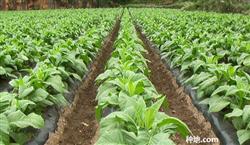
What are the key points of summer tobacco management techniques?
How should tobacco be managed in summer? Summer tobacco can be managed as follows: 1. Promote uniform seedling emergence. Check and fill in seedlings promptly. Pull out weak and small tobacco seedlings and those bitten to death or injured by underground pests, and replant new seedlings. When replanting, apply a small amount of nitrogen fertilizer or compound fertilizer in the hole, water thoroughly, and apply poisoned bait in the hole. For weak-growing tobacco seedlings...
-
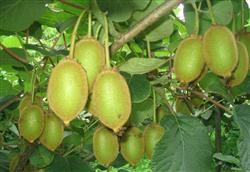
Kiwifruit Cultivation Techniques: How to Manage the Fruit-Swelling Stage in August?
How should kiwifruit be managed during the fruit-swelling stage in August? Please provide methods. During the fruit-swelling stage of kiwifruit in August, the following methods can be used for management: Vine tying. At this stage, when tying vines, new shoots should not be tied crossing each other. Except for a few that need to be tied upright, they should generally be tied at an angle to moderate the growth vigor. The vines should not be tied too loosely, to prevent...
条件筛选