Pangolin: Benefits and Uses, Scale Prices and Breeding Techniques Explained
The Price of Pangolin Scales
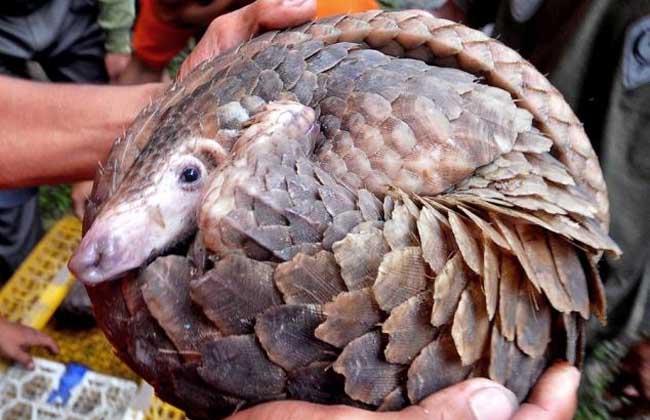
The market price of pangolin scales is about 7.5 yuan per gram, roughly 3750 yuan per jin. Prices vary with grade and market, being higher or lower accordingly. Note that the pangolin is an animal whose hunting is strictly prohibited by the state. In Southeast Asia, the purchase price of pangolins is only 70 to 100 yuan per kilogram, yet after being resold several times and reaching the black market, pangolin meat reaches 600-800 yuan per kilogram, and the price of pangolin scales is as high as 4000 yuan per kilogram. Driven by enormous economic interests, some lawbreakers attempt to smuggle these endangered animals and their products through passenger inspection channels to reap huge profits.
The Living Habits of Pangolins
1. Diet: The pangolin's main food is termites. It also eats ants and their larvae, bees, wasps and other insect larvae, etc. Its appetite is large; the stomach of one adult pangolin can hold up to 500 grams of termites. According to scientists' observations, in 250 mu of woodland, as long as there is one adult pangolin, termites will not cause damage to the forest. This shows that the pangolin plays a great role in protecting forests and embankments, and in maintaining ecological balance and human health.
2. Reproduction: The pangolin is a viviparous animal. Its estrus and mating period is mainly from April to May. During estrus, the male and female live together, and after mating they separate. The birthing period is from December to January of the following year. The gestation period is about 5-6 months. The male pangolin's estrus lasts a long time; the male is in estrus continuously and does not show periodicity. The female has 2-5 estrous cycles, with an estrous cycle of 12-25 days. After conception, the female no longer comes into estrus. During the estrus and mating period, the male searches everywhere for the female; during the estrus and mating period the male and female live together, and after mating they separate. There is one litter per year; under artificial breeding conditions, 3 litters can be produced in 2 years.
3. Burrow Building
① Summer burrow: The one lived in during summer is called a summer burrow. It is built on a ventilated, cool, relatively high hillside to prevent rainwater from flowing in. The tunnel inside the burrow is relatively short, about 30 cm, and its internal structure is relatively simple.
② Winter burrow: The one lived in during winter is called a winter burrow. It is built in a place sheltered from the wind and facing the sun, at a relatively low elevation. Its vertical height from the ground is more than 4 m. The internal structure of the burrow is relatively complex, with winding tunnels shaped like a gourd. At intervals there is also an earthen wall piled up with soil, and the length can reach more than 10 m. It also passes through two or three termite nests, making them its winter “granary”. At the end of the burrow there is a relatively spacious recess, lined with fine, soft weeds to keep warm. This is its “bedroom” for overwintering and is also used as a “nursery”.
Pangolin Benefits and Uses
[Nature and Flavor] Salty in flavor, slightly cold in nature.
[Meridians Entered] Liver and Stomach meridians.
[Effects] Unblocking meridians and promoting lactation, dispelling wind and removing dampness, activating blood and reducing swelling, stopping bleeding and regulating menstruation. It mainly treats carbuncles, sores and swollen toxins, wind-cold-dampness bi syndrome, blood stasis amenorrhea, abdominal masses and accumulations, and insufficient lactation, among other conditions.
1. Unblocking meridians and promoting lactation: Pangolin scales can promote milk secretion and lactation, and have a very good milk-promoting effect for insufficient milk secretion in postpartum women and for failure to produce milk caused by later environmental factors. Generally, about 10 grams can be added when stewing pig trotters. It can also treat breast swelling in women, lobular hyperplasia, and swelling caused by blocked milk ducts during lactation.
2. Menstruation-regulating effect: Pangolin scales also have the effect of activating blood and regulating menstruation, and are used to treat reduced menstruation, amenorrhea, dysmenorrhea, dark menstrual blood, etc. in women.
3. Dispelling wind and removing dampness: Pangolin scales have a very good therapeutic effect on waist, leg and joint pain, rheumatic bi pain, difficulty in bending and stretching, stroke paralysis, scabies, wind leprosy, etc. caused by wind-cold-dampness pathogens obstructing the meridians and qi and blood stagnation.
4. Activating blood and reducing swelling: For early-stage carbuncle swelling with redness, swelling, heat and pain, traumatic injuries, joint swelling, hypochondriac pain, hemiplegia, as well as various enlarged lymph nodes, tumor masses and various cancers, pangolin can be used for treatment.
5. Bleeding-stopping function: Grind prepared pangolin into powder. When using it, dry the bleeding area, then quickly and evenly sprinkle the pangolin powder on the bleeding site. It can achieve a rapid hemostatic effect and can also be used for nosebleeds, etc.
Breeding Techniques" />
Pangolin Breeding Techniques
1. Site setup: For the pangolin breeding site, it is advisable to choose a cool place near water and beside mountains. First dig out the topsoil, then mix quicklime, coarse sand and yellow mud into mixed soil. After drying in the sun, pour a smooth cement floor. Then use stones or bricks to build a 2 m high wall around the finished cement floor, and plaster the surrounding surfaces with cement to make them smooth, so as to prevent pangolins from digging holes and escaping. Then put the topsoil back into the site and pile it into a rockery. Trees, grapes, flowers and plants are planted on the mountain to regulate the microclimate within the site, achieving warmth in winter and coolness in summer. The rockery inside the wall must not exceed 1.5 m in height and must be more than 1 m away from the wall. Beside the rockery, build a small pool for pangolins to drink and swim. The size of the site is determined by the breeding quantity; generally 2 pairs are raised per 10 sq m.
2. Feed preparation: Pangolins feed exclusively on ants. Under artificial breeding conditions, it is very difficult to rely on manually catching termites for feeding, because each pangolin needs to eat 80-120 grams of termites per day, and generally one termite nest contains no more than 1000 grams. Moreover, termite nests are hard to find, and even if there is a nest, digging it out is especially labor-intensive. Therefore, the following measures must be taken.
① Artificial termite cultivation: The cultivation method is to dig pits in the ground, use rotting pine trunks, branches and leaves, and introduce termite species for large-scale reproduction.
② Artificially formulated feed: The formula of artificially formulated feed must be reasonable, and the proportions of various components must be appropriate, so that the formulated feed is palatable and readily eaten. Newly captured pangolins used for breeding initially refuse artificially fed feed, so they must be fed termites or black ants. Afterward, the feed proportion should be gradually changed until they slowly become accustomed to the artificial mixed feed. For the few that refuse food for a longer time, artificial force-feeding can also be carried out.
3. Feeding management: The rearing room should be disinfected regularly, drinking water and the soil of the manure pit should be changed frequently, and the food basin should be washed once a day. Do not use moldy feed. Feed once a day at a fixed time and in a fixed amount, with 150-200 grams of artificially formulated feed each time. After feeding, put the pangolin into the activity area to move around for 2-3 hours. Because pangolins are accustomed to a wild burrowing life, they have poor adaptability to changes in ground temperature differences. Once the temperature and humidity of the rearing room are not properly controlled, they are prone to catching cold and dying of pneumonia. The room temperature should be controlled at 18-25°C, and the relative humidity should be controlled at 60%-70%, so that the rearing room can basically achieve warmth in winter and coolness in summer, which is beneficial to the growth and development of pangolins.
4. Management of young: Newborn pangolins weigh 90-130 grams, have closed eyes, no scales, and are light white in color. They open their eyes at half a month of age. After 1 month, they gain 200-500 grams, and the scales gradually become keratinized, mostly dark brown. After 2 months, they can go out with the mother pangolin to forage. At 6 months, the young can weigh 1500-2000 grams and can leave the mother to live independently. Young born in the first year can reach sexual maturity in the second year and be bred for reproduction.
5. Disease prevention and control: When pangolins change from wild to domestic rearing, food and environmental conditions both change greatly, which sometimes causes temporary physiological maladaptation. Pile some disinfected river sand in the site, that is, mix 90% crystalline trichlorfon 1000-fold solution into the river sand. After mixing evenly, let the pangolins take sand baths. This can prevent disease occurrence and make the pangolin scales smooth and plump.
① Lice disease: Occurs on the body surface. Use 10 mL of lice-removing essence diluted in 3-4 kg of water for a medicinal bath on the body surface.
② Gastrointestinal disease: If pangolins develop diarrhea and eat little, then furazolidone, oxytetracycline or chloramphenicol should be added to the bait and fed continuously for 4-6 days.
③ Coccidiosis: Affected pangolins are generally emaciated and anorexic. Sulfur powder can be added to the bait (add 2-3 grams to 0.5 kg of bait) and fed continuously for 3-4 days.
6. Product processing: After killing the pangolin, remove all bone and flesh and dry it in the sun to obtain the shell (the scale sheet). Place the shell in boiling water and the scales fall off by themselves, then dry them in the sun. Or put the shell into lime water to rot away the skin and flesh, then wash with clean water and dry in the sun. During preparation, separate the pangolin scales by size. First heat sand in a wok, pour in the scales, then stir-fry with the sand until the scales bulge and turn golden yellow. Take them out, sieve off the sand, and while hot put them into a vinegar basin and stir evenly (use 200 mL of vinegar per 500 grams of scales). Take them out and dry them in the sun, and they are ready. After processing, they are called “jiazhu”.