Pepper Summer Planting Methods and Management Techniques
How to plant peppers in summer? Here is an introduction to the planting methods. For summer pepper planting, you can refer to the following methods for cultivation: Grow strong seedlings. Choose a plot with high terrain that has not grown solanaceous crops in the past two years, and build a seedling shed that is high in the north and low in the south. The south wall of the seedling shed is 0.6 m high, the north wall is 1.2 m high, the width is 1.5 m, and the shed length depends...
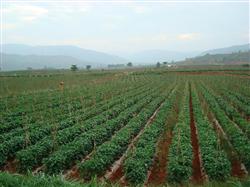
How to plant peppers in summer? Here is an introduction to the planting methods.
For summer pepper planting, you can refer to the following methods for cultivation:
Grow strong seedlings. Choose a plot with high terrain that has not grown solanaceous crops in the past two years, and build a seedling shed that is high in the north and low in the south. The south wall of the seedling shed is 0.6 m high, the north wall is 1.2 m high, and the width is 1.5 m. The shed length depends on the field area; generally, for planting 1/15 hectare of field, the shed length should be 5 m. The seedbed soil should use mature soil from the plough layer. For each square meter of seedbed, use 50 g of diammonium phosphate, mix it evenly with the soil, and spread it flat on the seedbed surface (do not use urea or ammonium bicarbonate). Before sowing, soak the seeds in warm water at 55°C for 15 minutes, stirring constantly. After the water temperature drops, continue soaking for 8 hours, then remove the floating seeds. After soaking, remove the seeds, dry them, and sow. The sowing period is about 80 days before transplanting, roughly between the Beginning of Spring and Rain Water. For planting 1/15 hectare of field, use 100 g of seed. Water once when sowing; sow at least 3 times to ensure even seed distribution. Because seedlings grown about 10 cm from the south wall are weak, use newspaper 10 cm wide to cover the 10 cm area along the base of the south wall and do not sow there. Use fine soil for covering, with a thickness of 4-5 mm. To make this easier to judge, place a few chopsticks evenly on the bed surface, then cover with soil until the chopsticks are neither fully exposed nor fully buried. After covering with soil, cover with plastic film, then cover with the shed film, and cover the film with straw mats. After about 20 days, when 50% of the seedlings have emerged, remove the plastic film in time.
During the seedling period, remove the mats promptly after the sun comes out each day and cover them again before sunset. Choose windless, warm sunny days and use the midday period to pull weeds. When the seedbed is dry, water lightly. If necessary, apply foliar fertilizers such as Jingjiu Feiba, Plant Power 2003, and potassium dihydrogen phosphate. In the later seedling stage, ventilate to lower the temperature and remove the film to harden the seedlings. Two days before transplanting, water the seedbed thoroughly to facilitate seedling removal.
Transplanting. Choose a plot with high terrain and good waterlogging resistance in summer for planting. Prepare the land and make beds, and cultivate on ridges. The ridge height is 35 cm and the ridge width is 60 cm. Use wide and narrow row planting, with a narrow row spacing of 60 cm and a wide row spacing of 80 cm. Before ridging, apply sufficient base fertilizer at one time. For each 1/15 hectare, apply 4000-5000 kg of organic fertilizer, 25 kg of diammonium phosphate, and 25 kg of nitrogen-phosphorus-potassium compound fertilizer. After the frost period ends (the end of April), choose a warm, sunny, windless day and transplant promptly. Use plastic film mulching and plant two plants per hole, with a plant spacing of 40 cm. Water immediately after transplanting, water twice in a row, and then carry out intertillage to raise the temperature and help the seedlings recover.
Growth period management. About 20 days after transplanting, promptly remove the first pepper. Promptly control pests such as tobacco budworm, cotton bollworm, aphids, red spider mites, and tea yellow mites. For tobacco budworm and cotton bollworm, it is advisable to use pesticides such as Lügongfu, Yitaibao, abamectin, and Bao'er in rotation and alternation, applying once every two days for 5-6 consecutive sprays. To control aphids, use imidacloprid-type pesticides. To control red spider mites and tea yellow mites, use abamectin, Saomanjing, and others. The main diseases of peppers are phytophthora blight and viral disease. The key to controlling pepper phytophthora blight is preventing waterlogging. Summer has a lot of rain; in order to drain water promptly, when ridging, dig drainage ditches every few beds for standby use. When diseased plants are found in the field, promptly spray pesticides such as Anke-manganese zinc and Ridomil. The key to controlling viral disease is controlling aphids well. When diseased plants appear in the field, choose virus A 500-fold solution for spraying, and combine it with an appropriate amount of foliar fertilizer. During the vigorous growth period of summer peppers, in years with heavy rainfall, there is basically no need to water. In years with little rainfall, water 3-4 times. When the first layer of fruit expands, apply 25 kg of compound fertilizer and 15 kg of urea per 1/15 hectare. After that, each time one crop of fruit is harvested, water and fertilize as appropriate according to the plant growth condition.
Click to get more pepper planting techniques
Click to get more vegetable planting techniques