-
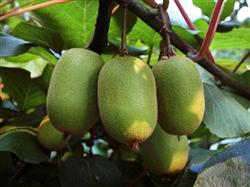
Kiwifruit Growing Techniques: Why Do Kiwifruit Turn Green?
Why do kiwifruit turn green? Here are the causes and control methods. The skin of a normally ripened kiwifruit should be brown or yellowish-brown, but due to factors such as climate and management, some fruit develop emerald green or bluish-green skin, with a milder flavor, reduced quality and poor storage life. Through comparative analysis, the author...
-
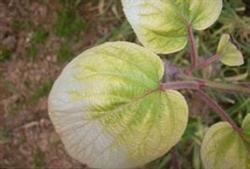
How to prevent and control kiwifruit chlorosis? These cultivation techniques you need to master
How to prevent and control kiwifruit chlorosis? Please introduce the prevention and control methods. Kiwifruit chlorosis can be prevented and controlled by referring to the following methods: Build the orchard in a suitable location and choose a good site. The soil pH of a production orchard should be between 5.5 and 7.5. The soil should preferably be light loam, medium loam, or well-aerated sandy loam, with organic matter content in the topsoil above 1.5%, and the groundwater level below 1 m. Avoid establishing an orchard on replanted land where perennial trees such as apple, pear, and peach have already been grown, or on heavy clay soil. It should also not be established in areas with a high groundwater level that are prone to waterlogging.
-
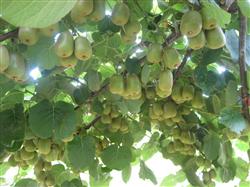
What should you pay attention to for kiwifruit in summer? Key points of cultivation techniques
What should you pay attention to for kiwifruit in summer? Please note that kiwifruit in summer should be protected against the following: Preventing wilting. During the high-temperature period in summer, kiwifruit leaves wilt, mainly for two reasons: first, high temperature and drought, mostly occurring from 12 noon to 4 pm on sunny days. They recover in the morning and evening, and it usually occurs over a large area. When this happens...
-
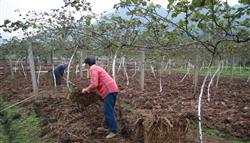
How to fertilize kiwifruit properly? Key points of planting and fertilization techniques
How to fertilize kiwifruit properly when planting? Please give guidance. When planting kiwifruit, you can refer to the following method for fertilization: kiwifruit absorbs large amounts of various inorganic nutrient elements, and after sprouting, the absorption of various nutrient elements differs at different stages such as leaf expansion, flowering and fruit development....
-
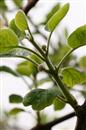
Kiwifruit Growing Techniques: How to Pinch Back Kiwifruit in Summer?
How to pinch back kiwifruit in summer? Please explain the method. For pinching back kiwifruit in summer, you can refer to the following methods: Pinching back young trees. For newly planted trees of the current year and 2-year-old young trees, shaping is generally not needed. After selecting and keeping 1 to 2 strong canes, pinch once when the cane grows to 80 cm, and then let it grow freely....
-
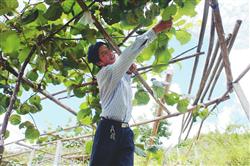
How to summer-prune kiwifruit? Detailed explanation of the key cultivation techniques
How to summer-prune kiwifruit? Please provide guidance. For growing kiwifruit, you can refer to the following methods for summer pruning: 1. Bud removal. If buds sprouting on the trunk, main canes and side canes are in improper positions or are too dense or overlapping, they should be removed at any time. The earlier the buds are removed, the better. Generally, on a vigorous fruiting mother cane, 5-6 fruiting canes can achieve high yield...
-
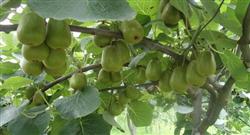
Kiwifruit Cultivation Techniques: How to Manage Kiwifruit in Summer?
How to manage kiwifruit in summer? Please provide guidance on management methods. The main summer management practices for kiwifruit are as follows: 1. Bud removal and pinching. Based on the principle of "early bud removal, timely pinching, and shortening of long branches," combined with the tree's vigor, kiwifruit should be pruned multiple times during the growing season to achieve high and stable yields...
-
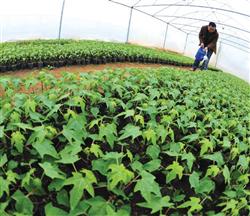
Detailed Explanation of Papaya Seedling Raising Methods and Planting Techniques
How to raise papaya seedlings? Please provide an introduction to the methods. The reference for papaya seedling propagation techniques is as follows: 1. Seed collection and seed treatment. Select trees in full fruit-bearing stage that are free from pests and diseases. Around mid-September each year, when most of the papaya fruit skin has turned yellow, harvesting can begin. Remove the seeds, discard empty and shriveled seeds, then soak them in a 0.1-0...
-
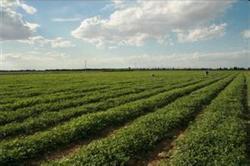
Detailed Explanation of Field Management Techniques for Licorice
Licorice is a plant in the Fabaceae family. The main types include Glycyrrhiza aspera, Glycyrrhiza glabra, and Glycyrrhiza inflata. Its dried roots and rhizomes are used as medicine, and the crude drug is called licorice. It has the effects of tonifying the spleen and boosting qi, relieving cough and reducing phlegm, clearing heat and detoxifying, easing tension and relieving pain, and harmonizing the properties of medicines. The cultivation techniques for licorice are introduced as follows. 1. Soil selection. Licorice...
-
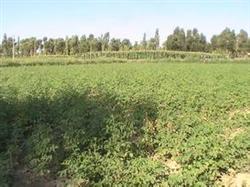
Detailed Explanation of Key Techniques for Licorice Seedling Raising and Transplanting
Licorice is an important medicinal herb. With the strengthening of national ecological and environmental protection, the use of wild resources has become very limited, and licorice seedling raising and transplanting techniques have become very important. Licorice is a perennial herbaceous plant of the Fabaceae family and is listed by the state as a key controlled medicinal herb. Glycyrrhizic acid, as a sweetener, is 200-300 times sweeter than sucrose, ...
条件筛选