Detailed explanation of cultivation techniques for transitioning wild Panax japonicus to domestic cultivation
(1) Propagation generally uses cuttings. Take mature branches and cut them into cuttings about 15 cm long with 5-7 leaves, and insert them into a sand bed. Plant spacing is 4 cm x 10 cm. Keep the sand bed moist; roots can grow in about 20 days for transplanting. Cuttings can be taken throughout the year, but rooting is easiest in spring and autumn. In summer, choose a shady area for the seedbed...
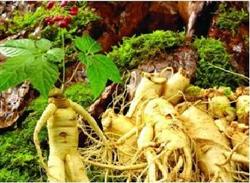 Bamboo ginseng, also known as bamboo seven, northern seven, and arhat seven, has the effects of invigorating blood and stopping bleeding, dispersing blood stasis and relieving pain, and tonifying and strengthening the body. It is used to treat weakness after illness, hemoptysis from pulmonary tuberculosis, amenorrhea, postpartum abdominal pain due to blood stasis, cold-dampness arthralgia, and traumatic injuries. Bamboo ginseng prefers a cold and shaded environment, likes fertilizer and tends toward moisture, and avoids direct sunlight. It grows in places with deep humus layers under old mountain forests at altitudes above 1200 m. In the wild, bamboo ginseng usually emerges in early to mid-May, fully unfolds its leaves in early June, and flowers in mid to late June. It fruits in early July, the fruit matures in mid to late August, and the aboveground plant withers in early September. Its artificial cultivation must conform to its ecological requirements. The key technical points are as follows: 1. Land preparation Bamboo ginseng is suitable for growing in fertile and loose soil. Mountain bubble soil or loam with a relatively thick humus layer is acceptable, with a slope of 15-20 degrees. Newly cleared land must be plowed twice, weeds and stones removed, and then raked fine and leveled. 2. Making beds and building shade frames Bed width is 120-140 cm, ditch depth is 25 cm, ditch width is 30 cm, and shade frame height is 140-160 cm. Shade level should be controlled at 60%-70% for seedling raising and 40%-50% after transplanting. 3. Fertilizer preparation Bamboo ginseng has a high fertilizer requirement and is relatively tolerant of fertilizer. Base fertilizer is commonly made by mixing fire soil, cake fertilizer, barnyard manure, phosphate fertilizer, or compound fertilizer. Pig and cattle manure must be thoroughly decomposed and finely broken up. Fertilizer application rates (per 667 sq m, the same below): 3000 kg of farmyard manure, 100 kg of phosphate fertilizer, and 100 kg of cake fertilizer. 4. Seedling raising and transplanting After treating seeds collected in the same year with gibberellin, sow in mid to late September, either by broadcasting or by dibbling evenly. Dibbling is superior. The row and plant spacings for dibbling are two specifications: 15 cm x 3 cm or 15 cm x 15 cm. Sow on the leveled bed surface and evenly cover with a 3-5 cm thick layer of fine soil. After 2 years of seedling raising, transplanting can be done. In autumn (early to mid-September), divide 2-year-old seedlings by size and transplant them in horizontal rows on the bed surface. In the first year after transplanting, the plant and row spacing is 14 cm x 14 cm. After one year, change the plant spacing to row spacing and remove 1 plant from the middle to make it 14 cm x 28 cm. Transplant again in the third year, with a final spacing of 28 cm x 28 cm. 5. Field management Weed 4-5 times throughout the year to keep the ginseng garden clean. Combine with weeding and loosen the soil 2-3 times. Soil loosening is generally done on sunny days. Apply topdressing 1-2 times. Topdressing mostly uses diluted human manure and urine, phosphate fertilizer, compound fertilizer, etc. Topdressing with human manure and urine is generally done at the flowering stage, with an application rate of 2000-3000 kg. At the full flowering stage, combine with soil loosening and apply 40 kg of superphosphate to promote fruit maturity and rhizome growth. 6. Pest and disease control Phytophthora disease is the main disease at the seedling stage, with an incidence rate of 15%-20%. When the disease occurs, the leaves appear water-soaked and dark green, as if scalded by boiling water, and soon all palmate leaves droop and the whole plant dies. It can be controlled by spraying the stems and leaves of the plants with an aqueous solution of amobam and dimethoate, once every 7 days, for 3 consecutive times. Root rot is not easily noticed in the early stage. When aboveground withering is found, the rhizome has already rotted. During the disease period, irrigate the roots with 1:1:300 Bordeaux mixture, promptly remove diseased plants, and sprinkle quicklime into the diseased holes. Pests include cutworms, white grubs, etc. During the growing period, they can be controlled by mixing dimethoate into applied human manure and urine. In the later period, combine with topdressing chemical fertilizer and mix a long-acting soil insecticide into the bed surface. 7. Harvesting and storage After harvesting, use fresh or dry in the sun. Store in a ventilated and dry place to prevent insect damage.