-
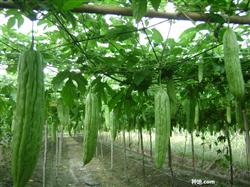
How to train the vines of bitter melon in arched sheds? Detailed technical points
How should bitter melon in arched sheds be vine-trained? Please advise. When visiting the countryside, I saw that many vegetable growers left too many lateral vines on their arched-shed bitter melon, resulting in poor air circulation and light penetration, slow plant growth, and a serious impact on increasing bitter melon yields. When asked why they did not train the vines, the growers said that bitter melon mainly sets fruit on lateral vines,...
-
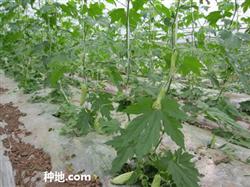
How to cultivate bitter melon in the open field? Detailed explanation of the key technical points
How to cultivate bitter melon in the open field? Please advise. The scientific name of bitter melon is Momordica charantia L. It is also known as liang gua, golden lychee, and balsam pear. It is a cultivated species of the genus Momordica in the Cucurbitaceae family, an annual climbing herbaceous plant. It originated in subtropical regions; it is cultivated in South China, North China, Central China, and Southwest China...
-
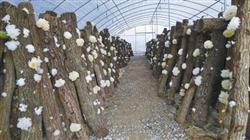
Production Methods and Technical Key Points for Tremella fuciformis Spawn
The producing areas of log-cultivated Tremella fuciformis include Tongjiang in Sichuan, Gutian in Fujian, Changbai Mountain in Northeast China, and the Huangshan area of old Huizhou. The traditional method for cultivating white wood ear (Tremella fuciformis) on logs (raw substrate) is: from March to April, inoculate the Tremella fuciformis spawn onto felled raw wood log sections in the field; after 80 to 90 days of mycelial colonization and cultivation, fruiting bodies appear in July and August. The raw...
-
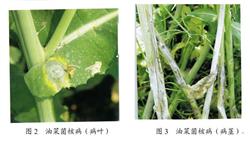
Key Technical Points for Integrated Control of Rapeseed Sclerotinia Stem Rot
Rapeseed sclerotinia stem rot is a major disease of rapeseed, widely distributed in China, especially common in the Yangtze River basin and the south. In ordinary years, incidence ranges from 10% to 30%, and in severe cases reaches 80%, causing very serious losses. Rapeseed sclerotinia stem rot is caused by a fungus, and it can occur at all stages of rapeseed growth, but it is most severe after flowering...
-
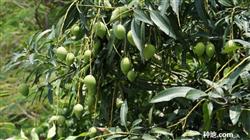
Scientific Fertilization Methods and Technical Key Points for Autumn Mango
How to scientifically fertilize autumn mango? Please advise. Autumn mango is a mango that flowers and fruits in autumn. In various parts of Maoming City, the autumn mango varieties grown include Guixiang Mango, Zihua Mango and Chuan Mango. Among the three varieties, Guixiang Mango has better quality and flavor, Zihua Mango is above average, and Chuan Mango is medium; they are suitable for local cultivation and show stable and high yields. To grow autumn mango well...
-
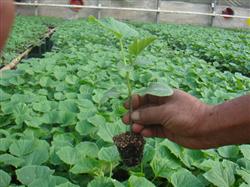
How to Graft Bitter Melon? Methods and Key Technical Points Explained
1. Grafting bitter melon is mainly aimed at preventing Fusarium wilt. The main grafting method is the approach grafting method, which is divided into: 1. Seedling approach grafting 2. Mature plant approach grafting. 1. Seedling approach grafting (currently the main grafting method used in seedling nurseries): Bitter melon and loofah are simultaneously disinfected, soaked and germinated, then sown separately in plastic seedling trays; the medium in the cells is best peat moss, or a self-mixed blend of 1 part decomposed compost and 3 parts river sand or clean soil. After sowing, place in a sunny, well-ventilated spot; when the first true leaf has fully grown and the second true leaf is about to appear, this is the suitable period for grafting. The steps are:
-

Detailed Explanation of Key Technical Points for Spring Planting of Sweet Corn
Everyone likes to eat fresh sweet corn. It has a large market capacity, high yield, and good economic returns. From sowing to fresh ear harvest is about 90 days, and it does not affect the planting of hybrid rice. It is a good grain-and-cash cropping model with a yield of a thousand jin of grain and a thousand yuan per mu. Summarizing recent cultivation practice, to grow spring sweet corn well, the following points should be grasped: 1....
-

Bitter Melon Seedling Stage Management Methods and Technical Key Points
How to manage bitter melon at the seedling stage? Please advise on the following points to note during the bitter melon seedling stage: 1. Intertillage, weeding and earthing up: generally after planting and watering to help the seedlings recover, carry out the first intertillage when the surface soil is slightly dry and no longer sticky. If there are strong winds or the soil is dry, water thoroughly once more before intertilling. The second intertillage can be done...
-
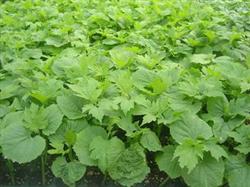
Detailed Explanation of Bitter Melon Seedling Raising Methods and Technical Points
How are bitter melon seedlings raised? Seeking advice. The seed coat of bitter melon is thick and hard. If the seeds are sown directly into the field, water cannot easily penetrate inside, germination is slow, seedlings emerge unevenly, and the rate of missing seedlings is relatively high. Therefore, seeds should be soaked and sprouted before sowing. (1) Sprouting method: first place the seeds in warm water at about 55...
-
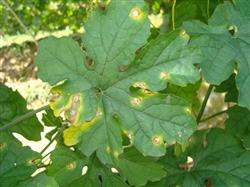
Detailed Explanation of Bitter Melon Seed Saving Methods and Key Technical Points
How can bitter melon yellow leaves be effectively prevented and controlled? Please advise. The symptoms of bitter melon yellow leaves are as follows: the leaves of the entire bitter melon plant turn yellow and lose their green color, the leaf veins dry up, the stems have fine cracks or split into 1-2 cm fissures, the top of the plant grows slowly and gradually shrivels, and when the plant's root system is pulled out, it is found that the root system is underdeveloped....
条件筛选