Detailed Explanation of Bitter Melon Seedling Raising Methods and Technical Points
How are bitter melon seedlings raised? Seeking advice. The seed coat of bitter melon is thick and hard. If the seeds are sown directly into the field, water cannot easily penetrate inside, germination is slow, seedlings emerge unevenly, and the rate of missing seedlings is relatively high. Therefore, seeds should be soaked and sprouted before sowing. (1) Sprouting method: first place the seeds in warm water at about 55...
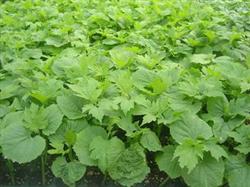
How are bitter melon seedlings raised? Seeking advice.
The seed coat of bitter melon is thick and hard. If the seeds are sown directly into the field, water cannot easily penetrate inside, germination is slow, seedlings emerge unevenly, and the rate of missing seedlings is relatively high. Therefore, seeds should be soaked and sprouted before sowing.
(1) Sprouting method: first place the seeds in warm water at about 55°C and soak for 10 minutes to sterilize and disinfect. Then soak them in clean water at room temperature for 4 to 5 hours, so that the bitter melon seeds fully absorb water and are prompted to germinate, then scoop out the seeds, wash off the gelatinous substance on the seed coat, let them dry slightly, then wrap them in clean, moist coarse cotton cloth and place them in a constant-temperature chamber at 28 to 33°C to sprout. If there is no constant-temperature chamber, the bitter melon seeds can be placed in a clay jar or iron bucket, with a 40 to 60 watt electric light hung above, heated day and night, and the mouth of the jar covered to maintain a constant-temperature environment. Place a thermometer in the clay jar or iron bucket so that the temperature is kept at 28 to 33°C. During sprouting, check every morning and evening; if the temperature in the jar is low, increase the light bulb, and if the temperature is too high, switch to a lower-wattage light bulb (if conditions permit, a temperature controller can be used to control the temperature, and the effect will be better). When the seeds are dry, spray water to keep the seeds moist. After soaking and heated sprouting, bitter melon seeds begin to germinate after 30 hours, and germination can be complete in 2 to 3 days. During the sprouting process, check diligently every day and pick out the seeds that have already germinated for sowing. If mold has grown on the surface of seeds that have not germinated, wash them promptly with clean water and then sprout them again, until germination is complete.
(2) Plastic film greenhouse: A greenhouse using plastic film as the transparent roof is called a plastic film greenhouse. Plastic film greenhouses can obtain a relatively complete spectrum, and the effect on promoting seedling growth is better than that of glass greenhouses. Plastic film greenhouses are easy to build, have diverse configurations, and are low in cost. At present, southern China mostly uses galvanized pipe arched sheds or 6-meter steel-bar arched sheds or bamboo-wood structure arched sheds.
(3) Other seedling-raising equipment: In southern China, shade seedling raising is commonly used in hot summers. At present, the most widely used is shade netting. Shade netting, also called cooling yarn or cold-resistant yarn, is a new type of lightweight, high-strength, aging-resistant, net-like agricultural covering material made mainly from polyolefin resin as raw material and woven through wire drawing. The width of the net is 900 mm, 1500 mm, 1600 mm, 2000 mm and 2200 mm, and the colors include black, silver-gray, white, etc., with a shading rate of 20 to 75%. As for the shading and cooling effect of shade netting, if covered in hot summer, the general surface temperature can be reduced by 4 to 6°C, and the soil temperature at 5 cm underground is 3 to 5°C lower than in the open field. Using black shade netting can reduce the temperature by up to 9°C. After shading, wind speed is slowed, humidity is increased, and soil evaporation is reduced, so it also has the effect of preserving moisture and preventing drought. In addition, its effect of preventing heavy rain is also very good.
Preparation of seedling-raising nutrient soil
Nutrient soil is the foundation that supplies the water, nutrients and air needed for the growth and development of bitter melon seedlings. Whether the seedlings grow and develop well is very closely related to the quality of the seedbed soil. Good seedbed soil should be fertile, warm, loose and fine. It is generally required that the organic matter content be 15% to 20%, the total nitrogen content be greater than 0.5%, the available nitrogen content be greater than 6×10⁻⁵, the available phosphorus content be greater than 10×10-5, the available potassium content be greater than 10×10-6, and the pH be about 6.5. Usually, taking 2/3 garden soil plus 1/3 decomposed pig, cattle and chicken manure can meet the above requirements.
Click to get more bitter melon cultivation techniques
Click to get more vegetable cultivation techniques