Scientific Fertilization Methods and Technical Key Points for Autumn Mango
How to scientifically fertilize autumn mango? Please advise. Autumn mango is a mango that flowers and fruits in autumn. In various parts of Maoming City, the autumn mango varieties grown include Guixiang Mango, Zihua Mango and Chuan Mango. Among the three varieties, Guixiang Mango has better quality and flavor, Zihua Mango is above average, and Chuan Mango is medium; they are suitable for local cultivation and show stable and high yields. To grow autumn mango well...
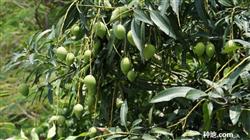
How to scientifically fertilize autumn mango? Please advise.
Autumn mango is a mango that flowers and fruits in autumn. In various parts of Maoming City, the autumn mango varieties grown include Guixiang Mango, Zihua Mango and Chuan Mango. Among the three varieties, Guixiang Mango has better quality and flavor, Zihua Mango is above average, and Chuan Mango is medium; they are suitable for local cultivation and show stable and high yields. The key to growing autumn mango well lies in scientific fertilization management. That is, a distinction must be made between young trees and fruiting trees, and different fertilization management measures must be adopted accordingly. Fertilization management for young trees is mainly to promote rapid growth of new shoots and expand the canopy, laying a foundation for early fruiting and high yield. The fertilization principle is to apply frequently and lightly, with heavier application before shoot emergence and lighter application after, progressing from dilute to concentrated and gradually increasing. In the first year after planting, starting from resumption of growth, fertilize once a month, applying 2.5-5 kg of manure water and 0.25 kg of urea per tree each time. From the second year onward, base the timing on the shoot stage; apply the shoot-promoting fertilizer 15 days before shoot budding, with a larger amount, applying half a picul of manure water plus 0.1-0.5 kg of urea per tree. After shoots emerge, topdress according to leaf color. Fertilization for fruiting trees is mainly to promote flowering and fruiting in the current year, striving for robust autumn shoot growth to lay a foundation for stable and high yields the following year. Focus on doing well with the shoot-promoting fertilizer, flower-strengthening fertilizer, fruit-strengthening fertilizer, and the work of protecting flowers and fruits.
1. Shoot-promoting fertilizer. This depends on the mango's fruiting load; its purpose is to restore tree vigor as quickly as possible and produce strong autumn shoots as fruiting mother branches for the following year. Therefore, the shoot-promoting fertilizer should be applied heavily, accounting for 60% of the annual fertilization amount, mainly organic fertilizer combined with quick-acting chemical fertilizers. Calculated at 50 kg of fruit per tree, apply 2 piculs of farmyard manure, 2-2.5 kg of peanut bran, 0.5-0.75 kg of urea, 1 kg of superphosphate, and 0.5 kg of potassium chloride. Fertilization should be done in August to September, after harvest for early-maturing varieties and before harvest for late-maturing varieties.
2. Flower-strengthening fertilizer. It should be applied 15-20 days before flowering, mainly with quick-acting nitrogen fertilizer and appropriately combined with phosphorus and potassium fertilizers. Apply 1 kg of urea, 1-1.5 kg of peanut bran, 0.5 kg of superphosphate, and 0.25 kg of potassium chloride per tree, applied in February to March of the following year.
3. Fruit-strengthening fertilizer. It should be applied after flower drop and in the early stage of fruit expansion, mainly with quick-acting nitrogen combined with phosphorus and potassium fertilizers, applied in May to June before physiological fruit drop. Apply 0.5 kg of urea, 0.25 kg of potassium fertilizer, and 2 piculs of manure water per tree. It should also be combined with foliar fertilization to make the fruit large and robust.
4. Protecting flowers and fruits. To do a good job of protecting flowers and fruits, the following three measures should be taken: (1) Remove flower clusters. This varies by variety; generally, when the flower cluster has not reached 7 cm, it should be removed. For monoembryonic varieties, because their sprouting ability is relatively strong, removal can be done at flowering, and flower clusters can also sprout from axillary buds. Removal of flower clusters should be carried out 1-2 times according to weather conditions. (2) Spray hormones. You can use 500 ppm paclobutrazol or 1500 ppm B9, starting in early November, spraying once every 20-30 days for 2 consecutive sprays, which can inhibit winter shoots and has a good effect of delaying germination of both flower buds and leaf buds. (3) During the tender shoot stage and fruit stage, disease and pest control should be done in a timely manner to ensure normal growth of branches and shoots and full, plump fruit. In addition, timely pruning and shaping should be carried out, cutting off diseased and pest-damaged branches, dead branches and weak branches, and thinning dense branches at the top and outer periphery to create ventilation and reduce the occurrence of diseases and pests, which is beneficial for achieving stable yields and a bumper harvest.
Click to get more mango cultivation techniques
Click to get more fruit cultivation techniques