Production Methods and Technical Key Points for Tremella fuciformis Spawn
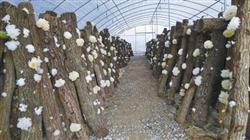
The producing areas of log-cultivated Tremella fuciformis include Tongjiang in Sichuan, Gutian in Fujian, Changbai Mountain in Northeast China, and the Huangshan area of old Huizhou. The traditional method for cultivating white wood ear (Tremella fuciformis) on logs (raw substrate) is: from March to April, inoculate the Tremella fuciformis spawn onto felled raw wood log sections in the field; after 80 to 90 days of mycelial colonization and cultivation, fruiting bodies appear in July and August. The raw...
 (1) Mother spawn and stock spawn: The isolated and purified Tremella fuciformis hyphae and Hypoxylon sp. hyphae are cultured separately in test tubes. When producing mother spawn, first take out the Tremella fuciformis hyphae and expand them to the required number of tubes. Then culture at 25°C until the Tremella fuciformis colony reaches a diameter of about 1 cm. At this point, inoculate a very small amount of Hypoxylon sp. hyphae into each test tube that has grown Tremella fuciformis hyphae, and once the two grow together, it can be sold or used for stock spawn production.
If the Hypoxylon sp. hyphae are inoculated first, because the Hypoxylon sp. hyphae grow quickly, they will rapidly cover the slant and quickly consume nutrients, making it difficult for the subsequently inoculated Tremella fuciformis hyphae to grow.
If the Hypoxylon sp. hyphae and Tremella fuciformis hyphae are inoculated simultaneously into one test tube, the same defect of too few Tremella fuciformis hyphae and too many Hypoxylon sp. hyphae will also occur.
Therefore, when producing Tremella fuciformis mother spawn (test tube spawn), one must pay attention to the order of inoculation and to controlling the ratio of the two.
(2) Tremella fuciformis and its "companion fungus": Among the edible and medicinal fungi that can be artificially cultivated, currently only Tremella fuciformis and Tremella aurantialba belong to this type. For the formation of their fruiting bodies, Tremella fuciformis requires not only pure Tremella fuciformis hyphae but also the help of a "companion fungus," namely Hypoxylon sp.; Tremella aurantialba requires not only pure Tremella aurantialba hyphae but also the help of Stereum hirsutum, and neither can be lacking. Under general conditions, the pure mycelium of Tremella fuciformis and Tremella aurantialba grows quite slowly and has very weak ability to decompose lignin and cellulose; they must respectively rely on Hypoxylon sp. hyphae and Stereum hirsutum hyphae to decompose the substrate and provide the nutrients needed for their growth and development, otherwise fruiting bodies cannot be formed. Therefore, when expanding and propagating mother spawn of Tremella fuciformis and Tremella aurantialba, the two corresponding mycelia must be transferred onto the same medium for mixed culture. Now, taking Tremella fuciformis as an example, the technique of mixed spawn production with two kinds of hyphae is introduced:
1. Slant mother spawn mixed inoculation method (Figure 33-1): Take one test tube of pure Tremella fuciformis hyphae mother spawn and one freshly prepared
PDA slant test tube, and together with inoculation tools, place them into an inoculation room (box). Perform transfer under aseptic operation, i.e., pick one piece of spawn about the size of a rice grain with medium and transfer it onto a blank test tube slant medium. After adding a cotton plug, culture at a constant temperature of 22-24°C for 6-8 days. When the Tremella fuciformis hyphae grow to a hydrangea-like mass about the size of a soybean, then together with the Hypoxylon sp. mother spawn, move them into the inoculation room (box). Under aseptic operation, use an inoculation spatula to inoculate a small piece of Hypoxylon sp. hyphae mother spawn at a distance of about 2 cm from the pure Tremella fuciformis hyphae mass. After 2 days of culture, white hyphae can be seen on the inoculated block; after about 7 days, a white fluffy mass forms and covers the pure Tremella fuciformis hyphae mass; after 12-15 days, red and yellow water droplets can be seen above the white fluffy mass, indicating success.
It should be pointed out that when using the slant mixed mother spawn of Tremella fuciformis and Hypoxylon sp. to expand and inoculate stock spawn, one should cut
off the front and rear ends of the slant, and take only the hydrangea-like pure white Tremella fuciformis hyphae and the nearby black-gray Hypoxylon sp. hyphae for transfer inoculation. Therefore, one slant mother spawn can only inoculate 1 bottle of stock spawn.
Figure 33-1 Slant mother spawn mixed inoculation method
Bottled sawdust stock spawn mixed inoculation method (Figure 33-2): If there are no pure Tremella fuciformis hyphae,
culture Tremella fuciformis spores to produce yeast-like conidial mother spawn, then inoculate it into Hypoxylon sp. mother spawn made from bottled sawdust medium, and obtain it through mixed culture.
According to the required inoculation amount, at a ratio of expanding 1 slant mother spawn of Hypoxylon sp. to 12-15 bottles of sawdust medium, place the Hypoxylon sp. mother spawn test tube, the sterilized bottled sawdust medium, and the inoculation tools together into the inoculation box. Under aseptic operation, use an inoculation spatula to pick one piece of Hypoxylon sp. mother spawn about the size of a soybean and inoculate it into the sawdust medium bottle. After inoculation is completed, move it to 24-26°C for culture, and after about 2 days white hyphae can be seen germinating on the inoculated block. After that, inspect every other day, and promptly detect and remove contaminated cultures. Generally, after about 11 days of culture, the Hypoxylon sp. hyphae can extend about 3 cm into the medium. At this time, gray-brown or black-brown secretions can be observed on the surface of the medium, indicating that the Hypoxylon sp. hyphae are growing vigorously, and the Tremella fuciformis yeast-like conidial mother spawn should be inoculated promptly.
At a ratio of 1:12-15, take the Tremella fuciformis yeast-like conidial mother spawn test tube and the cultured sawdust medium Hypoxylon sp. mother spawn, and place them together into the inoculation room (box). Under aseptic operation, use a sterile inoculation knife to cut open the surface layer of the Hypoxylon sp. hyphae, then use a sterile inoculation spatula to pick a small amount of Tremella fuciformis yeast-like conidia and inoculate them into the Hypoxylon sp. hyphae body (Figure 33-2). After mixing, move the bottle to 23-25°C for culture. After about 10 days, dense white hyphae can be seen growing at the site where the Tremella fuciformis yeast-like conidia were inoculated. After about another 18 days of culture, red and yellow water droplets appear; after about 25 days, twisted fruiting body primordia can be observed, indicating successful culture. One bottle of such mixed sawdust spawn can expand to inoculate 30-40 bottles of stock spawn (secondary spawn).
Figure 33-2 Bottled sawdust stock spawn mixed inoculation method
1. Tremella fuciformis yeast-like conidia; 2. Hypoxylon sp.; 3. Cut open the surface layer of Hypoxylon sp. spawn;
4. Pick Tremella fuciformis yeast-like conidia; 5. Inoculate into the Hypoxylon sp. spawn bottle
(3) Production of planting spawn: According to the growth quality of the stock spawn, the size of the fruiting base, and the depth to which the Tremella fuciformis hyphae "feed into" the substrate, determine the number of bottles to which each bottle of stock spawn should be expanded. To ensure quality, try to keep it within 40-60 bottles. If the stock spawn can be stirred very evenly so that the Tremella fuciformis hyphae and Hypoxylon sp. hyphae are mixed very uniformly, each bottle of stock spawn may also inoculate 100-200 bottles of planting spawn.
(4) Precautions: To produce excellent Tremella fuciformis spawn, in addition to paying attention to the above requirements such as aseptic operation, one must also pay attention to the following aspects:
1. Biological specificity: The pairing of Tremella fuciformis hyphae and Hypoxylon sp. hyphae also has specificity. Therefore, in order to produce effective Tremella fuciformis spawn, we must separately obtain the pure culture of Tremella fuciformis (including yeast-like conidia or Tremella fuciformis hyphae) and pure Hypoxylon sp. hyphae from the same wood ear log. Tremella fuciformis hyphae and Hypoxylon sp. hyphae obtained from different regions or from different wood ear logs (tree species) in the same region cannot be exchanged or combined at will. Otherwise, there is a possibility of causing degeneration. The effect of exchange and combination must be judged according to the colonization of Tremella fuciformis hyphae in the sawdust medium, as well as the size of fruiting base formation and the condition of fruiting body opening. If the Tremella fuciformis hyphae can continue to grow, form a fruiting base, and open smoothly, then they can continue to be expanded and used for production; otherwise, they cannot be used.
Inoculation ratio: Based on the fact that Tremella fuciformis hyphae grow relatively slowly while Hypoxylon sp. hyphae grow very quickly,
this characteristic means that during pure mixed culture, attention must be paid to the inoculation ratio of Tremella fuciformis hyphae to Hypoxylon sp. hyphae. To achieve control of the inoculation ratio of the two, the method of first culturing the Tremella fuciformis hyphae and then adding the Hypoxylon sp. hyphae is the most ideal. It would not be excessive to say that the inoculation ratio of Tremella fuciformis hyphae should reach 1000:1 (when Tremella fuciformis hyphae develop to a diameter of about 1 cm, there are thousands upon thousands of hyphae within it, and only a few Hypoxylon sp. hyphae need to be added). Otherwise, if there are very few Tremella fuciformis hyphae and the Hypoxylon sp. hyphae occupy an absolute advantage, fruiting will not occur in the future or the fruiting rate will be very low. If the method of adding yeast-like conidia to Hypoxylon sp. hyphae is used to produce spawn, then the number of Tremella fuciformis yeast-like conidia is very large; the number of Tremella fuciformis yeast-like conidia per milliliter of culture liquid can reach 1 billion to 10 billion. When yeast-like conidial liquid is added to sawdust medium in which Hypoxylon sp. hyphae are growing, because the yeast-like conidia are dispersed among the sawdust particles and not concentrated, and not all yeast-like conidia can germinate into hyphae, therefore, using this method to produce Tremella fuciformis spawn is not very ideal. If Tremella fuciformis hyphae cannot be obtained, the Tremella fuciformis yeast-like conidia can be concentrated and spread on the surface of sawdust medium on which Hypoxylon sp. hyphae have grown, so that the Tremella fuciformis yeast-like conidia can germinate relatively easily.
3. Culture conditions: The culture conditions for pure Tremella fuciformis spawn (yeast-like conidia or Tremella fuciformis hyphae)
and those for Tremella fuciformis stock spawn and planting spawn (mixed culture) are somewhat different. Therefore, attention must be paid to the conditions of mixed culture so that both Tremella fuciformis hyphae and Hypoxylon sp. hyphae can adapt to the same medium and the same culture conditions. For example, control the temperature within the range of 20-28°C (preferably 23-25°C). The water content of stock spawn is controlled at 65%, and the water content of planting spawn is controlled between 65%-70%. Because the stock spawn medium is slightly dry, it is beneficial to the growth of Tremella fuciformis hyphae and not prone to producing yeast-like conidia, which is beneficial for expansion into planting spawn; while the planting spawn is slightly wetter, which is beneficial to the production and reproduction of yeast-like conidia. This conidial liquid penetrates deep into the sawdust medium and mixes uniformly with the Hypoxylon sp. hyphae, which can compensate for the defect that Tremella fuciformis hyphae do not "feed" deeply and only grow on the surface layer, making the fruiting rate higher and more stable.
It is also necessary to determine, according to the growth condition of the fruiting base of each bottle of stock spawn, whether that stock spawn can be expanded into planting spawn and how many bottles of planting spawn each bottle should be expanded into. Any combination that, after mixed culture, can make Tremella fuciformis yeast-like conidia germinate, allow Tremella fuciformis hyphae to continue growing, form a fruiting base, and allow the fruiting base to keep growing, is spawn with practical application value. Stock spawn should be strictly selected; where the fruiting base is large, there is much Tremella fuciformis hyphal growth (deep feeding), and the Hypoxylon sp. hyphae are robust and vigorous, the number of bottles expanded to after stirring will be greater. Conversely, it should not be expanded into planting spawn. To be safer, it is advisable to expand each bottle to 40-60 bottles. In short, every newly inoculated bottle of medium must have both Tremella fuciformis hyphae and Hypoxylon sp. hyphae, or yeast-like conidia and Hypoxylon sp. hyphae. Alternatively, after stirring the stock spawn, plug it with a cotton plug and culture for another 3-5 days so that the broken Tremella fuciformis hyphae regenerate new hyphae; only in this way can the quality of the planting spawn be guaranteed.
4. Purification and rejuvenation: Prevent the spawn from declining in vitality due to long-term use, showing symptoms such as yellowing fruiting bodies, difficulty in opening, and poor regenerative capacity. According to the production method, select Tremella fuciformis strains of different spawn ages and different physiological maturity. For example, for log cultivation, select strains with young spawn age, low maturity, vigorous Tremella fuciformis aerial hyphae (white fluffy masses), and not easily gelatinized; for bottle cultivation, select strains with older spawn age, high maturity, small white fluffy masses, and easy gelatinization and fruiting body opening. For Hypoxylon sp. hyphae, select strains with strong wall-climbing ability, long feather-like branches, and strong wood-decomposing ability as strains for log cultivation; while for substitute substrate cultivation, strains with slightly "weakened" Hypoxylon sp. hyphae are better, otherwise the entire bottle or bag will be full of Hypoxylon sp. hyphae, and the limited nutrients will all be consumed by the Hypoxylon sp. hyphae, so that the Tremella fuciformis will instead not grow large.
If stock spawn has been stored for too long, the fruiting base is very large, the nutrients of the medium are excessively consumed, and the vitality of the spawn has already declined, it should be discarded and not used. Otherwise, the effect of use will be inferior to spawn obtained by further expanding and culturing planting spawn of the appropriate age.
5. Preservation of mother spawn: Mother spawn should be stored in a refrigerator at 4-15°C. Transfer once every 1-3 months. If stock spawn is not to be used immediately, it should also be stored in a low-temperature, dry place. Planting spawn should be planted as early as possible within 45 days after the bottle is full.
If pure Tremella fuciformis spawn (Tremella fuciformis hyphae and yeast-like conidia, commonly known as budding spores) is preserved alone for a long time, the fruiting bodies grown tend to turn yellow; while if mixed-cultured with "Hypoxylon" hyphae and preserved for a long time, the fruiting bodies are less likely to turn yellow. In order to obtain snow-white Tremella fuciformis, spawn should be collected from snow-white Tremella fuciformis (wild or cultivated). After preserving the spawn for more than 3 years, attention should be paid to the issue of color.