Bitter Melon Seedling Stage Management Methods and Technical Key Points
How to manage bitter melon at the seedling stage? Please advise on the following points to note during the bitter melon seedling stage: 1. Intertillage, weeding and earthing up: generally after planting and watering to help the seedlings recover, carry out the first intertillage when the surface soil is slightly dry and no longer sticky. If there are strong winds or the soil is dry, water thoroughly once more before intertilling. The second intertillage can be done...
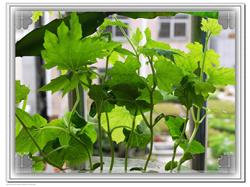
How to manage bitter melon at the seedling stage? Please advise
At the bitter melon seedling stage, note the following points:
1. Intertillage, weeding and earthing up: generally after planting and watering to help the seedlings recover, carry out the first intertillage when the surface soil is slightly dry and no longer sticky. If there are strong winds or the soil is dry, water thoroughly once more before intertilling. The second intertillage can be carried out 10-15 days after the first intertillage. During this intertillage, take care to protect the new roots; it should be shallow rather than deep. Each intertillage can be combined with applying some high-quality farmyard manure: such as cake fertilizer, various types of poultry feathers, and decomposed chicken manure, pig manure, etc. After trellising, when the vines have extended to more than 50 cm, the root system has basically spread throughout the entire row spacing, so intertillage is generally no longer suitable. However, be sure to pull out weeds in time. During the first intertillage, if missing seedlings or weak, diseased seedlings are found, replant them in time to ensure a full stand.
2. Trellising and pruning: when the seedlings grow to about 20 cm, they need to be trellised and the vines guided. There are two trellising methods: the flat trellis and the A-frame trellis. The flat trellis has good ventilation and airflow, bears more melons, and gives higher yields. Flat trellises are further divided into connected flat trellises and separate flat trellises. For a connected flat trellis, generally in the melon rows, a wooden stake is set every 3-4 m, and small bamboo, small wooden sticks or nylon netting, etc. are used on top to connect the stakes of the whole field into one continuous sheet, with the trellis top about 2 m above the ground; a separate flat trellis generally uses every two rows of melons as one trellis, with a trellis height of 1.5-2 m. All trellises must be made firm to avoid being blown down by wind, which would damage the melon seedlings and affect yield.
Click to get more bitter melon growing techniques
Click to get more vegetable growing techniques