Key Technical Points for Integrated Control of Rapeseed Sclerotinia Stem Rot
Rapeseed sclerotinia stem rot is a major disease of rapeseed, widely distributed in China, especially common in the Yangtze River basin and the south. In ordinary years, incidence ranges from 10% to 30%, and in severe cases reaches 80%, causing very serious losses. Rapeseed sclerotinia stem rot is caused by a fungus, and it can occur at all stages of rapeseed growth, but it is most severe after flowering...
Rapeseed sclerotinia stem rot is a major disease of rapeseed, widely distributed in China, especially common in the Yangtze River basin and the south. In ordinary years, incidence ranges from 10% to 30%, and in severe cases reaches 80%, causing very serious losses.
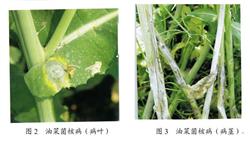
Rapeseed sclerotinia stem rot is caused by a fungus, and it can occur at all stages of rapeseed growth, but it is most severe after flowering. Infection at the seedling stage causes seedling rot, death or poor growth; at the adult plant stage, leaves show large, irregular leaf spots and defoliation, and infected stems form spindle-shaped, elongated or stem-girdling large lesions. In wet weather, the diseased parts become wet and rotted, growing white cottony mycelium, known as "white stalks" or "moldy stalks." Infected pods also become wet and rotted. Under humid conditions, the production of large amounts of white cottony mycelium from the diseased parts and the later formation of black sclerotia resembling mouse droppings (especially in the middle and lower parts of the stem) are the two important characteristics of sclerotinia stem rot.
The pathogen overwinters as sclerotia in the soil, in seeds and in diseased winter rapeseed plants. Sclerotia can survive for 4 to 10 years under dry conditions, but rot within 30 days in water at 30°C. Overwintering sclerotia begin to form apothecia in February to March, successively producing large numbers of ascospores. This period happens to be the flowering stage, when rapeseed is most susceptible to the disease, and if rainy weather occurs again, the disease may become epidemic and cause disaster. For this reason, practicing crop rotation, especially paddy-upland rotation; not continuous cropping and not rotating with cruciferous vegetables such as Chinese cabbage and radish, is the primary control measure.
In addition, the pathogen itself has weak parasitism, and can only infect through wounds or natural openings, and only infects old and yellow leaves as well as petals and anthers. According to surveys, the rate of petals carrying the pathogen can reach more than 90%, and fallen flowers thus become a very important means of transmission. Therefore, it is necessary to comprehensively adopt two aspects of technology: agricultural measures to prevent the disease and spraying chemicals to control the disease.
Agricultural measures with disease-preventing effects include: rational fertilization, balanced application of nitrogen, phosphorus and potassium fertilizers, increased application of microfertilizers such as boron, manganese and zinc, steady application of bolting fertilizer (only 20% of the total fertilizer application), and no use of undecomposed organic fertilizer; planting disease-resistant varieties, generally the mustard type is relatively disease-resistant; opening ditches for drainage to reduce waterlogging damage and rational close planting to lower field humidity; and timely removal of old leaves, yellow leaves and diseased leaves, deep burial or composting to reduce the pathogen.
For chemical control, 40% dimethachlon wettable powder at 1000 times dilution, or 50% procymidone (Sumilex) wettable powder at 50 grams per mu, or 50% iprodione (Rovral) wettable powder at 100 grams per mu can be used, diluted with water for spraying. There are also reports that new chemicals such as prochloraz (Shibaike), picoxystrobin, and boscalid, as well as some compounded chemicals such as 25% carbendazim?triadimefon (Chimeiqing) wettable powder and thiram?sclerotium wettable powder, have good control effects and can be used in rotation. It is recommended to apply the first treatment at the full flowering stage of rapeseed, and spray the second time at an interval of 7 to 10 days.