How to cultivate bitter melon in the open field? Detailed explanation of the key technical points
How to cultivate bitter melon in the open field? Please advise. The scientific name of bitter melon is Momordica charantia L. It is also known as liang gua, golden lychee, and balsam pear. It is a cultivated species of the genus Momordica in the Cucurbitaceae family, an annual climbing herbaceous plant. It originated in subtropical regions; it is cultivated in South China, North China, Central China, and Southwest China...
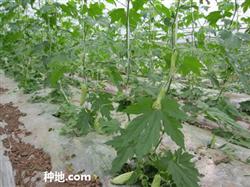
How to cultivate bitter melon in the open field? Please advise
The scientific name of bitter melon is Momordica charantia L. It is also known as liang gua, golden lychee, and balsam pear. It is a cultivated species of the genus Momordica in the Cucurbitaceae family, an annual climbing herbaceous plant. It originated in subtropical regions; it is cultivated in South China, North China, Central China, and Southwest China. Bitter melon is mostly eaten as an immature fruit; the flesh is crisp and tender, the bitterness is moderate, and it is rich in nutrients, stimulating the appetite. It is not only rich in nutrients but also has relatively high medicinal value. Bitter melon is cool in nature and bitter in taste; it clears summer heat and relieves fever, brightens the eyes, and removes toxins. Eating bitter melon often in summer has the effect of cooling the blood and removing toxins, and can prevent heatstroke, laryngitis, gastroenteritis, dermatitis, and other conditions, so it is deeply loved by everyone. Based on many years of cultivation experience, its cultivation techniques are introduced as follows.
I. Raising seedlings. Cultivating strong seedlings is an important foundation for obtaining high yield and high quality in bitter melon cultivation. Bitter melon seeds have a thick coat and hard shell; if sown directly and then exposed to low-temperature rainy weather, they are prone to mold and rot, resulting in gaps and missing plants in the field. Therefore, in production, germination acceleration before sowing is generally adopted. Conventional germination acceleration methods often take 7-8 days to sprout. A rapid germination acceleration method is introduced below.
1.1 Germination acceleration. Before soaking the seeds, first sun-dry the seeds for 4-5 hours, then soak them in 54-56°C warm water for 10 minutes while stirring constantly, then soak them in cold water for 8-10 hours and remove. After soaking, wipe the seeds dry with a dry towel, then use pliers to crack open 1/3 or 1/2 of the seed to facilitate sprouting, but do not damage the seed. Then wrap the seeds in a wet towel and place them in an incubator; at 30-32°C, they will sprout in about 36 hours. If there is no incubator, the following method can be used: for every 50 grams of seeds, use 20 grams of sifted stove ash; mix the stove ash with boiling water, with a ratio of ash to boiling water of about 1:0.7, until it forms a ball when held in the hand and crumbles when the hand is released. Then mix the bitter melon seeds with the hot coal ash, put them into a basin or other container. Cover the top with rice straw and place it in a place with a heat source for germination acceleration. After 10 hours, turn the seeds in the basin over from top to bottom once. If they are dry, evenly spray with 32°C warm water and continue germination acceleration; they will sprout in about 24 hours.
1.2 There are two sowing methods: the seedling-pricking sowing method and the non-seedling-pricking sowing method. In the seedling-pricking sowing method, first prepare the seedling-raising site, water the bottom water, and after the water seeps down, scatter a layer of dry fine soil before sowing. Scatter the pre-germinated seeds onto the seedbed, trying to avoid the seeds colliding with each other, then cover with fine dry soil 3-5 cm, cover tightly with plastic film, and maintain the temperature at 30-35°C; seedlings will emerge in about 1 week. When most seeds emerge and push through the soil, ventilation should be carried out in time: uncover the film during the day and cover it again at night. When the two cotyledons are flat and spread out, the seedlings can be pricked out. Prepare the seedling-pricking seedbed well, plant the seedlings at 10 cm square spacing, then water, taking care to maintain a certain temperature. Non-seedling-pricking sowing method: after sowing, no further seedling pricking is carried out. First, sow the germinated seeds by dibbling at 10 cm square spacing on a seedbed with sufficient bottom water, then grab dry fine soil to cover them, forming a mound, one mound per seed, with the mound 3-5 cm high. This helps expand the area for light reception and heat absorption and promotes seedling emergence. Then spread a layer of soil evenly over the whole seedling bed.
1.3 Seedling stage management. After sowing, the main task is to keep warm and moist to promote seed germination and sprouting. During the day, the temperature should be maintained at 30-35°C, and at night it should not be lower than 13-15°C. The film used for warmth and moisture retention should be fastened tightly, with no air openings left, to strengthen moisture retention and cold protection. After emergence, the temperature can be appropriately lowered to promote robust seedling growth. Because bitter melon is a heat-tolerant crop, seedlings in protected cultivation in spring mostly grow slowly, so the number of daylight hours should be increased. One week before planting, ventilation can be increased until all coverings are removed, strengthening the seedlings' stress resistance training to improve their adaptability. For water management, under normal conditions, no further watering is needed during the seedling stage; soil moisture is mainly maintained by the bottom water of the seedbed and by covering with soil in stages to preserve moisture. If the soil is relatively dry, moist soil can be used as cover; if the soil moisture is relatively high, some fine dry soil can be used as cover; if the soil is too dry, appropriate spraying with water can be done. When the seedlings reach 4-5 leaves, they are ready for planting. One week before planting, water thoroughly and at the same time carry out stress resistance training so they can adapt to the external environment after planting.
II. Planting. In North China, planting can generally be done after the late frost in early May. Bitter melon has a well-developed root system and many lateral roots, and the vine is tall, so it is suitable for cultivation on loose, fertile sandy loam with convenient drainage and irrigation. Before planting, apply sufficient base fertilizer, using 1000-1500 kg of decomposed organic fertilizer per mu. Plant with soil attached, generally with a row spacing of 0.8 m and a plant spacing of 0.5 m, planting 1600-1800 seedlings per mu. The method of planting seedlings on small high ridges covered with plastic film can be used, or the method of planting seedlings in furrows and watering with hidden water can be used for planting.
III. Management after planting. Appropriate topdressing and strengthened intertillage to promote growth and development are key measures in seedling management after planting, early harvest, and high yield. In North China, in the early stage of seedling growth, if the soil is dry, viral disease symptoms are likely to appear, plant growth stagnates, the seedlings remain small, and they do not grow vigorously. Water and fertilizer should be strengthened to promote the melon vines onto the trellis and close the rows as early as possible.
1.1 Fertilizer and water management: Immediately after planting, water for establishment; one week after planting, water to help the seedlings recover, then carry out intertillage and seedling restraint. End seedling restraint after about 10 days, and apply topdressing with water to promote growth. After that, water every 6-7 days. During the flowering period, appropriately restrain the seedlings and carry out intertillage to preserve moisture. After the first melon sets, water again to promote vine growth. During the full fruiting period, watering every 5-7 days is appropriate. Bitter melon seedlings are not tolerant of fertilizer, so topdressing should be applied lightly. After fruiting begins, fertilizer should be supplied continuously; combined with watering, apply topdressing once every 10-15 days, each time applying 10 kg of urea per mu or 15-20 kg of compound fertilizer. During the peak fruiting period, apply superphosphate 2-3 additional times, 10-20 kg each time, to prevent premature aging and extend the harvest period. If topdressing is insufficient during the peak fruiting period, the plants will be weak in growth, the lateral branches thin, the leaf color rather yellow, fruiting reduced, the fruits small, the yield low, the quality poorer, and the bitterness stronger.
1.2 Trellising and pruning: Bitter melon vines are slender and long, so trellises should be set up and vines tied in time to avoid damage from strong winds. Because female flowers on the lateral vines of bitter melon appear relatively late, the lateral vines at the base should be removed to give play to the advantage of the main vine bearing fruit. Otherwise, the lateral vines grow vigorously, which not only wastes the plant's nutrients but also leads to excessive vegetative growth, causing fruit abortion, premature aging, and other phenomena. Generally, when the main vine grows to 50-70 cm, begin pruning the vines, remove all lateral vines at the base, and keep only the main vine up the trellis. After the main vine is on the trellis, if a lateral vine has no female flowers, remove the lateral vine from the base; if it has female flowers, promptly pinch off the growing tip to protect the fruit. In the late growth stage, in order to improve ventilation and light penetration, promptly remove old leaves, diseased leaves, yellow leaves, and small lateral branches.
IV. Harvesting. Bitter melon is eaten as an immature fruit (melon), so it should be harvested in time in production. Generally, 12-15 days after flowering is the harvest period. The appearance traits indicating readiness for harvest are: the fruit's strip-like or tumor-like protrusions are plump, the color at the top of the fruit becomes lighter, the corolla is withered and shed, and the fruit skin is glossy. Bitter melon seeds develop quickly, and the fruit also reaches physiological maturity rapidly. If harvested too late, the top of the melon turns yellow or orange-red, the bitterness becomes milder, the flesh becomes soft, and the quality decreases; if harvested too early, the melon has not fully grown, the bitterness is strong, the quality is poor, and the yield is low. When harvesting, it is best to cut it off from the base of the fruit stalk with scissors, so as to avoid tearing the plant or leaves when picking by hand.
Click to get more bitter melon cultivation techniques
Click to get more vegetable cultivation techniques