Correct Methods and Technical Key Points for Fertilizing Winter Rapeseed
Rapeseed "flowering but not seeding," also known as stunted non-seeding. That is, from the onset of the disease in the plant until maturity, it continues to bloom successively, but cannot set seed normally. It is a physiological disease caused by planting rapeseed on boron-deficient soil, mainly occurring in Brassica napus varieties, but in recent years it has also been found in Brassica rapa rapeseed. After the disease occurs...
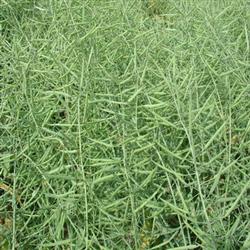 Intertillage and weeding: Most late-planted rapeseed is transplanted in the gaps between rains. Because the soil is severely compacted, intertillage should be carried out in a timely manner, loosening and enlivening the soil to promote root growth. For transplanted rapeseed, intertillage removes field weeds, deepens the topsoil, and breaks up clods. When the rapeseed has survived and turned green, deep hoeing is appropriate during intertillage, loosening and aerating the soil, and combined with intertillage, the three ditches should be cleared well, so that the compartment ditch, surrounding ditch, and waist ditch are all connected, allowing smooth drainage and preventing waterlogging in the field, thereby raising soil temperature.
Skillfully apply and heavily apply seedling-promoting fertilizer: After transplanting and turning green, seedling-promoting fertilizer should be applied in a timely manner. The earlier the better. Generally, per mu use 3-5 kg of urea, 5 kg of potassium chloride, 300-500 g of boron fertilizer, mixed with 750-1000 kg of dilute human and livestock manure water fertilizer, and apply 1-2 times, or per mu use 45-50 kg of ammonium bicarbonate, applied to promote rapid turning green, making full use of the higher temperatures after clear weather to promote early rooting and more leaf growth in rapeseed.
Heavily apply winter fertilizer: Winter fertilizer is mainly organic fertilizer. For fields of medium fertility, apply 1000-1500 kg of pig and cattle pen manure per mu, 10-12 kg of superphosphate, and 5-7.5 kg of ammonium bicarbonate. Mix the three fertilizers together and apply them between the rapeseed rows. Combined with intertillage and hilling, this plays a role in keeping warm after hilling, promoting roots, protecting roots, and increasing fertility.
Foliar spraying of phosphate fertilizer: Foliar spraying of phosphate fertilizer solution can enhance its cold resistance. How to grow rapeseed to achieve high yield: The specific method for preparing phosphate fertilizer solution is to take 2 kg of finely ground phosphate fertilizer per mu, place it in a container, add an appropriate amount of clean water to soak, take it out after one week, add 200 g of urea per mu, and spray until the leaves begin to drip. If the container is small and the prepared phosphate fertilizer solution is insufficient, a small amount of clean water can be added. To reduce evaporation of the solution and supply the maximum absorption amount to the leaves, spraying should be done on sunny afternoons when there is no strong wind, with an interval of one to two weeks. According to practical observation, on the third day after spraying, some leaves that had been frozen yellow turned green again, and the growth rate accelerated rapidly. After the second spraying one week later, the leaves had increased from the original four or five to eight or nine, and the leaf color was emerald green, the leaf stems strong, and the leaves thick, upright, and spread out.
Control early bolting: Because late-planted rapeseed has weak vegetative growth before winter, it is prone to early bolting and early flowering, which can be controlled according to the situation. First, carry out deep intertillage on fields with better growth and sufficient fertility. Second, for rapeseed fields with poorer growth, the method of heavily applying nitrogen fertilizer can be used, which can effectively delay vegetative growth, increase growth amount, and prevent the occurrence of early bolting and early flowering.
Spring fertilizer for strong seedlings: Do a good job of spring fertilization for strong seedlings of late-planted rapeseed; this is an important measure for achieving high yield in late-planted rapeseed. Generally, after the Beginning of Spring, apply 8-10 kg of urea per mu, and topdress another 5-7 kg at the bolting stage, striving to build a high-yield seedling structure. Relying on heavy application of spring fertilizer to strengthen the seedling structure achieves the goal of high yield. Strictly prevent downy mildew from occurring after spring in late-developing rapeseed. At the bolting and flowering stages, pesticides such as Miebingwei and Hekuling can be selected for control.