How to manage sweet persimmon after harvest? Detailed explanation of key technical points
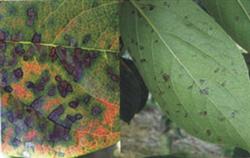
Anthracnose is the main disease of persimmon, mainly harming fruit, branches and shoots, and the trunks and branches of seedlings. It causes a large amount of fruit drop and the death of branches. When the disease is severe, fruit drop can reach 20%-40%, seriously affecting the yield and quality of persimmons. The control methods are as follows. 1. Water and fertilizer management Strengthen water and fertilizer management, enhance tree vigor, and improve disease resistance...
 1. Fertilization The amount of fertilizer applied should be determined according to soil fertility, tree vigor, canopy size, and fruit load. Generally, for a persimmon tree producing 20 kg of fresh fruit, apply 0.5 kg of peanut bran (composted and decomposed before application) or 0.75 kg of potassium sulfate compound fertilizer (15:15:15). Fertilization method: it can be applied by drenching or broadcasting. Before leaf drop and dormancy in winter, apply winter fertilizer, accounting for 60% of the annual fertilization amount, mainly with quick-acting organic matter fertilizer, to promote nutrient absorption and store it in the tree body, so as to meet the needs of new shoot growth, flowering, and young fruit development in the coming year. For each tree, apply 0.75-1.25 kg of peanut bran (composted and decomposed before application) or 5 kg of decomposed poultry and livestock manure. Dig opposite-facing trenches for application, and cover with soil after application.
2. Deep plowing and soil improvement Sweet persimmon is a deep-rooted fruit tree. If the plow layer is deep, the root system will grow deep, with many lateral roots and fibrous roots, wide distribution, and strong absorption capacity. After the Beginning of Winter, carry out deep plowing and soil improvement in combination with orchard clearing and fertilization. Rotate the direction year by year to open deep trenches and bury green manure and miscellaneous organic fertilizers, while also placing 100 kg of pond mud or fertile soil per tree on the tree plate. When the soil pH is <6.0, lime should be applied to improve it. The annual lime application rate should not exceed 100 kg per mu.
3. Pruning For fruiting trees, pruning is mainly done during the winter dormant period, and it is suitable to carry out during the period from the Winter Solstice to Major Cold. Mainly prune away diseased and insect-damaged branches, weak branches, ineffective branches, drooping branches, and so on.
4. Orchard clearing Remove weeds from the persimmon orchard. From after leaf drop to before budding in the coming year, thoroughly prune away the remaining persimmon leaves, persimmon calyxes, dead branches, and diseased and insect-damaged branches on the trees, sweep up fallen leaves and burn them in a centralized manner, to reduce overwintering sources of diseases and insects.