How to prevent and control peanut bacterial wilt and stem rot? Detailed explanation of technical key points
I. Peanut bacterial wilt 1. Symptoms. Peanut bacterial wilt mostly begins to develop around flowering, but the disease is most severe during the peak flowering and pegging stage, and the condition eases somewhat after pod setting. Its most notable symptom is: the aboveground leaves of diseased plants wilt rapidly, the vascular bundles of the underground roots turn brown, and along the root-stem section, when moist, squeezing the cut surface can exude...
I. Peanut bacterial wilt
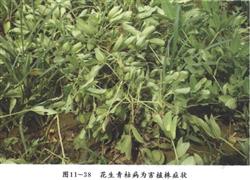
1. Symptoms. Peanut bacterial wilt mostly begins to develop around flowering, but the disease is most severe during the peak flowering and pegging stage, and the condition eases somewhat after pod setting. Its most notable symptom is: the aboveground leaves of diseased plants wilt rapidly, the vascular bundles of the underground roots turn brown, and along the root-stem section, when moist, squeezing the cut surface can exude cloudy bacterial ooze. If the diseased root-stem section is suspended and immersed in clean water, a smoke-like cloudy liquid can be seen gushing from the cut, which is a reliable basis for confirming this disease. Usually the chlorophyll of the wilted leaves has not yet been destroyed, and although the leaves lack luster, they still remain green, hence the name bacterial wilt.
2. Disease development pattern. The bacterial wilt pathogen mainly overwinters in the soil, and can also overwinter in diseased plant residues and soil mixed manure. Diseased soil and diseased manure are the main primary infection sources for the disease the following year. The pathogen spreads through soil, rainwater, irrigation water, and farming activities, and invades through wounds or natural openings in the host root-stem. The occurrence and epidemic of the disease are closely related to factors such as weather, soil, cropping system, plant growth stage, and variety resistance. High temperature and abundant rain, especially alternating sunshine and rain, or prolonged drought followed by sudden rain, and drastic changes in soil temperature and moisture, are most likely to induce this disease; shallow soil layers, coarse sandy soil with poor water and fertilizer retention, or yellow clay soil with poor permeability are all favorable to disease development; continuous cropping fields develop the disease more severely than rotated fields; excessive or biased application of nitrogen fertilizer makes the disease more likely; creeping-type varieties are more resistant than erect-type and bunch-type varieties; southern-type varieties are more resistant than northern-type varieties. Disease incidence from around flowering to pod setting accounts for more than 70% of the total incidence during the entire growth period.
3. Control measures
(1) Reasonable crop rotation. It is best to implement paddy-upland rotation, and at least carry out upland rotation with sugarcane, sweet potato, etc. The rotation period depends on the severity of the disease.
(2) Select disease-resistant varieties. Varieties such as Xiekangqing No. 10, No. 11, Tianfu No. 11, Yuhua No. 14, Yuanza 9102, Yueyou 589, 320, Guiyou No. 28, Quanhua 3121, Taishan Pearl Bean, etc. can be selected according to local conditions.
(3) Strengthen cultivation management. Deep plow and sun the soil or introduce water to soak the field (the longer the better); improve drainage and irrigation systems to enhance the field's ability to prevent waterlogging and resist drought, and prevent cross-irrigation; appropriately increase the application of lime to adjust soil acidity; promptly pull out central diseased plants and pay attention to field sanitation; use formula fertilization, avoid biased application of nitrogen fertilizer, and do not apply soil mixed manure containing diseased residues.
(4) Adopt a spot-treatment method of spraying liquid medicine to seal off disease centers. For disease centers, you may try 20% quinoxalone 1000-fold solution, or potassium permanganate 600-fold solution, or copper-ammonia solution 600-fold solution, continuously spraying the diseased holes and adjacent healthy plants 2-3 times or more, which has a certain effect on sealing off disease centers and controlling the spread of the disease.
II. Peanut stem rot
Peanut stem rot occurs in all production areas nationwide, especially seriously in northern production areas, and often causes large areas of plant death.
1. Symptoms. This disease can occur at the peanut seedling stage and adult plant stage. The affected site is the stem base and root crown near the ground. The affected part initially appears as a yellow-brown to dark brown wet rot, later turning to dry rot, and the surface of the diseased part is densely covered with small black grains the size of pinheads, which are the pathogen's pycnidia. In severe cases, the cortex at the stem base falls off and the entire plant dies.
2. Disease development pattern. The pathogen mainly overwinters in the soil with diseased residues or mixed into soil mixed manure, and can also overwinter attached to seed pods and seed kernels. It spreads through wind and rain or farming operations, and directly invades and causes disease through host wounds or the epidermis. The occurrence and epidemic of this disease are closely related to factors such as weather, seeds, cultivation management, and variety resistance. Warm and rainy conditions, high soil moisture, or heavy rain followed by sudden clearing, with drastic changes in soil temperature; dry climate, high soil surface temperature, and plant scorching often easily induce this disease; if there is much rain during harvest, and seed pods are stored before being fully dried, or if poor storage after storage causes the seed pods to become moldy, seed viability decreases and the seed-borne pathogen rate increases, making disease likely after sowing; continuous cropping fields, plots with poor soil structure and fertility, or application of soil mixed manure containing diseased residues result in more severe disease; spring peanuts develop the disease more severely than summer peanuts, and early-sown spring peanuts develop the disease more severely than late-sown ones.
3. Control measures. Comprehensive control measures should be adopted, mainly agricultural control supplemented by chemical control.
(1) In severely affected areas, switch to disease-resistant varieties, do a good job in seed selection, retention, drying, and storage, and implement 1-2 years of rotation with gramineous crops.
(2) Treat seeds with chemicals before sowing for disinfection. You may choose 40% triadimefon-carbendazim wettable powder or 45% triadimefon-thiram wettable powder to treat seeds, seal for 24 hours, and then sow (the amount used is 0.3% of seed weight).
(3) Strengthen cultivation management. Thoroughly clean the field at harvest and collect and burn diseased residues; do not use diseased vines to make compost, and do not apply soil mixed manure containing diseased residues; appropriately adjust the sowing period according to local conditions; improve drainage and irrigation systems to enhance the field's ability to prevent waterlogging and resist drought; use formula fertilization and increase the application of phosphorus and potassium fertilizers; carefully prepare the land, pay attention to sowing depth and soil covering, and promote early seed germination and emergence.
(4) Do a good job in spraying chemicals for preventive disease control. After full emergence, before flowering, and at the peak flowering and pegging stage, spray chemicals once each, focusing on spraying the stem base. In addition to using 1000-1500-fold solutions of the above seed-treatment chemicals, you may also choose 70% thiophanate wettable powder plus 75% chlorothalonil wettable powder (1:1) 1000-1500-fold solution, or 30% copper oxychloride plus 70% mancozeb wettable powder (1:1) 1000-fold solution, or 65% duokejun wettable powder 600-800-fold solution for spray control.