Key Technical Points for Skillfully Applying Boron Fertilizer to Chestnut Trees
According to surveys, in areas where chestnuts grow normally, 15% of the burrs are empty, and in some cases the rate is even as high as over 50%, seriously affecting chestnut growth. Boron deficiency is the main cause of empty chestnut burrs. Applying boron fertilizer can markedly inhibit the formation of empty chestnut burrs and increase yield. In spring, before the chestnuts sprout, apply it in a ring-shaped trench or in holes...
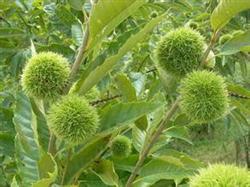
According to surveys, in areas where chestnuts grow normally, 15% of the burrs are empty, and in some cases the rate is even as high as over 50%, seriously affecting chestnut growth. Boron deficiency is the main cause of empty chestnut burrs. Applying boron fertilizer can markedly inhibit the formation of empty chestnut burrs and increase yield.
In spring, before the chestnuts sprout, apply it in a ring-shaped trench or in holes. Apply borax in the area around the tree canopy where the fibrous roots are densely distributed, then cover with soil and water, applying 0.1-0.15 kg per tree. In that same year, the empty burr rate of chestnuts can be reduced to below 4%, and within 4 years after application, trees with an empty burr rate of over 50% can be reduced to below 5% every year. It can thus be seen that applying boron fertilizer can meet the chestnut's boron needs for many years, lower the empty burr rate, and increase yield.