How to control aphids on rapeseed? These technical points need to be mastered
Aphids, commonly known as greasy bugs, are the main insect pest of rapeseed in Linxiang District, occurring in all major rapeseed-producing areas; when drought is severe in winter and spring, the pest is heavier in plots lacking irrigation conditions. Aphid damage mainly occurs from the bolting stage to the maturity stage of rapeseed, and untimely or improper control can cause a certain amount of yield loss. 1. Rapeseed aphids...
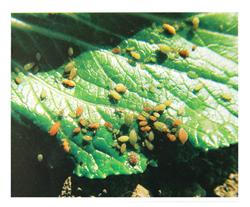
Aphids, commonly known as greasy bugs, are the main insect pest of rapeseed in Linxiang District, occurring in all major rapeseed-producing areas; when drought is severe in winter and spring, the pest is heavier in plots lacking irrigation conditions. Aphid damage mainly occurs from the bolting stage to the maturity stage of rapeseed, and untimely or improper control can cause a certain amount of yield loss.
1. Rapeseed aphids are suited to a warm, relatively dry climate. The climate is warm in spring and autumn, which is most suitable for their growth and reproduction, so damage is generally severe in late spring and early summer and in autumn. Adult aphids or nymphs gather in groups on the undersides of rapeseed leaves, tender stems, flower buds and flowers, and use their needle-like piercing-sucking mouthparts to suck the plant's sap, causing cells to be damaged, growth to lose balance, leaves to curl and shrivel toward the underside, and the growing point leaves to be shaded; in severe cases the plant stops growing, and even the whole plant wilts and dies. When feeding, aphids excrete large amounts of water and honeydew, which drip onto the lower leaves, causing mold disease to occur, disrupting the physiological functions of the leaves and reducing the accumulation of dry matter. Because they repeatedly move about and taste-test when migrating and dispersing in search of host plants, they can transmit many kinds of plant virus diseases, causing even greater damage.
2. Control methods
1. During the rapeseed growing period, clear weeds in and near the field, and remove aphid-infested plants when thinning and thinning to a stand or when transplanting. After sowing, cover with medicated soil, and spray an insecticide once before transplanting. Cultivate and earth up in time to grow strong seedlings; use rational close planting to increase ventilation and light penetration in the field.
2. Trap and kill aphids with yellow boards. At the rapeseed seedling stage, set up yellow boards at the edge of the field. The method is to use 0.33 sq m of plastic film, coat it golden yellow, then coat it with a layer of petroleum jelly or machine oil, and set it up on a frame 0.5 m above the ground, which can trap and kill large numbers of winged aphids.
3. Pesticide control. Begin spraying when the rate of aphid-infested plants at the seedling stage reaches 10%, with a population density of 1 to 2 aphids per plant, or when 10% of stems, branches or flower clusters have aphids at the bolting and flowering stage, with 3 to 5 aphids per branch. Per mu, use 20 g of 10% imidacloprid, or 30 mL of 4.5% beta-cypermethrin, or 40-50 mL of 3% acetamiprid emulsifiable concentrate, or 10-18 g of 50% pirimicarb wettable powder, or 10-20 mL of 2.5% kung fu emulsifiable concentrate, etc., diluted with water and sprayed for control.