-
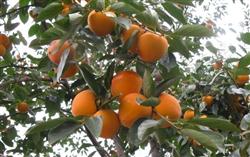
How to Fertilize a Persimmon Tree Well? A Detailed Guide to Scientific Fertilization Methods
How to fertilize a persimmon tree well? Please give guidance. The persimmon tree is a fruit tree that is widely cultivated, easy to manage, long-lived and high-yielding. It originated in our country, and is also cultivated in Japan, Korea and other countries. The persimmon tree is a deciduous tree, with a tree height of more than 10 m, a crown spread of about 16 m, and a lifespan of several hundred years. I. Root nutrition of the persimmon tree...
-
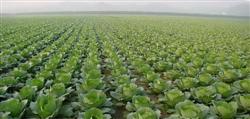
How to fertilize cabbage? A complete guide to scientific fertilization methods
How to fertilize cabbage? Is there any sharing of cabbage fertilization techniques? Producing 1000 kg of cabbage requires 2.0 kg of pure nitrogen, 0.72 kg of phosphorus pentoxide, and 2.2 kg of potassium oxide; for a yield of 3000-5000 kg of cabbage per mu, 6-10 kg of pure nitrogen, 2.2-3.6 kg of phosphorus pentoxide, and 6.6-11 kg of potassium oxide are required. Before planting...
-

Scientific Fertilization Methods and Technical Points for Bananas
How to fertilize bananas scientifically when growing them? Please give a detailed introduction. Fertilizing bananas requires suitable fertilization according to the banana's growth stage. The following detailed analysis is for reference: (1) Growth and nutritional characteristics. Bananas have no taproot, and the root system is distributed most densely in the topsoil at a depth of 10-25 cm. Suckers begin to sprout after February each year...
-
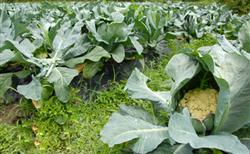
How to Fertilize Cauliflower Properly? A Detailed Guide to Scientific Fertilization Methods
How to fertilize cauliflower properly? Please give guidance. Cauliflower, also known as cauliflower (Brassica oleracea var. botrytis), has an edible portion that is a malformed flower head, and fertilization techniques differ depending on the variety. 1. Given that early-maturing varieties have a short growing season, the base fertilizer should be a quick-acting nitrogen fertilizer, applying about 8 kg of urea and about 8 kg of superphosphate per mu; for mid- and late-maturing varieties with a long growing season, the base fertilizer should be 1500 kg of barnyard manure, applied into the soil when tilling and preparing the land, followed by transplanting the seedlings. 2. Topdressing. In the early growth stage of cauliflower, frequently apply light applications of quick-acting chemical fertilizer as a 2% to 4% ammonium sulfate aqueous solution, about 700 kg per mu each time, or 10% to 30% human feces and urine, about 700 kg each time, applied around the roots. When the flower head begins to form, heavy topdressing should be applied to promote leaf and flower head growth. Apply about 800 kg of 40% human feces and urine per mu, or 10 kg of urea, about 20 kg of superphosphate, and about 8 kg of potassium sulfate, watered on.
-
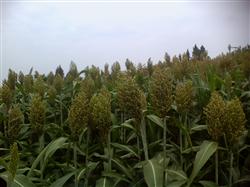
How to fertilize sorghum scientifically? Detailed explanation of key fertilization techniques
How to fertilize sorghum scientifically? Please give guidance. Sorghum has wide adaptability to soil and strong nutrient uptake capacity. When planted on sandy loam soil rich in organic matter and with relatively high fertility, it is easier to obtain high yields. On poor dry land with phosphorus deficiency and low potassium, fertilizer must be added to obtain a good harvest. Sorghum seedlings are small, and the fertilizer requirement is not...
-
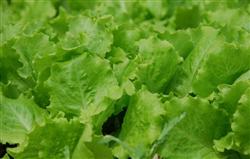
What are the scientific methods for growing lettuce?
How do you grow lettuce scientifically? Please give a detailed introduction to the growing methods. Lettuce can be grown by referring to the following methods: 1. Soil selection: choose fertile, slightly acidic soil rich in organic matter, with strong water and nutrient retention, good aeration, and convenient drainage and irrigation. 2. Variety selection: for growing lettuce, varieties such as glass lettuce, crisphead lettuce, curly-leaf lettuce and Caesar are better.
-
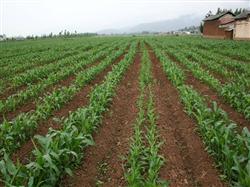
How to fertilize scientifically when growing summer corn?
How to fertilize when growing summer corn? Please explain the methods. For fertilizing summer corn, you can refer to the following methods: 1. Avoid applying too much fertilizer. Some farmers use more than 50 kg of urea per mu when growing summer corn, which reduces fertilizer use efficiency and corn quality and pollutes the soil. To...
-

What to do about low-yielding mulberry orchards? Find the cause and improve them scientifically
The mulberry orchard has been planted for many years and the yield has never been high. How should it be renovated? Please advise. A low-yielding mulberry orchard can be renovated by the following methods: 1. Thickening and replanting 1. Layering to fill in plants 2. Filling gaps with strong seedlings: in mulberry orchards with wider row and plant spacing, healthy mulberry seedlings can be replanted between plants or rows. 2. Interplanting for renewal...
-
How to grow sunflowers scientifically? Detailed explanation of key techniques
How to grow sunflowers scientifically? Here is an introduction and guide. Sunflower cultivation can follow the methods below: land preparation and sowing. Before planting, apply 30-35 dan of farmyard manure per mu or 25 dan of cattle pen manure, plus 3 dan of plant ash, then plow and harrow to form beds 2-2.5 m wide. Spring sowing of sunflowers is from late March to late April; the earlier the sowing, the...
-
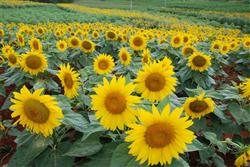
How to fertilize sunflowers properly? A detailed guide to scientific fertilization methods
How to fertilize sunflowers properly? Please give guidance. When growing sunflowers, you can refer to the following methods for fertilization: 1. Nutrient requirements of sunflowers. Sunflowers are a crop with relatively high nutrient demands. The period from flower head formation to flowering is the peak period of nutrient demand for sunflowers. From emergence to flower head formation, phosphorus demand is relatively high; from flower head formation to...
条件筛选