Scientific Fertilization Methods and Technical Points for Bananas
How to fertilize bananas scientifically when growing them? Please give a detailed introduction. Fertilizing bananas requires suitable fertilization according to the banana's growth stage. The following detailed analysis is for reference: (1) Growth and nutritional characteristics. Bananas have no taproot, and the root system is distributed most densely in the topsoil at a depth of 10-25 cm. Suckers begin to sprout after February each year...
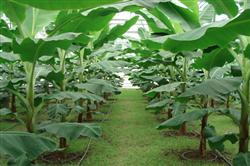
How to fertilize bananas scientifically when growing them? Please give a detailed introduction
Fertilizing bananas requires suitable fertilization according to the banana's growth stage. The following detailed analysis is for reference:
(1) Growth and nutritional characteristics
Bananas have no taproot, and the root system is distributed most densely in the topsoil at a depth of 10-25 cm.
Suckers begin to sprout after February each year, so the work of selecting and removing suckers must be done regularly.
Seedling stage: from the emergence of suckers from the soil to the appearance of large leaves, lasting 2-3 months; during this period the plant's growth quantity is not large.
Vegetative growth stage: from the beginning of large leaf emergence to flower bud initiation, lasting about 5-6 months; this is the banana's vegetative growth stage, and during this period the plant's biological yield accounts for 30%-35% of the biological yield of the entire growth cycle. According to surveys, tall-stemmed bananas initiate the bud when 31-34 leaves have emerged, while short-stemmed bananas initiate the bud when 28-30 leaves have emerged. Fruit ripening stage: from completion of female and male pollination to fruit ripening. According to research, banana nutrition has the following characteristics:
(1) Banana is a typical potassium-loving crop, and its potassium requirement is higher than that of any other crop.
(2) Different banana varieties have roughly the same ratio of nitrogen, phosphorus, and potassium nutrient uptake throughout the whole growth period, averaging 1:19:3.72.
(3) The amount of nitrogen, phosphorus, and potassium nutrients required by bananas is related not only to yield but also to banana plant type. For example, for every 1000 kg of bananas produced, medium-stemmed varieties absorb 5.9 kg of nitrogen (N), 1.1 kg of phosphorus (P2O5), and 22 kg of potassium (K2O). Short-stemmed bananas absorb 4.8 kg of nitrogen (N), 1.0 kg of phosphorus (P2O5), and 18 kg of potassium (K2O).
(4) Bananas also have a very high demand for calcium and magnesium. The nitrogen-calcium uptake ratio is 1:0.69, and the nitrogen-magnesium uptake ratio is 1:0.2, both greater than the nitrogen-phosphorus uptake ratio.
(5) Uptake at each growth stage of banana: for the first crop, bud emergence stage (accounting for 0.5%, 45.5%, and 52.6% of the whole growth period respectively) > fruit development and ripening stage (accounting for 40.2%, 37.2%, and 31.0% of the whole growth period respectively) > vegetative growth stage (accounting for 19.3%, 17.8%, and 16.4% of the whole growth period respectively); for the second crop, fruit development and ripening stage (accounting for 42.0%, 43.0%, and 37.0% of the whole growth period respectively) > bud emergence stage (accounting for 31.9%, 32.1%, and 35.9% of the whole growth period respectively) > vegetative growth stage (accounting for 26.1%, 24.3%, and 27.1% of the whole growth period respectively).
(6) The ratio of nitrogen, phosphorus, and potassium uptake by bananas at different growth stages throughout the year is roughly the same, with N:P2O5:K2O at about 1:0.2:3.5-4.5. This characteristic of banana fertilizer uptake makes it relatively easy to grasp the nutrient ratio when fertilizing bananas, that is, the same fertilizer formula can be applied throughout the entire growth period of the banana.
(2) Fertilization techniques
Bananas generally require 30-50 kg of nitrogen fertilizer per mu, and high-yielding bananas require 70-90 kg. The application ratio of nitrogen, phosphorus, and potassium nutrients is 1:0.3:0.6:1-2. Different regions differ due to different soil conditions. For example, for bananas in Guangdong, 70 kg of nitrogen (N) per mu is required throughout the year, with N:P2O5:K2O at 1:0.3:1.3; for bananas in Hainan, 90 kg of nitrogen (N) per mu is required, with N:P2O5:K2O at 1:0.6:2. Each region can adjust flexibly according to yield requirements and soil nutrient status.
During its annual growth cycle, bananas need multiple fertilizations, about 10-15 times per year. In winter and spring, organic fertilizer is generally applied, and it can be applied in trenches or holes about 50 cm from the banana head at a depth of 20-30 cm.
Topdressing during the growth period generally should use chemical fertilizers. Before bud emergence, apply frequently and lightly. The cumulative fertilization amount accounts for 75% of the total. For newly planted sucker seedlings, after they survive and before 10 large leaves have emerged, fertilize twice a month, with each application accounting for about 3%-5% of the total fertilization amount. For newly planted tissue-cultured seedlings, after the bananas survive, pour on a 0.2% compound fertilizer solution once every 7 days, for a total of 4-6 days; then, before another 10 large leaves have emerged, fertilize once every 15 days, with each application accounting for 3%-5% of the total fertilization amount. During the period when bananas emerge 10-16 large leaves, plant growth accelerates; fertilize twice a month, with each application accounting for 10% of the total. During the period when bananas have 16-23 large leaves, the plants clearly heighten, the pseudostem thickens, and flower bud differentiation begins; attention should be paid to fertilizer, applying twice a month, with each application accounting for about 15% of the total.
Then apply topdressing once at the bud emergence stage, with the fertilization amount accounting for 15% of the total, and apply topdressing once more at the early fruit stage, with the fertilization amount accounting for 10% of the total fertilization amount.
Generally, acidic soils in the south are prone to magnesium deficiency; apply 25-30 kg of magnesium sulfate or potassium magnesium sulfate per mu. When the soil is deficient in boron, during the banana growth period, spray a 0.2% borax solution 2-3 times in the early stage, and the yield increase effect is significant.
Click to get more banana cultivation techniques
Click to get more fruit cultivation techniques