What to do about low-yielding mulberry orchards? Find the cause and improve them scientifically
The mulberry orchard has been planted for many years and the yield has never been high. How should it be renovated? Please advise. A low-yielding mulberry orchard can be renovated by the following methods: 1. Thickening and replanting 1. Layering to fill in plants 2. Filling gaps with strong seedlings: in mulberry orchards with wider row and plant spacing, healthy mulberry seedlings can be replanted between plants or rows. 2. Interplanting for renewal...
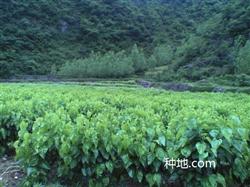
The mulberry orchard has been planted for many years and the yield has never been high. How should it be renovated? Please advise
A low-yielding mulberry orchard can be renovated by the following methods:
1. Thickening and replanting
1. Layering to fill in plants
2. Filling gaps with strong seedlings: in mulberry orchards with wider row and plant spacing, healthy mulberry seedlings can be replanted between plants or rows.
2. Interplanting for renewal
For mulberry orchards with older trees and declining vigor, the method of interplanting for renewal can be used, that is, planting healthy mulberry seedlings between the mulberry rows at a density of 1000-1200 plants per mu, while the old mulberries are still used for leaf harvesting as usual during the spring silkworm season. The newly planted mulberries are pruned by spring pruning, and cultivation management is strengthened to promote vigorous growth.
3. Rejuvenation by grafting
1. Lowering the trunk for rejuvenation: for mulberry trees with a relatively tall tree form, thin and short branches, and declining growth vigor, the method of trunk truncation can be used before sap flow in spring, lowering the trunk and branches by 1-2 layers. Because there are many dormant buds at the branching points, when lowering the trunk, cut as much as possible at the branching points, and after sprouting, pay attention to thinning buds and retaining shoots to re-form the trunk and branches.
2. Grafting to change varieties: suitable for the improvement of seedling mulberries and poor mulberry varieties, especially seedling mulberries, which have many flowers and fruits, small leaves, and low leaf yield, but have well-developed root systems and vigorous growth. Grafting excellent mulberry varieties onto them can quickly form an orchard and increase mulberry leaf yield. For low-trunk mulberries, use root excavation grafting; for medium and high-trunk mulberries, use multiple grafting; for young mulberries, use tubular bud grafting or bark patch bud grafting. After grafting, management should be strengthened to form the tree shape. Because the mother tree has a well-developed root system, the new mulberry after successful grafting grows very vigorously. After the new buds grow to a certain height, pinching can be done according to the pruning requirements to promote branching, forming 2-3 branches in the same year, thereby shortening the number of years needed to form the tree shape and significantly increasing mulberry leaf yield.
4. Spring pruning and trunk truncation
For mulberry trees that have declined due to poor management, spring pruning can be used for rejuvenation, that is, before the mulberries sprout in spring, according to the original training form, all existing branches are cut off from 2-3 cm above the base, all poorly growing branches, dead stubs, and dead knobs are removed, and buds are reasonably thinned, removing the weak and retaining the strong, keeping 2-3 buds per branch. For mulberry trees with a good main trunk but declining vigor, thin and short branches, and few shoots, they can be cut above the fork, and fertilizer and water management can be strengthened to promote new sprouting and the formation of branch groups, thereby achieving the purpose of rejuvenation.
5. Strengthen fertilizer and cultivation management: one of the important factors in low yield of mulberry orchards is severe fertilizer deficiency. Therefore, fertilizer is the material basis for obtaining high yields in mulberry orchards. Generally, based on pure nitrogen converted to leaf yield, each 1 kg of pure nitrogen applied can increase mulberry leaf yield by 50 kg. Therefore, low-yielding mulberry orchards should increase the amount of fertilizer applied, and pay attention to the combined application of N, P, and K fertilizers, with a ratio of 7:3:4. Especially in sandy beach land and yellow mud soil, phosphorus deficiency is relatively serious. While applying N fertilizer, P fertilizer should also be added. The proportion of fertilizer applied in each season to the annual total is: spring fertilizer 30%, summer and autumn fertilizer 50-60%, winter fertilizer 10-20%, to meet the fertilizer needs of mulberry growth.
View more mulberry planting techniques