-
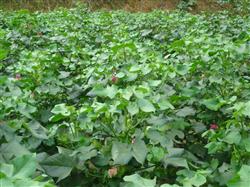
How should cotton be managed well in the middle and late stages?
How should cotton be managed well in the middle and late stages? Please introduce the management methods. In the middle and late stages, cotton can be managed by referring to the following methods: 1. Management during the flowering and boll-setting stage (1) Apply flowering and boll-setting fertilizer heavily and apply topping fertilizer. Cotton generally flowers around July 10. Fertilization during the flowering and boll-setting stage generally accounts for 50% of the topdressing amount during the growth period and can be appropriately advanced, applying as soon as flowers appear (July 10-15). On the basis of sufficient basal fertilizer or base fertilizer applied earlier, apply 40-45 kg per mu of compound fertilizer containing 15% each of nitrogen, phosphorus, and potassium, or 15-20 kg of urea, 15-20 kg of diammonium phosphate, and 10-15 kg of potassium chloride, or apply a formula fertilizer with the same content of nitrogen, phosphorus, and potassium. In cotton fields where flowering and boll-setting fertilizer is insufficient or there is a trend of fertilizer deficiency during the full flowering and boll-setting stage, applying topping fertilizer is beneficial for retaining summer bolls, increasing autumn bolls, and preventing premature senescence. In early August, apply 10-15 kg of urea as topdressing, no later than mid-August. In high-yield cotton fields, after the full boll stage, the root absorption capacity declines. In cotton fields with a trend of fertilizer deficiency, spray 300-500 times dilution (or 0.3-0.5 jin per mu) of potassium dihydrogen phosphate, or 15 ml of Lüzhi Feng (Shuofeng 481), or 10 ml of Duoxiao Fengchan Ling, and other plant growth regulators or foliar fertilizers, mixed with 30 kg of water, and spray 1-2 times. This has an obvious effect on increasing boll weight. (2) Irrigate in drought and drain in waterlogging. During the flowering and boll-setting stage, cotton is sensitive to water and is neither tolerant of drought nor waterlogging. Therefore, it is necessary to promptly meet the large water consumption demand of cotton fields. In high-yield cotton fields, as long as there is no rain for 7-10 days, irrigation should be carried out promptly. In general cotton fields, if the top leaves of the cotton plants show wilting at noon, they should be watered. When rainfall is heavy, drainage should be carried out promptly. (3) Intertillage and hilling. Before the cotton field closes in the early flowering stage, intertillage and hilling should be combined. This is beneficial for irrigation during drought and drainage during waterlogging in the full flowering and boll-setting period and helps prevent lodging in the later stage of high-yield fields. (4) Pruning. Top the plants early at the appropriate time, generally from July 15-20, and finish before July 25. Tip the side branches around August 10, no later than August 15. For row spacing above 1.1 m, retaining one vegetative branch (smooth shoot) during pruning gives the highest yield.
-
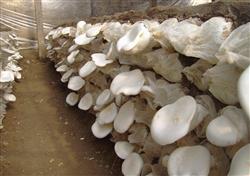
How can white king oyster mushroom cultivation be managed for good results?
How should white king oyster mushroom cultivation be managed well? Please give an introduction to the management methods. For cultivating white king oyster mushrooms, you can refer to the following methods for management: 1. Cultivation season. The white king oyster mushroom is a medium-temperature type fungus; the optimum temperature for mycelial growth is 24--27°C, and the optimum temperature for fruiting body growth is 15--20°C. Therefore, the cultivation season should be arranged for inoculation in early September...
-
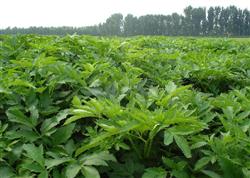
How should Angelica dahurica be managed to achieve high yields?
How can Angelica dahurica be managed to achieve high yields? Please give some guidance. To achieve high yields when growing Angelica dahurica, you must pay attention to management. The following management methods for Angelica dahurica are for reference: 1. Thinning and final thinning of seedlings: Angelica dahurica seedlings grow slowly, so generally no thinning is done in the year of sowing. After the seedlings turn green again in early spring of the second year, when the seedlings are about 5-7 cm tall, carry out the first thinning, removing...
-
How should jujube trees be managed to increase yield?
How to increase the yield of jujube trees? How to improve the quality of jujube trees? Please introduce the methods. To increase both yield and quality when growing jujube trees, you can refer to the following management methods: 1. Apply sufficient organic fertilizer and phosphorus-potassium fertilizer. Many years of practice have proven that producing 100 kg of fresh jujubes requires 1 kg of pure nitrogen, 2 kg of phosphorus pentoxide, and 1...
-
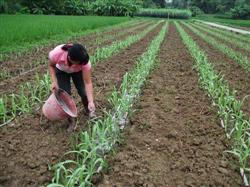
How should black-skinned sugarcane be managed for good cultivation?
How do you manage black-skinned sugarcane well? Please introduce good management methods for growing fruit sugarcane. After years of trial and cultivation, the following fruit sugarcane cultivation and management methods have been summarized for reference: timely fertilization. After emergence, fertilize together with the first weeding; during the second field growth period, apply diluted fertilizer together with each hilling; the third time, apply foliar fertilizer and balanced fertilizer at the appropriate time. Each time you fertilize, add New High-Lipid Film, which can greatly increase the availability rate of the fertilizer's limited nutrients.
-
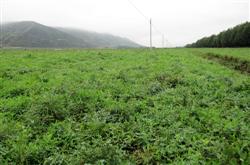
How can Scutellaria baicalensis be managed effectively during cultivation?
How should Scutellaria baicalensis be managed well during cultivation? Please provide guidance. For growing Scutellaria baicalensis, you can refer to the following methods for management: 1. Management before emergence: Regardless of the propagation method, the soil should be kept moist from planting until emergence to promote seedling emergence. 2. Thinning and final thinning: Combined with intertillage and weeding, Scutellaria baicalensis should be thinned, replanted, and finally thinned in a timely manner...
-
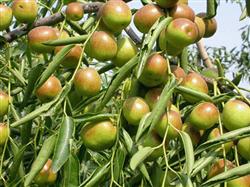
How should winter jujube trees be managed in the early stage?
How to manage winter jujube before harvest? Please give guidance. For the management of winter jujube before harvest, you can refer to the following methods: 1. Loosen the soil and preserve moisture: promptly hoe and loosen the soil, spray 800-fold diluted Xin Gao Zhi Mo solution, so that the soil in the jujube orchard maintains suitable moisture, preventing fruit cracking and improving the yield and quality of winter jujube in the later stage. 2. Prevent damage from wind and rain: winter...
-
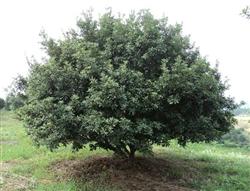
How should bayberry trees be managed to increase yield?
How can bayberry trees be made to increase yield? What methods can achieve this? Please give an introduction. The main reasons for low yield in bayberry trees are low production caused by stunted young trees, excessively vigorous trees, aging trees, low-yielding trees in mixed forests, and trees of inferior varieties. The following methods can be used to renovate the fruit trees and increase yield. Bayberry...
-
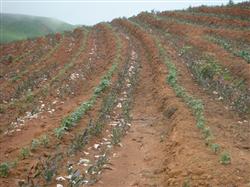
How is tea garden soil managed in tea cultivation?
How should tea garden soil be managed? Please explain the methods. Tea garden soil management is one of the important technical measures for achieving high quality and high yield. Its main purpose is to control weeds, improve the physical and chemical properties of the soil, promote the proliferation of beneficial microorganisms, and create a very favourable underground environment for the good growth and development of tea plants. 1....
-
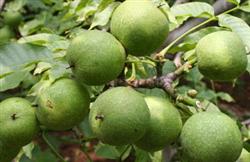
How should walnut trees be managed to set more fruit?
How can walnut trees set more fruit? What methods can make walnut trees set more fruit? Experienced netizens are also asked to help explain. With the improvement of living standards, walnuts are becoming more and more popular, and walnuts are also the newest trendy item for handling and play, but the low fruit-setting rate of walnuts is the most headache-inducing thing for fruit growers. For this reason, Zhongdi Network has compiled...
条件筛选