-
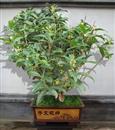
How should osmanthus be managed when kept in an apartment building?
How should osmanthus be managed when kept in an apartment building? Please provide guidance on methods. For urban residents living in apartment buildings, cultivating osmanthus is very difficult, mainly because after osmanthus is transplanted from its native habitat to the city, its growing environment and conditions undergo great changes. Therefore, necessary measures must be taken in the cultivation and management of osmanthus...
-
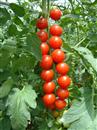
How should cherry tomatoes be managed at each stage of cultivation?
How do you manage small tomatoes at each stage of cultivation? Please give a detailed introduction. For managing small tomatoes at each stage of cultivation, you can refer to the following methods: seed soaking, germination, sowing: soak the seeds in clean water for 4-6 hours, then disinfect with 800-fold chlorothalonil for 10-15 minutes (stirring constantly), then rinse with clean water, put them into a sand cloth bag...
-
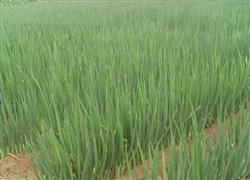
How should scallion cultivation be managed to achieve high yields?
How should scallion cultivation be managed to achieve high yields? Please provide an introduction to the methods. After scallions are planted between Grain in Ear (early June) and Minor Heat (early July), to obtain high-yield, high-quality marketable scallions, in addition to selecting good soil, crop rotation, and varieties, field management is especially important. Here are a few points: 1. Watering During the seedling recovery stage of scallions...
-
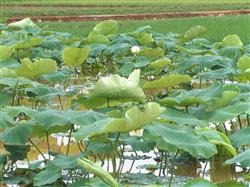
How should lotus root cultivation be managed?
How should lotus root cultivation be managed? Please give a detailed introduction. Lotus root cultivation can be managed by referring to the following methods: For topdressing lotus root, apply fertilizer 2-3 times. The first time is when 1-2 standing leaves have grown, the second time can be before the rows close, and the third time is when the rear ridge leaves appear. Per 667 sq m (mu), for the first application use 200...
-
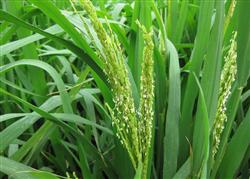
How should water be managed during the heading and grain-filling stage of rice?
How should water be managed during the heading and grain-filling stage of rice? Please explain. Mid-to-late July is when rice enters the heading and grain-filling stage, and scientific water management is quite critical for increasing rice yield and achieving high yields. For reference, see below: 1. The heading and flowering stage is a period when rice is relatively sensitive to water, second only to the late booting stage in sensitivity...
-
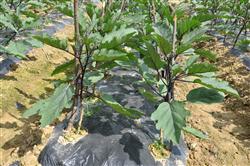
How should eggplants be managed during summer planting for the best results?
How should eggplants be managed well when planted in summer? Please explain. Summer eggplants, because their growing period falls in a season of high temperatures, frequent rain, and frequent pests, diseases, and weeds, have low and unstable yields. To achieve an ideal yield, the following field management measures should be carried out well: 1. Apply the "three" fertilizers properly: after the seedlings survive transplanting, apply a good seedling-promoting fertilizer, applying 1000 kg of 20% human excrement and urine per mu or applying 10-15 kg of compound fertilizer in holes; when the first eggplant fruit swells, apply a good first-fruit fertilizer, applying 1500 kg of human excrement and urine or applying 15 kg of compound fertilizer in holes; apply a good fruit-fattening fertilizer, applying 2000 kg of human excrement and urine or 20 kg of compound fertilizer when eggplants enter the fruiting stage.
-
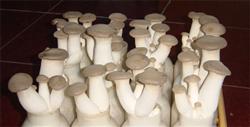
How should temperature be managed well during king oyster mushroom cultivation?
How should temperature be managed well during king oyster mushroom cultivation? Please give a detailed introduction. The king oyster mushroom (Pleurotus eryngii) is a medium-to-low-temperature, constant-temperature fruiting mushroom type. The optimum temperature for mycelial growth is 21-26°C, the fruiting body growth temperature is 8-20°C, and the optimum growth temperature is 12-16°C. Below 8°C, fruiting bodies are difficult to differentiate. In winter, the outdoor temperature is generally below 15°C,...
-
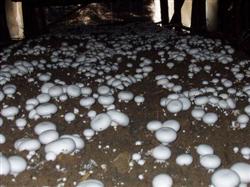
How should water be managed during the cultivation of the button mushroom (Agaricus bisporus)?
How should water be managed when cultivating the button mushroom (Agaricus bisporus)? Please provide guidance. In button mushroom production, from casing to fruiting, in addition to routine water management and moisture retention, correctly mastering and applying the following four key points about water use plays an important role in ensuring mycelial quantity and vigor, ensuring the number and uniformity of pinheads, and ensuring healthy growth of the fruiting bodies...
-
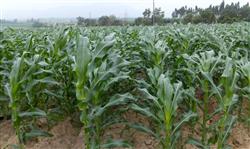
How can corn be managed better in the middle and late stages?
How should corn be managed well in the middle and late stages of cultivation? Please give guidance. The management of corn in the middle and late growth stages can refer to the following methods: Fertilization 1. Ear fertilizer. Generally, heavy nitrogen application is done at the large trumpet stage, accounting for about 50% of the total topdressing amount, with 30-40 kg of standard nitrogen fertilizer applied per mu. 2. Grain fertilizer. Generally accounts for about 10% of the total topdressing amount...
-
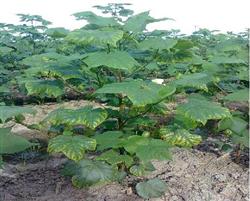
How should late-stage premature senescence in cotton be managed to prevent and control it?
How can management prevent and control late-stage premature senescence in cotton? Please provide methods. To prevent and control late-stage premature senescence in cotton, you can refer to the following methods: 1. Fertilizer and water management: According to the condition of the cotton plants, the climate and the soil conditions, apply the flowering and boll fertilizer heavily; if the flowering and boll fertilizer is insufficient, then apply a top-dressing fertilizer. After mid-August, if the maximum field water-holding capacity is below 60%, and in early September below 55%, water promptly to promote fertilizer with water and ensure the fertilizer effect is exerted in time. If cotton premature senescence is caused by soil potassium deficiency, while applying base fertilizer, increase the application of potassium sulfate or potassium chloride by 5-10 kg during the seedling and bud stages. When fertilizing, be sure to plow deeper than 20 cm, apply the fertilizer at the plow bottom, achieve deep fertilizer application, promote root penetration downward, reduce fertilizer loss, and improve fertilizer use efficiency. During the flowering and boll-setting stage, if drought occurs, water lightly, carefully clean the furrows and beds to prevent waterlogging again; if waterlogging occurs, drain promptly.
条件筛选