-
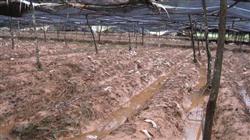
How should bamboo fungus be managed after a flood?
How should bamboo fungus be managed after a flood? Here is an introduction. After a flood, bamboo fungus should be managed as follows: 1. For bamboo fungus that has been soaked by floodwater, drain the water promptly and wash away the mud on the bed surface; 2. After the rain stops, promptly rebuild and cover the shade shed that was washed away to prevent exposure to the sun after the rain; 3. When the rain clears, if the bamboo fungus bed surface has become compacted, ...
-

-

How should potted roses be cared for and managed in winter to survive the cold safely?
Winter is coming, and many flower lovers move their potted roses indoors to overwinter. Before bringing them in, for one-year-old small seedlings, if the new shoots are 30 cm or taller, cut off 2/3; if less than 30 cm, cut off 1/2; if too small, do not prune. For large plants over two years old, cut back strong ones by 1/2 and weaker ones by 2/3.
-
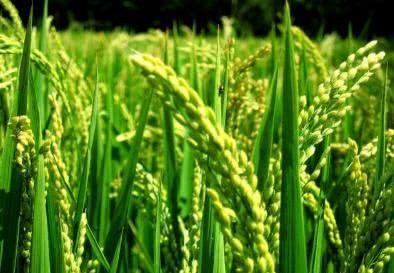
Rice enters a critical growth period in August, how should it be managed?
Let us first understand the growth stages of rice. The rice growth period is divided into three stages: 1. Vegetative growth stage (from germination to young panicle differentiation) 2. Vegetative and reproductive growth concurrent stage (from young panicle differentiation to flowering stage) 3...
-
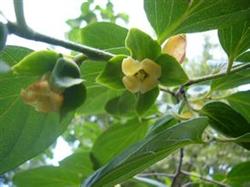
How should persimmon trees be managed before and after flowering?
Management of persimmon trees before and after flowering. Persimmon trees are light-loving crops, and in dense planting, attention should be paid to solving ventilation and light penetration, which is the main measure for high-yield management. Persimmon trees bear fruit from axillary buds, so thinning out vigorous growing branches and strengthening nutrient accumulation in the branches and trunk are very important. Before flowering, attention should be paid to applying amino acids to the trunk to promote flower bud differentiation and overcome alternate...
-
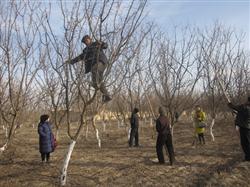
How should apricot trees be managed in winter to achieve high yields?
How should apricot trees be managed in winter for high yields? Please explain in detail. In winter, apricot trees can be managed by referring to the following methods: Pruning and shaping: Winter pruning of apricot trees is especially important. The focus is on removing diseased and weak branches and dead, dry branches to encourage flower buds to form as early as possible. At the same time, according to the terrain, the tree shape should be made favorable for sunlight, and its angles should be opened up for ventilation. After pruning...
-
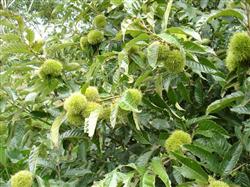
How should chestnut trees be managed to achieve a high yield?
How should chestnut trees be managed for a high yield? Please give guidance. Chestnut trees can be managed by referring to the following methods: 1. Fertilization. In spring, before flowering, apply 300-400 g of urea and 200-300 g of superphosphate per tree, and broadcast 6-7 g of borax per sq m of ground. In July, during the fruit burr swelling stage, apply fruit-swelling fertilizer and a three-element compound fertilizer at 0.7-...
-
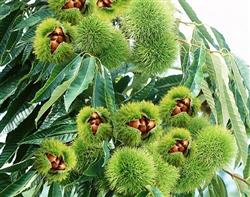
How should chestnuts be planted and managed to achieve a high yield?
How can chestnuts be made to yield heavily? Please explain the methods. To make the chestnut trees you plant yield heavily, you can refer to the following methods: 1. Close planting. Reasonable close planting can not only increase early yields and obtain economic benefits as quickly as possible, but also facilitate intensive management of the orchard. Planting density: the spacing between plants and rows is generally 2m x 4m, 3m x 4...
-
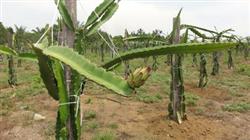
How should dragon fruit be managed after planting?
How should dragon fruit be managed after planting? Please explain the management methods. Post-planting management of dragon fruit has a great impact on seedling survival rate and growth, and directly affects early fruiting and high yield. Post-planting management mainly includes the following aspects: 1. Soil, fertilizer and water management. After dragon fruit is planted, water once every 3 to 5 days. Once it survives, adjust the watering frequency as needed. Although dragon fruit stems have a relatively thick epidermis and strong drought tolerance, if irrigated regularly when winter temperatures are relatively low, it grows extremely quickly. Fertilizer can use liquid fertilizer that promotes the growth of branches and leaves, applied 2 to 3 times per week, to promote branch growth. When growing seedlings in pots, fertilizer can be applied once survival is confirmed. Compound fertilizer can be used, but it must not be applied too much to avoid fertilizer damage. Applying organic fertilizer has a better effect. If human urine is used, it needs to be left to stand for 10 days, diluted 10 times, and then applied. Fertilization once or twice a month is appropriate.
-
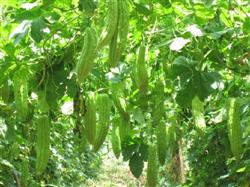
How should bitter melon be managed during cultivation to achieve high yields?
How should bitter melon be managed during cultivation to achieve high yields? Please provide an introduction to the management methods. The bitter melon root system prefers moist conditions and dislikes waterlogging. Normally, care should be taken to dig drainage ditches clear, and if a rainstorm occurs, standing water in the field should be drained promptly. Water use can be adjusted according to soil moisture conditions. Generally, on sunny days with strong sun and high evaporation, moisture disappears quickly,...
条件筛选