How is tea garden soil managed in tea cultivation?
How should tea garden soil be managed? Please explain the methods. Tea garden soil management is one of the important technical measures for achieving high quality and high yield. Its main purpose is to control weeds, improve the physical and chemical properties of the soil, promote the proliferation of beneficial microorganisms, and create a very favourable underground environment for the good growth and development of tea plants. 1....
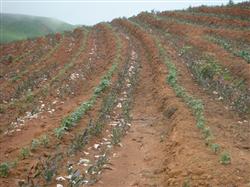
How should tea garden soil be managed? Please explain the methods
Tea garden soil management is one of the important technical measures for achieving high quality and high yield. Its main purpose is to control weeds, improve the physical and chemical properties of the soil, promote the proliferation of beneficial microorganisms, and create a very favourable underground environment for the good growth and development of tea plants.
1. Conventional soil tillage and hoeing in mature tea gardens
(1) Timing and depth of tillage and hoeing. The timing and depth of tillage and hoeing in mature tea gardens vary considerably with local natural climate conditions and the level of cultivation technology, but all can be divided into shallow tillage in spring and summer and deep-to-medium tillage in autumn and winter. ① Spring tillage and hoeing. The time is from late February to mid-March, and in high-mountain tea areas (above 1200 m altitude) it may extend to early April. This shallow tillage is generally carried out together with the application of spring fertilizer, with a tillage depth of 7-10 cm. The purpose is to loosen the soil, raise soil temperature, supply nutrients, and promote the sprouting and growth of spring tea. ② Summer tillage and hoeing. After the first round of tea is finished (around mid-to-late May), it is carried out together with the topdressing of summer fertilizer, with a tillage depth of 10-15 cm. After spring picking and other farming activities, the surface soil of the tea garden has been compacted by repeated trampling, which hinders air circulation and rainwater infiltration, and this is also a period of vigorous weed growth, so summer tillage and hoeing is extremely important. ③ Hot-season tillage. In late summer and early autumn (late July to early August), when the second round of tea is finished, it is carried out together with the application of autumn fertilizer, with a tillage depth of 10-15 cm. At this time the temperature is high, sunlight is strong, and drought often accompanies it; timely tillage has a notable effect on thoroughly killing weeds, promoting the activity of soil nitrifying bacteria, and accelerating the decomposition of organic matter. ④ Autumn tillage. In late autumn and early winter (late October to mid-November), when aboveground growth stops, it is carried out together with the application of winter fertilizer, with a tillage depth of 15-20 cm. This ploughing can not only turn weeds into the soil together with base fertilizer to increase soil organic nutrition and promote root growth, but also accelerate the natural weathering of the soil, release nutrients, and improve soil structure, laying the material foundation for the mass formation of next year's spring buds (overwintering buds). Deep-to-medium tillage in autumn and winter in mature old tea gardens can be done once a year. However, for tea gardens still in their prime with roots densely spread between the rows, it need not be done every year; it can be done once every 2 years to avoid heavily damaging the roots and affecting tree vigour development and next spring's tea yield.
(2) Tillage and hoeing methods and tools. Whether the tillage and hoeing method is reasonable is closely related to tea plant growth and soil and water conservation, and also has a great impact on labour efficiency. When hoeing weeds, the ground close to the tea plants should be shallow-cultivated to minimise damage to tea roots, and the "crotch weeds" densely clustered at the base of the clumps should be pulled out by hand together with their roots. The removed weeds should be piled between the rows, killed by the hot sun on clear days, or carried out of the garden to make compost. The weeding method has a great relationship with soil and water conservation. In sloping tea gardens, hoeing weeds down the slope will expand surface gully erosion and cause washing, so it should be done along contour lines (or terrace surfaces). The direction of the first and second tillage and hoeing should be alternated to avoid displacement and shifting of the surface soil. Tillage and hoeing should be done on clear days or after rain when the soil is slightly dry; soil that is too wet easily sticks together into clods and is difficult to work, and because it destroys soil structure it can make the soil even more compacted. In terraced tea gardens, terrace wall management must also be carried out during cultivation. The terrace wall should not be dug with a hoe, but cut with a knife, so that grass roots go deep into the soil to protect the terrace edge. For weeding tools, flat hoes and trouser knives are generally used, while for deep tillage, pointed hoes, spike-tooth harrows and the like are used. Note that an ox plough must never be used, because ploughing causes severe damage to tea roots and leads to a drastic yield reduction the following year; if an ox plough is used year after year, it will cause poor growth and premature decline of the tea plants. To save labour and maintain good soil structure, at present the best choice for weed control in tea gardens is chemical weeding with herbicides such as glyphosate, with tillage and hoeing used only when the surface soil is compacted, but in order to combine with fertilizer application, tillage still cannot be completely omitted.
2. Soil management in densely planted no-tillage tea gardens
After 2-3 years of careful cultivation, a densely planted tea garden can form a broad tea canopy covering the entire ground. At this time, because the ground is shaded, weeds have lost the conditions to survive; the dense branches and leaves prevent rainwater from directly striking the ground, water is slowly absorbed by the soil, the huge underground root mass has spread throughout the entire soil surface layer, and a layer of dead branches and fallen leaves on the ground protects the stability of soil water and heat, soil organic matter rises rapidly, and the tea plants enter a period of vigorous growth. At this point, the conditions for no-tillage are in place, and tillage and hoeing should be stopped; this has a good effect on promoting the further formation of good soil structure and improving tea quality and yield. Research shows that the quality of tea plant growth has little relation to the length of the main root, but is most closely related to the number and vigour of lateral and fine roots; working the soil through tillage inevitably damages a large number of roots, disrupts the physiological balance between aboveground and underground parts, and thereby leads to reduced yield. Experiments by the Guizhou Provincial Tea Research Institute showed that hoeing weeds in a densely planted tea garden once caused a loss of as much as 5 kg of fine roots per 667 sq m, while tea yield decreased as the number of tillage operations increased; in a continuous 5-year comparison, the total yield of the tilled area was 16.6% lower than that of the no-tillage area. No-tillage after canopy closure in densely planted tea gardens is not unchanging either; after a certain number of years, it can be combined with canopy renewal and improvement, and at the same time the soil can be deeply tilled and supplemented with organic fertilizer, so that the soil undergoes periodic regulation.
Click to get more tea cultivation techniques
Click to get more flower cultivation techniques