How should bayberry trees be managed to increase yield?
How can bayberry trees be made to increase yield? What methods can achieve this? Please give an introduction. The main reasons for low yield in bayberry trees are low production caused by stunted young trees, excessively vigorous trees, aging trees, low-yielding trees in mixed forests, and trees of inferior varieties. The following methods can be used to renovate the fruit trees and increase yield. Bayberry...
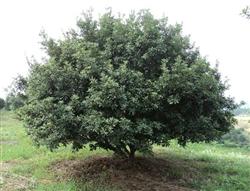 How can bayberry trees be made to increase yield? What methods can achieve this? Please give an introduction.
The main reasons for low yield in bayberry trees are low production caused by stunted young trees, excessively vigorous trees, aging trees, low-yielding trees in mixed forests, and trees of inferior varieties. The following methods can be used to renovate the fruit trees and increase yield.
Renovation methods for stunted young bayberry trees
Reasons for low yield: Because the base fertilizer applied at planting time was insufficient or even absent, and the planting holes were small, the root system did not grow well; or because of damage from pests and diseases and the effects of natural disasters and climate, tree growth became weak, the canopy was short and small, and the branching ability was extremely poor, so the number of flowers and fruits was low. Trees showing this phenomenon are called stunted young trees.
Renovation methods:
(1) Deeply plow and widen the planting holes, add imported soil for renovation, and increase the application of organic fertilizer to promote the formation of soil aggregates, thereby improving the soil's ability to retain fertilizer and water, promoting the development of roots and shoots, and forming a canopy as early as possible.
(2) Moderately increase heading-back pruning of the scaffold branches to stimulate the sprouting of dormant buds on the bayberry tree, improve the canopy structure, and at the same time apply an appropriate amount of quick-acting nitrogen fertilizer and potassium fertilizer to strengthen tree vigor so that it bears fruit earlier.
Renovation methods for excessively vigorous bayberry trees
Reasons for low yield: Because the soil is deep and fertile, or because nitrogen fertilizer was applied excessively to the soil, and the tree was then allowed to grow naturally, vegetative growth became excessive. A large amount of the tree's nutrients was consumed in the growth of branches and leaves, making it difficult for flower buds to form or allowing very few to form. The tree enters the fruiting stage late or has very low yield.
Renovation methods:
(1) Control fertilizer and water, especially apply little or no nitrogen fertilizer, and appropriately increase the application of phosphorus and potassium fertilizers;
(2) From October to November, apply paclobutrazol to the soil at 0.2-0.4 g of active ingredient per square meter of canopy projection area; or from March to April, spray the canopy with 700 mg/kg paclobutrazol;
(3) In autumn, dig trenches about 30 cm deep near the canopy drip line and carry out an appropriate amount of root pruning; and perform spiral girdling or bark inversion on some large branches to promote flower bud formation and improve yield and quality.
Renovation methods for aging bayberry trees
Reasons for low yield: The economic life of bayberry is generally 70-80 years, but due to improper management, or the effects of pests, diseases, and natural disasters, trees show many dead branches, sparse leaves, bare inner canopy, and very little fruiting. Trees showing these phenomena are called aging trees.
Renovation methods:
(1) According to the specific vigor of the aging tree, carry out partial renewal. Cut back the trunk and main branches in batches over 2-3 years, retain strong branches sprouting from the middle and lower parts, and remove excessive sprouts to facilitate renewal and rejuvenation.
(2) At the same time as renewal, combine with increased application of organic fertilizer, loosen the surface soil, and mound with new soil to promote the sprouting of new shoots and root growth, thereby restoring the canopy and yield. (3) Note that the wounds from sawing off large branches should be smoothed flat, and grafting wax or water-based bitumen paint should be applied to protect the wounds and promote early healing.
Renovation methods for low-yielding bayberry trees in mixed forests
Reasons for low yield: Because the mixed trees around the bayberry trees are tall and too dense, they affect ventilation and light penetration in the canopy, resulting in low bayberry yield.
Renovation methods:
(1) The mixed forest trees should be appropriately thinned to improve ventilation and light conditions for the bayberry trees.
(2) If mixed with moso bamboo, because bamboo rhizomes have extremely strong branching ability, they must all be cleared away. 5. Trees of inferior varieties: Because the fruit quality is poor, even if the yield is high, they have little value and must be renovated through top grafting to change varieties.
Click to get more bayberry tree cultivation techniques
Click to get more fruit cultivation techniques