Intercropping "millennium longevity fish" in wild rice stem fields: 300 yuan each and no worries about selling them
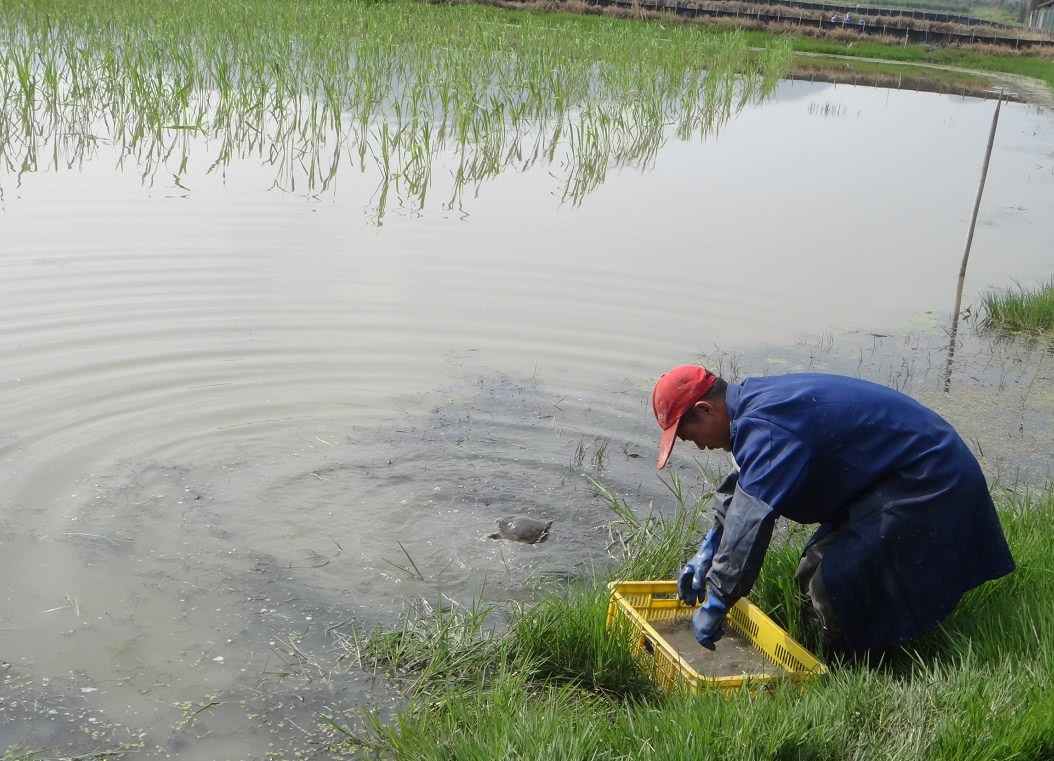
This season is the harvest season for all kinds of agricultural products, and also the season when wild rice stems mature. Many people love to eat wild rice stems; white as jade, they are commonly known as "water bamboo shoots" and are also highly nutritious. Wild rice stem is a plant that grows in freshwater ponds, so it is relatively vulnerable to damage from aquatic organisms. For example, the parasitic golden apple snail gnaws on the tender stems of wild rice stem, affecting yield and quality. In Yuyao, Zhejiang, China's main producing area of wild rice stem, local farmers put their minds to work and intercropped a kind of "millennium longevity fish" in the wild rice stem fields. It feeds on golden apple snails, small fish, small shrimp, crabs and so on in the water, while its droppings also nourish the wild rice stems, achieving multiple benefits at once and helping local farmers get on the road to prosperity.
As the saying goes, a millennium turtle and a ten-thousand-year tortoise; the "millennium longevity fish" in the wild rice stem fields refers to the soft-shelled turtle. The soft-shelled turtle is an omnivorous animal, so it eats anything, but what it likes best is still animals smaller than itself. Fish, shrimp, crabs and animal carcasses are its favorite foods. Such small animals and insects are exactly what the wild rice stem fields have in abundance. After farmers release soft-shelled turtle seedlings into the wild rice stem fields, they basically do not need to tend them, nor do they need to put in feed, because there is already enough food in the fields. In there, the soft-shelled turtle is like a guardian, clearing away pests for the wild rice stems, and the soft-shelled turtle's droppings can also fertilize the field, letting the wild rice stems grow better. It must be said that this method is quite good.
This ecologically free-range soft-shelled turtle has a longer growth period, but its quality is first-rate. Each mu of wild rice stem field can raise 100 soft-shelled turtles. This kind of ecological soft-shelled turtle is very popular in Guangdong's high-end market, and every year before it even reaches the market it is reserved by major buyers. A 2-jin soft-shelled turtle has a market price of 300 yuan, so each mu of field can increase income by 30,000 yuan. In addition, there are wild rice stems to sell. Grown in this kind of nutrient-rich paddy field, the wild rice stems are very thick and sturdy, and during the growing process, in order to take care of the soft-shelled turtles, pesticides are basically not applied, so they are green food and the price is somewhat higher than ordinary wild rice stems. It can be said that the intercropping of wild rice stems and soft-shelled turtles is a highly complementary model and is worth learning from by farmers in various places. Of course, this farming model is only suitable for places with higher temperatures, and may not be very suitable in the north.
The soft-shelled turtle is a precious tonic food, and every part of it is valuable. Its meat has the effect of nourishing yin and supplementing yang, and stewed soup is a great tonic. In addition, the soft-shelled turtle's plastron is also a medicinal herb called "guiban," which is likewise of high value. This is also why the soft-shelled turtle is very expensive in our country's market. If in the future this farming model can be promoted to various places and realize the industrialized development of the new countryside, it will also be able to help more farmers become prosperous and reach a moderately prosperous life.