What are the technical characteristics of wheat field intercropping and multiple cropping patterns?
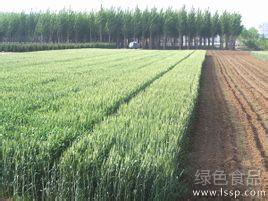
Land preparation for wheat fields under rice-wheat multiple cropping
Because different regions differ in geographical location, natural resources, production conditions and so on, farmers must adapt their cropping sequence arrangements and crop layout methods to local conditions. Drawing on experience from various places, the "intercropping and multiple cropping" patterns based mainly on growing wheat include the following:
1. Wheat-grain relay intercropping and multiple cropping. There are three forms: wheat-grain multiple cropping after harvest, wheat-grain relay intercropping, and wheat-grain strip intercropping of two crops.
(1) Wheat-grain multiple cropping after harvest. That is, a two-crops-per-year cropping system in which an autumn crop is planted after the wheat harvest. Most of the central-southern Hebei wheat region in our province uses this pattern.
(2) Wheat-grain relay intercropping. Relay intercropping of two crops, wheat and corn. On the premise of ensuring that the wheat yield of that year is not reduced, it can increase corn yield by 10%-20%. This pattern suits wheat regions with a frost-free period of 210-230 days and an active accumulated temperature above 4700°C.
⟧ (3) Wheat-grain strip intercropping of two crops. The planting method mostly uses 1.3-1.7 m as one planting strip, with wheat occupying 0.7-1 m, planting 4-6 rows of wheat, and leaving 0.6-0.7 m as the relay intercropping row; 40-50 days before the wheat harvest, two rows of autumn grain are relay intercropped, generally mainly corn, though sorghum, sweet potato and other crops can also be relay intercropped. This method gives a slightly lower yield than flat-sown wheat, but relay intercropping corn and other crops has great potential for increasing yield and income. This planting pattern is "autumn as the main crop, ensuring autumn while striving for summer," and can turn areas originally difficult for two crops into two-crop planting; it is suitable for promotion in the cooler eastern Hebei wheat region (including northern Langfang, and all of Tangshan and Qinhuangdao).
2. Wheat, autumn grain, and green manure intercropping. This is a method of combining land use with land maintenance by adding green manure crops on the basis of wheat-autumn grain intercropping. This pattern suits areas with lower production conditions and yield levels, or with much land and few people and extensive cultivation, where developing green manure crops is taken as an effective way to build up soil fertility. There are two methods: two grains and one manure, and two grains and two manures.
(1) Two grains and one manure. This is suitable for development in areas with severe spring drought, concentrated summer rain, and a lack of irrigation conditions. The relay intercropping method mostly uses 2.5 m as one planting strip, with wheat occupying 1.7 m and sowing 10-12 rows, and corn occupying 0.7-0.8 m, with 2 rows of corn relay intercropped in early to mid-May. After the wheat harvest, leguminous green manure crops such as sesbania and beans are multiple-cropped. In this method, the first crop of wheat occupies less area than flat sowing and can be fertilized in a concentrated way; the middle crop of corn is relay intercropped early, resisting disasters and ensuring a stable harvest; and the third crop of green manure is turned under before wheat sowing to benefit the soil.
(2) Two grains and two manures. This pattern requires two conditions: first, heat that can both produce a certain amount of green manure fresh matter and allow timely turning under for planting autumn grain crops; second, a certain amount of rainfall to ensure normal sowing, or irrigation conditions. Generally, with a 2-2.4 m bed strip, hairy vetch is planted in the reserved gap in the wheat, the hairy vetch is turned under and corn is relay intercropped, and after the wheat harvest, sunn hemp, sesbania or mung bean is multiple-cropped; after the corn harvest, the green manure is turned under as base fertilizer for wheat, generally increasing that year's grain yield by 15%-30%. The green manure varieties intercropped in the first half of the year have very strict requirements. According to the identification trial of shade-tolerant, fast-growing varieties for wheat-relay-intercropped green manure conducted by the Hebei Academy of Agriculture and Forestry Sciences in Nanpi County, hairy vetch is the best, growing fast in early spring, with high grass yield reaching more than 1250 kg per mu, and it is easy to turn under; next is common vetch. For green manure intercropped with corn in the second half of the year, mung bean, whose natural plant height is lower than the corn ear position, is the best.
3. Wheat-oil crop relay intercropping. This mainly refers to relay intercropping of wheat and peanut. This is a planting pattern in peanut-producing areas for achieving a double harvest of grain and oil. It is divided into two methods: flat relay intercropping and furrow relay intercropping. Flat relay intercropping mostly involves relay intercropping peanut at the wheat flowering stage, with 7000-8000 hills per mu and 2 seeds per hill. Furrow relay intercropping involves planting wheat at the bottom of the furrow and peanut on the ridge, with peanut relay intercropped 20 days before the wheat harvest; generally the ridge spacing is about 0.8 m, 3 rows of wheat are planted at the bottom of the furrow, and 2 rows of peanut are relay intercropped on top of the ridge in spring. Although relay-intercropped peanut yields slightly less than a single spring planting, it allows an additional harvest of about 300 kg of wheat.
To solve the problem of competition for land between grain and oil crops and the long-term continuous cropping of peanut, the eastern Hebei peanut-producing area of Hebei Province has also created a wheat-oil crop-bean planting pattern, namely strip rotation of wheat, peanut and soybean. In areas with poor soil and water conditions, the strip spacing is based mainly on peanut, with a strip width of 1 m, ridges formed and furrows made, and peanut occupying 0.7 m planted on the ridges.