Key Techniques for Three-Dimensional Intercropping of Greenhouse Green Peppers, Loofah, and Cilantro
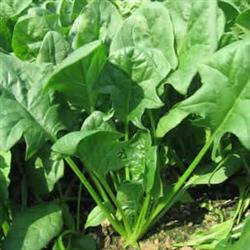
Summer spinach, also known as fu spinach, is difficult to cultivate and can only be grown on a small scale because it tends to bolt prematurely, and it also has the shortest leaf growth period of any crop in the year, resulting in unsatisfactory quality and yield, with pests and diseases hard to control. 1. Variety selection: It is advisable to choose varieties with strong drought resistance, heat tolerance, rapid growth, and low sensitivity to day length...
 1. Raising strong seedlings
1. For green peppers, select excellent varieties such as Zaofeng No. 1 (large-fruited type), Sujiao No. 5, and Luojiao No. 4, and raise seedlings in cold beds from late October to early-to-mid November. Choose a seedbed field where solanaceous vegetables have not been grown for 2 to 3 years. Before sowing, focus on enriching the seedbed fertility, sun the seeds for 1 to 2 days, and soak the seeds in 52°C warm water for 15 to 20 minutes to kill pathogens on the seed surface. At sowing, water thoroughly to saturate the bottom soil, sow 7 to 8 grams per square meter, then cover lightly with fine nutrient soil 0.5 to 1 cm thick and cover with plastic film. Before emergence, keep the greenhouse closed to raise temperature, maintaining a daytime temperature of 25 to 30°C and a nighttime temperature of 18 to 20°C. After emergence, gently remove the plastic film and appropriately scatter some dry fine soil to fill cracks and promote root growth. After full emergence, ventilate appropriately to reduce humidity, maintaining a daytime temperature of 20 to 25°C and a nighttime temperature of 16 to 18°C. At the 3-to-4-leaf stage, transplant seedlings into 10×10 cm plastic pots or paper tube pots. During the overwintering period, the focus is on preventing freezing and disease; a large greenhouse with a small greenhouse inside plus straw curtains or 2 to 3 layers of shade netting can be used for overnight coverage. In winter, watering should be controlled to avoid excessive humidity in the seedbed, and carbendazim, thiophanate-methyl, or chlorothalonil can be sprayed appropriately to prevent disease. After the Beginning of Spring, ground temperature gradually rises; appropriately apply dilute liquid manure and spray a 0.2% to 0.3% potassium dihydrogen phosphate solution to promote seedling growth. Seedling age is 100 to 120 days.
2. For loofah, select the white-seeded stick-shaped fleshy loofah variety, and in early-to-mid March use a large greenhouse with a small greenhouse inside for nutrient pot seedling cultivation. Before sowing, soak seeds to promote germination; the method is to soak seeds in warm water for 3 hours, then wrap the seeds in gauze or a towel and place them in a 30°C environment to promote germination, and after the seed coat splits, sow 1 seed per pot. Before emergence, maintain a daytime temperature of 25 to 30°C and a nighttime temperature of 18 to 20°C; after emergence, ventilate in a timely manner to reduce humidity. Seedling age 35 to 40°C, with 3 to 5 true leaves per plant, and leaves tender green.
2. Reasonable intercropping
1. Green peppers: In early March, choose a sunny morning to transplant green pepper seedlings into the greenhouse, planting 5000 plants per mu, with a plant-to-row spacing of 27×50 cm. Apply sufficient base fertilizer 7 to 10 days before transplanting: 4000 to 5000 kg of decomposed organic fertilizer per mu, 100 kg of cake fertilizer, 50 kg of diammonium phosphate, or 40 to 50 kg of 45% ternary compound fertilizer; prepare the land and make beds, spray trifluralin or dual, lay plastic film flat, and close the greenhouse to raise temperature. After transplanting, keep the greenhouse closed for 5 to 7 days to preserve heat and moisture and promote seedling recovery.
2. Loofah: In late April, transplant loofah vines between the green pepper rows and about 20 cm inside the lower edge of the greenhouse frame; plant 2 rows in each greenhouse, with 220 to 250 plants per mu.
3. Cilantro: After the green peppers are pulled up in late July, promptly dig and turn the soil, prepare the land, and apply fertilizer; apply 15 to 20 kg of compound fertilizer and 1500 to 2000 kg of decomposed manure per mu as base fertilizer, then sow cilantro under the loofah trellis in a timely manner (using the loofah's returning shade). Before sowing, rub open the schizocarps, soak seeds in water for 6 to 8 hours, then suspend the seeds above the water surface in a well to promote germination; use 6 to 7 kg of seed per mu. After sowing, cover the soil surface with wheat straw or shade netting, and during hot and dry weather insist on spraying water in the morning and evening to keep the soil moist and promote emergence.
3. Field management
1. Green peppers: Manage the field in a timely manner; on sunny days ventilate in a timely manner to reduce humidity, and at night cover appropriately to preserve heat and prevent frost damage. According to seedling condition, choose a sunny morning to apply 1 to 2 topdressings of dilute liquid manure, 1000 kg per mu each time, to promote seedling growth. If continuous rainy weather occurs in early spring, pepper seedlings are prone to excessive vegetative growth, so appropriately spray chlormequat or paclobutrazol. In the early flowering and fruiting stage (when the first pepper has set and the opposite pepper is swelling), on sunny days prevent high temperatures from damaging seedlings; control the greenhouse temperature at 25 to 28°C during the day and 15 to 18°C at night. According to growth vigor, apply 1000 to 1500 kg of dilute liquid manure plus 5 to 7.5 kg of urea per mu, and thereafter apply manure fertilizer once every 7 to 10 days to promote flowering and fruiting. In the full fruiting stage, apply 20 kg of urea plus 1500 to 2000 kg of human and livestock manure per mu, and combine with pest control and disease prevention by spraying foliar fertilizer 2 to 3 times. Remove the small greenhouse in late April, and remove the greenhouse film in late May.
2. Loofah: In the early vine-extending stage of loofah, first insert short bamboo poles beside the trellis and guide the vines to climb onto the bamboo poles. After the greenhouse film is removed in late May, promptly arrange and tie the vines so they climb along the bamboo poles onto the greenhouse frame, and pull strings between the greenhouse frames to form a net; apply dilute liquid manure appropriately to promote vine growth. In early-to-mid June, loofah enters the flowering and fruiting stage; carry out moderate shallow intertillage to loosen the soil, promptly arrange the vines and young gourds, and remove lower side vines. In the full fruiting stage, manage by frequently removing old leaves and thinning weak vines, frequently thinning excess male flower buds, and frequently harvesting gourds. In mid-to-late August, after cilantro has emerged uniformly, gradually remove the gourd vines to increase light under the trellis and promote cilantro growth.
3. Cilantro: After cilantro emerges, promptly remove the surface covering; in dry weather, spray water in the morning and evening to keep the soil moist, and apply decomposed dilute liquid manure once every 5 to 7 days to promote seedling growth. When plant height is 10 to 12 cm, combine with watering and apply 7.5 to 10 kg of urea per mu, and spray a 20 ppm gibberellin [920] solution to promote rapid growth of cilantro. Once plant height exceeds 20 cm, it can be harvested in batches. In early-to-mid October, the stubble can be cleared and the field cleaned for planting green vegetables.
4. Disease prevention and pest control
1. Green peppers: In the early stage, alternately use carbendazim, thiophanate-methyl, procymidone, and iprodione to control gray mold and sclerotinia; promptly use dimethoate or aphid-killing smoke agents to control aphids. In the middle and late stages, use carbendazim or thiophanate-methyl to control anthracnose; during the plum rain season, pay attention to using phosphethy aluminum to prevent late blight, and in hot and dry weather spray 83 disease resistance enhancer or virus A to prevent viral diseases.
2. Loofah: In the early stage, pay attention to using dimethoate to control aphids, and spray virus A at 500 times or 83 disease resistance enhancer at 150 times early to prevent viral diseases. In the rainy season, use 500 times of antidote alum or 300 times of phosphethy aluminum solution to control downy mildew. In the later stage, use 1500 times dichlorvos plus 3000 times deltamethrin mixed spray to control melon borer.