-

Feng Shui Interpretation of Home Bonsai: A Complete Analysis of Placement and Taboos
Regarding feng shui trees, there are many folk sayings, such as: peach and plum trees do not enter the home, banyan trees do not accommodate people, and cypress, pagoda tree, poplar, mulberry, and willow are all yin trees that cannot be planted at home, and so on. Plants all possess spiritual energy, and plants contain the five elements. Between plants and among all things, there exist fields, and under the effect of these fields
-
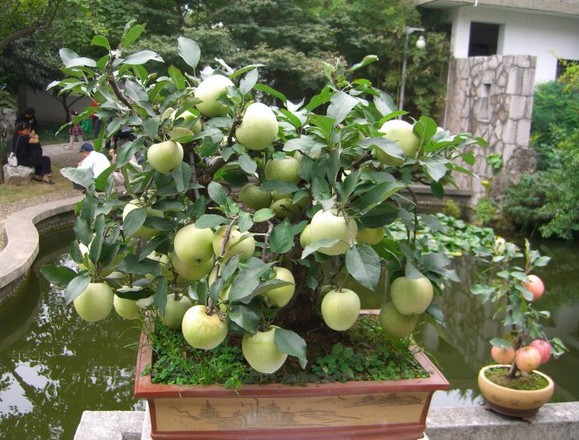
Detailed Explanation of Winter Pruning Methods for Fruit Tree Bonsai, Beginners Can Learn Too
Winter pruning, also called dormant-season pruning, refers to pruning during the dormant period from after the fruit tree sheds its leaves until spring flower buds begin to swell. The so-called winter pruning keeps the tree vigorous because at this time most of the nutrients have already been transferred from the branches and leaves to the main trunk and roots of the fruit tree for storage, so pruning causes the least nutrient loss to the fruit tree and less damage to the tree body.
-
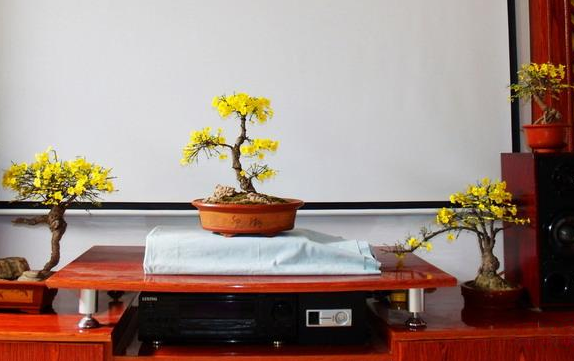
Propagation Methods and Cultivation Techniques for Winter Jasmine Bonsai
Winter jasmine, also known as golden plum or small yellow flower, is named for being the earliest to bloom among all flowers, and its blooming heralds the spring when all flowers bloom together. Along with plum blossom, narcissus and camellia, it is collectively known as one of the Four Friends in the Snow, and is one of China's precious flowers. Winter jasmine is not only elegant and beautiful in flower color with extraordinary temperament, but also fears no cold and is not choosy about soil
-
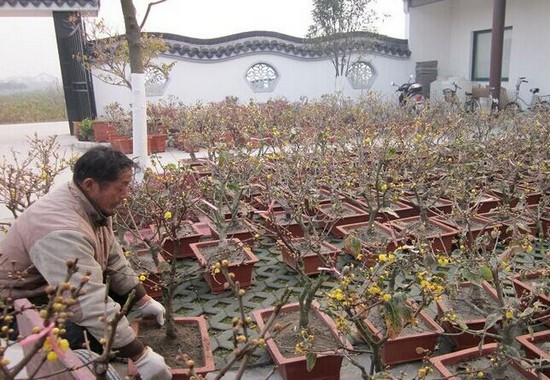
Fast cultivation method for wintersweet bonsai, a step-by-step guide
Wintersweet (Chimonanthus praecox) belongs to the family Calycanthaceae and is a deciduous shrub with opposite leaves and a rough leaf surface. The flowers are borne on new shoots (i.e. current-year shoots) that grow from the leaf axils of the previous year's branches. The flowering period is from December to February of the following year, and the fruiting period is from August to September of the following year. It is highly adaptable, drought-tolerant, cold-tolerant, light-loving, fertilizer-loving, and not tolerant of sooty mold. It tolerates pruning
-
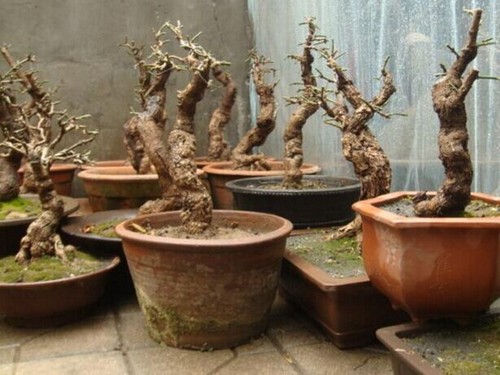
Detailed Guide to Winter Jasmine Propagation Techniques: Common Methods and Key Points
Winter jasmine (Jasminum nudiflorum) grows rapidly and is very suitable for making bonsai. Select a thick, sturdy old winter jasmine stump, plant it in a cylindrical pot, expose the roots and claws, bind it moderately, and let the trunk droop; within just a few years, an elegant and graceful cascade-style bonsai can be formed. Alternatively, select a small stump about the thickness of a thumb, wrap the lateral roots around a rock, and bury it in soil
-
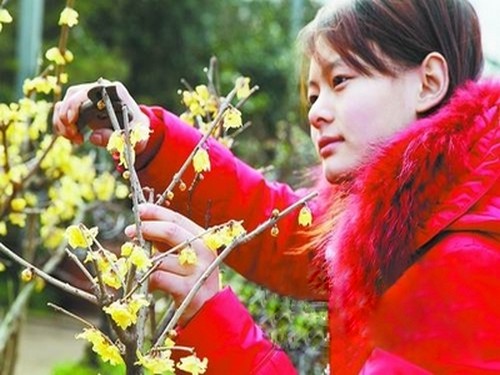
Wintersweet bonsai pruning techniques: master these few points and you are all set
Wintersweet (Chimonanthus praecox) is a flower that blooms in winter and symbolizes resilience and perseverance. Its flowers are small but numerous, with a fragrant scent that fills the air. Nowadays many people also grow wintersweet as potted plants at home. Wintersweet has strong branching ability, and there is a saying that "wintersweet never lacks branches."
-
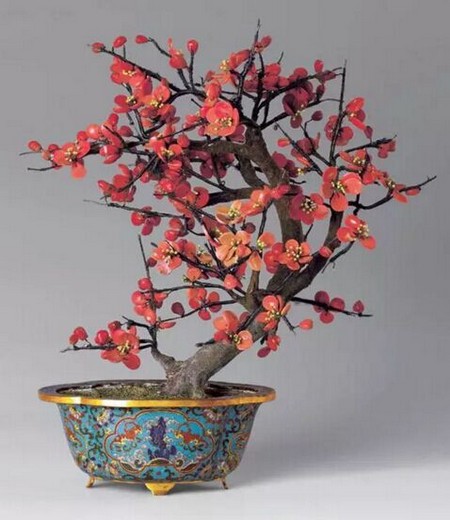
What are the fertilization methods for wintersweet bonsai?
Any plant needs a certain amount of nutrients to be grown well. Although wintersweet can withstand severe cold, fertilizer is something that still cannot be skimped on where it is needed. In fact, wintersweet is a flower that very much likes fertilizer. So when growing wintersweet bonsai, be careful to preferably choose fertile soil
-
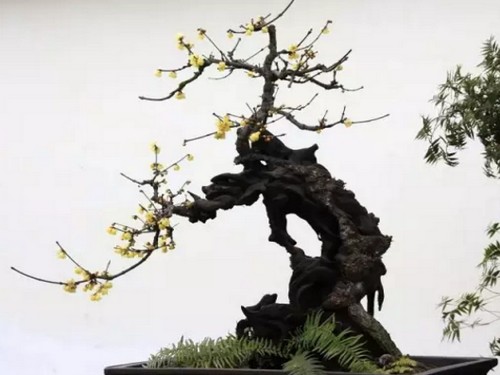
How to shape a wintersweet bonsai? A detailed guide to practical methods
In Yanling, Henan, the hometown of wintersweet, traditional wintersweet bonsai forms include single-trunk plum, dragon plum, knot plum, single-hanging-branch plum, double-hanging-branch plum, round-hanging-branch plum, screen-fan plum, and pearl upside-down roller blind, among others. It can be shaped by training and wiring young trees, or by using old, rugged dog-tooth wintersweet stumps as rootstock.
-
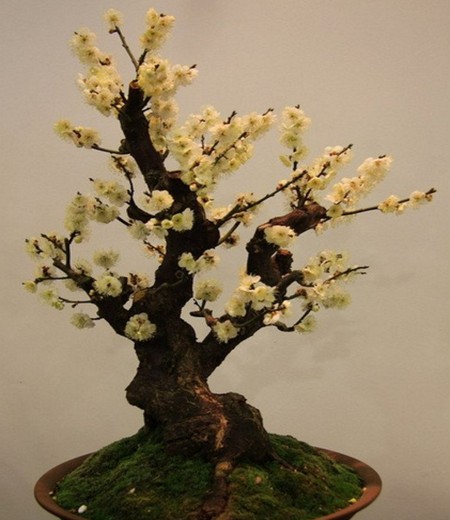
How to prune wintersweet bonsai? Detailed pruning techniques
Wintersweet (Chimonanthus praecox) has strong branching ability, hence the saying "wintersweet never lacks branches." Through timely pruning, it can sprout more strong flowering branches and bloom more profusely. Generally, pruning should be done after flowers fade but before leaves emerge, cutting out dead branches, overly dense branches, crossing branches, and diseased or pest-infested branches, and leaving 2 to 3 pairs of buds at the base of one-year-old branches.
-
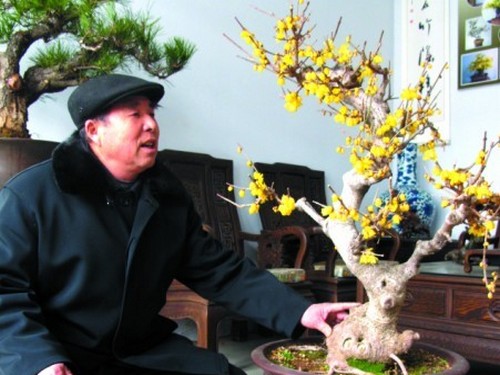
How to shape wintersweet bonsai? Detailed explanation of methods and principles
There are many ways to shape wintersweet bonsai. Taking the Sichuan-style bonsai as an example, they make wintersweet bonsai mostly in the "rolling dragon style," whose characteristic is a momentum like dragons flying and phoenixes dancing. If wintersweet is to keep a tree form, shape it after new branches grow; if making a stump landscape, cut off the upright branches and shape it after new branches emerge the following year
条件筛选