How to prune wintersweet bonsai? Detailed pruning techniques
Wintersweet (Chimonanthus praecox) has strong branching ability, hence the saying "wintersweet never lacks branches." Through timely pruning, it can sprout more strong flowering branches and bloom more profusely. Generally, pruning should be done after flowers fade but before leaves emerge, cutting out dead branches, overly dense branches, crossing branches, and diseased or pest-infested branches, and leaving 2 to 3 pairs of buds at the base of one-year-old branches, cutting off the upper branches to encourage branching. After each new branch grows 2 to 3 pairs of leaves, pinch off the growing tip to encourage short, sturdy flowering branches and give the plant a well-balanced, graceful shape. Pruning is mostly done from March to June, and stops after July. If pruning is not done at the right time, many water sprouts will emerge, consuming nutrients, resulting in poor flower bud differentiation and reduced flowering.
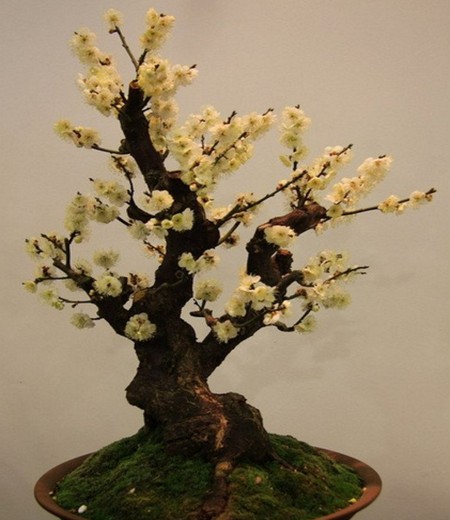
To keep wintersweet flourishing with branches and flowers year after year, pruning and bud pinching are extremely important. Pruning is generally done from March to June and stops after August. After flowering each year, the old flowering branches should be cut back immediately, leaving a maximum of only 15-20 cm per branch. After the new branches grow 2 to 3 pairs of buds, pinch off the terminal bud; soon after, side branches will grow again, and after they reach 10 cm, pinch the buds once more, repeating this several times until flower buds are basically formed. Also thin out crossing branches, parallel branches, overlapping branches, opposite branches, water sprouts, and overly dense or weak branches that affect the tree's appearance. There is a saying among flower growers that "wintersweet never lacks branches," so wintersweet can be heavily pruned.
Yanling Plum Garden is a garden designed with wintersweet as its theme, cultivating tens of thousands of wintersweet plants. Among wintersweet products, bonsai wintersweet stands out for its commercial value and revenue generation. Pruning bonsai wintersweet focuses on overall shape coordination and unique design. Wintersweet pruning is a skilled task; thinning branches and cutting back require removing some "taboo branches." How do you distinguish taboo branches, and what types of taboo branches are there? The many seedling growers of Yanling County Jingzhiyuan Flower and Tree Information Technology Co., Ltd. have summarized the following:
Taboo branches mainly fall into the following types:
Belly branch: a branch growing from the inner side of a curve in the stem; if there is a good branch nearby, cut it off at the base.
Various taboo branches in wintersweet bonsai pruning
Crossing branch: branches that cross each other; cut them off or correct them with wire.
Reverse branch: a branch extending back toward the branch base; cut it off or correct it with wire.
Erect branch: its momentum is too strong and disrupts the tree shape; cut it off.
Drooping branch: (a downward branch) not only lacks momentum but also disrupts the tree shape; cut it off.
Wheel branch: branches extending in three or more directions from the same point on the stem, causing the stem at that point to thicken. Keep one and cut off the others.
Parallel branch: not left-right parallel, but two branches growing in the same direction from nearby positions; choose one to keep to maintain branch order and cut off the other.
Protruding branch: back branches are very important, but front branches should at least not be allowed to grow on the lower half; instead, leave a short portion on the upper part, so the beauty of the stem can be appreciated and give the impression of a large tree.
Concave branch: a branch growing not in a V shape but in a U shape. If it is relatively thick, cut it off.
Penetrating branch: extends in two directions as if piercing through the stem; choose one side and cut it off.
Axillary branch: also called stacked branch, an adventitious bud growing from the base of a branch; cut it off.
For a well-formed wintersweet bonsai, carry out a timely pruning and shaping after the flowers fade, cutting off part of the perennial branches to encourage the branches to sprout new small side branches. You can also heavily prune aged branches according to the tree shape to promote renewal and rejuvenation, but pay attention to the position and direction of the terminal buds on the retained branches. During the growing season, pay attention to pinching the tips of the current year's young tender branches to encourage more branching, change the direction of the branches, make the branches grow thick and strong, and produce more flower buds and more flowers. During the growing season, for some current-year new branches that need bending, you can use hemp rope or palm rope to pull them appropriately, and carry out necessary pruning according to the tree's nature and growth vigor. After autumn begins, when flower buds grow to the size of a grain of rice, carry out a pruning and shaping to control leggy growth, make the plant compact, and achieve the artistic effect of sparse shadows slanting across, while also helping the plant accumulate nutrients so its flowers are large and brightly colored.