-

Detailed Explanation of Integrated Pest Management (IPM) Technology in Peach Orchards
The 6 core components of IPM technology in peach orchards: (1) Agricultural control measures for pests and diseases in peach orchards. During winter pruning, remove diseased and pest-infested branches and mummified fruit, and destroy them in a centralized manner; adjust the tree structure, improve ventilation and light penetration conditions, and strengthen tree vigor; (2) Frequency-vibration insect-killing lamp technology for trapping and killing pests. Install 1 insect-killing lamp per 3.3 hm2 of orchard, and use it from early April to mid-October, which can achieve a good insect-killing effect; (3) Sugar-vinegar basin technology for trapping and killing pests. Starting in mid-March, placing sugar-vinegar basins in the orchard has a clear effect on trapping and killing overwintering-generation adults of the peach leafminer moth; (4) Sex phero
-
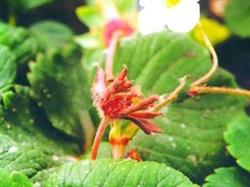
Symptom Identification and Integrated Control Methods for Strawberry Bud Blight
Strawberry bud blight is a soilborne fungal disease with a worldwide distribution. It is strongly saprophytic in soil and is an important root disease of many crops. In addition to strawberry, it also affects more than 160 species of cultivated and wild plants, including cotton, soybean and vegetables. On strawberry, it mainly damages buds, new shoots, stipules and the bases of leaf petioles, causing seedling-stage damping-off...
-
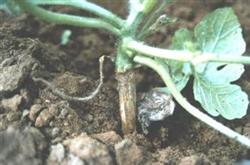
How to prevent and control watermelon seedling diseases? A detailed guide to integrated control techniques
I. Symptoms of the main diseases 1. Damping-off. In the early stage, the root collar of the seedling (the junction of root and stem) develops lesions that look as if scalded by boiling water and become rotten, after which the diseased part turns yellowish-brown, dries out and shrinks; the cotyledons have not yet wilted, but the seedling topples over. Damping-off mostly occurs from the emergence of the cotyledons to the stage when 2 true leaves have flattened out. The disease spreads very quickly; a few days after the appearance of the first diseased plants, seedlings topple over in patches. Under conditions of high temperature and high humidity, the diseased parts of the seedlings and the ground nearby,
-
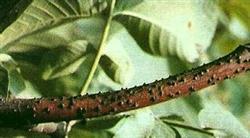
Integrated Control Methods and Technical Key Points for Walnut Branch Blight
Walnut branch blight is caused by fungal infection and mainly damages branches and trunks. It occurs in all regions, with a general diseased plant rate of 20-30%, and in severe cases the diseased plant rate reaches over 80%, causing massive branch dieback and directly affecting tree growth as well as walnut yield and quality. Therefore, timely control is necessary to curb the disease and promote tree...
-
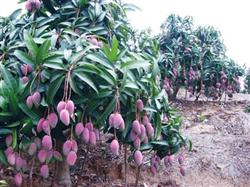
Integrated management with new techniques makes mangoes retain flowers and fruits, with more fruit set
Mango jujube sets fruit easily but retaining it is difficult; from the young fruit stage to the white-ripe stage it keeps dropping fruit, and puzzlingly, it always drops the large ones and keeps the small ones, which distresses jujube growers greatly. In recent years, various flower- and fruit-retention measures were tested on mango, and the following integrated management new techniques were developed to solve this problem: 1...
-
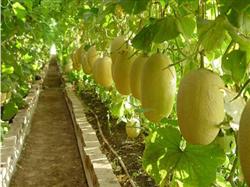
Integrated Control Measures for Gummy Stem Blight of Hami Melon in Rainy Regions
I. Bacterial Leaf Spot Symptoms: In the early stage, water-soaked lesions appear near the veins on the underside of leaves; the lesions expand rapidly and merge into one another, with a yellow halo at the edges. Control method: In the early stage of the disease, spray the foliage 2-3 times with 77% Duoning at 500 times dilution or 3% zhongshengmycin at 800 times dilution, once every 4-5 days. II. Gummy Stem Blight Symptoms...
-
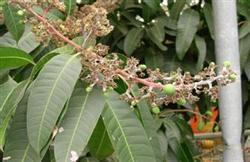
What to do if a mango tree gets sooty mold? Key points of integrated control techniques
I. Causes of mango flower and fruit drop 1. If the mango flowering period and young fruit period encounter low-temperature rainy weather (temperature below l1.5°C) and it lasts a long time, flower and fruit drop will be severe. The flower spikes are damaged and die, a large number of deformed fruits and abortive fruits appear, and they easily fall off naturally. 2. Pests and diseases damage Pests that harm mango...
-
What are the main pests of bayberry (Chinese bayberry)? A detailed guide to integrated control methods
I. Bayberry crown gall disease 1. Symptoms: Bayberry crown gall disease is a bacterial disease. It mainly affects the branches and trunks of 2-3 year old fruiting trees, mostly forming tumors on the branches and trunks. The tumors are nearly spherical, varying in size, very hard and suberized, and brown to dark brown. Generally, the tumors on the branches and trunks begin to enlarge in early April, and in July-August...
-
How to prevent and control jujube tree rust disease? Mastering integrated control techniques is key
Jujube rust disease, also known as jujube mist, often causes massive leaf drop during the fruit expansion stage. Diseased trees produce shriveled jujube fruits with reduced sugar content in the flesh, most of which are inedible. Due to the damage caused by rust disease, serious yield reductions occur, variety quality deteriorates, and farmers' economic income is directly affected. Severely diseased trees that drop leaves early will sprout a second time, affecting the...
-
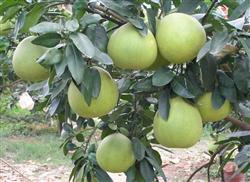
Detailed Explanation of Key Points of Integrated Pest and Disease Control Techniques for Shatian Pomelo
It is understood that since the 1980s, large-scale Shatian pomelo planting bases have been established successively across Meizhou, with economic benefits continuously increasing. Through many years of practice in growing Shatian pomelo, many farmers have greatly improved their cultivation techniques, but due to the large area and wide variety of pests and diseases, newly emerging pest and disease species...
条件筛选