-

Key Technical Points for Integrated Control of Rice Diseases, Insect Pests, Weeds and Rodents
1. Suitable areas: all rice-growing areas in Guangdong Province. The rodent control technology is suitable for controlling house mice in agriculture, forestry, livestock and poultry farming, and urban areas of Guangdong Province. 2. Key technical points for rice disease and insect pest control: (1) Agricultural control: A. Select disease- and insect-resistant, high-yielding, high-quality varieties. B. Sow and transplant at the appropriate time. C. Rational close planting and fertilization. For seedling throwing, 40 trays per mu (560 holes) is appropriate; for transplanted fields, about 20,000 hills per mu (6X5 cun), that is, about 80,000-100,000 seedlings, is appropriate. For basal fertilizer, it is recommended to apply more organic fertilizer; according to soil fertility and yield, apply an appropriate amount of nitrogen fertilizer in the early and middle stages (about 10 kg of pure nitrogen per mu), and increase the application of phosphorus and potassium fertilizers.
-
How to treat garlic leaf blight? Master integrated control techniques in one article
Shandong is a major garlic-producing region, and garlic suffers fewer diseases than other vegetables. However, in recent years, a relatively rare new disease, garlic leaf blight, has appeared in garlic-growing areas, and it strikes fiercely and causes severe damage. Once this disease occurs, it can cause major yield reductions. I. Symptom identification This disease mainly affects leaves and leaf sheaths. Leaf infection falls into two types: first, the tip-blight type, which mainly occurs in the initial infection stage, with the leaf tip turning dark brown and forming many dark purplish-brown oblique parallel stripes on it; in severe cases the lesions extend to 1/3 to 4
-
How to prevent and control garlic heart rot? Occurrence patterns and integrated control techniques
In recent years, the garlic industry in Pizhou City has developed rapidly, with the planting area growing from 3,333 hectares in the 1970s to 33,000 hectares in 2004, making it the largest garlic production area in the country and a national standardized high-quality garlic production demonstration county (city). However, with the expansion of garlic cultivation area and the extension of continuous cropping years, various pests and diseases have become increasingly severe, especially the damage from garlic heart rot, which has worsened year by year and seriously affects garlic yield and quality. 1 Occurrence patterns and damage symptoms ① Occurrence patterns In late February 2002
-
Garlic Disease Identification and Integrated Control Techniques
In recent years, with the expansion of garlic planting areas, continuous changes in cropping systems and cultivation ecological environments, the disease resistance of garlic plants has also decreased year by year, and the losses caused by garlic diseases have become increasingly severe. In particular, the continuous emergence of new diseases, with some diseases even showing a sharp upward trend, has further intensified the harm to garlic. According to investigation and analysis, the damage caused by garlic diseases generally results in a loss rate of 20%-30%, and in severe years and plots, it can reach over 50%, or even higher. For example, in a 1993 survey, garlic rust disease in Zhongmu County reached a diseased plant rate of up to 80% in severely affected garlic fields, with the affected area exceeding 65% of the planted area. The affected garlic was severely downgraded, affecting export earnings and greatly dampening the enthusiasm of garlic farmers. At present, more than 20 known garlic crop diseases exist, caused by fungi, bacteria, viruses and nematodes respectively. In addition, physiological diseases are also attracting increasing attention. The occurrence and damage of diseases has become a major obstacle in garlic production. The main garlic diseases and their integrated control techniques are introduced as follows.
-
What to do when the white part of scallions is short, thin, and hollow? Control measures and integrated management
1. Select excellent long-white scallion varieties, such as Zhangqiu scallion, grain scallion (whip-pole scallion), etc. 2. Choose a plot with deep soil, fertile texture, and good drainage, and carry out deep plowing and fine harrowing; generally plow deeper than 30 cm, dig 20-30 cm deep, 15-30 cm wide or more, with ridges 70-80 cm wide between furrows to facilitate earthing up. Before planting, open furrows and apply fertilizer, applying 1000-5000 kg of farmyard manure per mu, then subsoil the furrows deeply so that manure and soil are combined. 3. Plant between Grain in Ear and Minor Heat; earlier is better than later. If planted too late,
-
Detailed Explanation of Integrated Control Techniques for Ginger Bacterial Wilt
In recent years, ginger bacterial wilt has commonly occurred in ginger-producing areas. The disease generally appears in mid-to-late June (after the seed ginger is dug up). In the early stage of the disease, the main symptoms are dead seedlings and rotted hills, and it occurs until the harvest season. In mild cases, the rate of dead hills reaches 30-40%, and in severe cases, the rate of dead hills reaches 80%, causing serious yield reduction and even total crop failure. The pathogen of ginger bacterial wilt can overwinter in seed ginger and soil. When suitable temperatures occur, it spreads through flowing water and underground pests. The pathogen invades through the natural openings or wounds of ginger, causing the collapse and rotting of ginger tissues, and ultimately leading to the death of the whole plant. Therefore, when ginger is planted continuously in the same plot, the
-
Occurrence and Integrated Control Methods of the Eggplant Yellow Spot Borer
Since the 1990s, eggplant has developed rapidly in Jingning County, and the county's planting area has now exceeded 1,300 hectares, with an annual total output of more than 51,000 t. At the same time, the eggplant yellow spot borer has shown an increasing trend of damage in the county, affecting the development of eggplant production. For this reason, the author conducted a preliminary study on the occurrence pattern and integrated control techniques of this pest. 1 Occurrence and damage characteristics The eggplant yellow spot borer, also known as the eggplant borer, belongs to the order Lepidoptera, family Pyralidae. Its larvae bore into and damage eggplant flower buds, stamens, ovaries, tender stems, tender shoots and
-
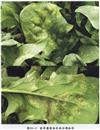
How to prevent and control downy mildew in spinach? Detailed explanation of prevention and integrated treatment methods
The disease is caused by a fungus called spinach downy mildew. It mainly affects the upper surface of the leaves; the lesions are pale yellow, irregular in shape and varied in size, with a diameter of 3-17 mm and indistinct edges. After the lesions expand, they join together into patches, and in the later stage they turn brown and the leaves die; on the underside of the leaves, a grayish-purple mold layer forms on the lesions. The disease spreads from the outer leaves...
-
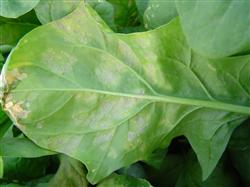
A Detailed Guide to the Prevention and Integrated Treatment of Spinach Downy Mildew
The disease is caused by a fungus called spinach downy mildew (Peronospora farinosa f. sp. spinaciae). It mainly affects the upper surface of the leaves; the lesions are pale yellow, irregular in shape, vary in size, measure 3-17 mm in diameter, and have indistinct edges. After the lesions expand, they join together into patches, and in the later stage turn brown and die, while a grayish-purple mold layer forms on the lesions on the underside of the leaves. The disease spreads from the outer leaves...
-
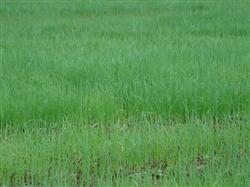
Key Integrated Pest and Disease Control Techniques for Onion Seedlings
I. Selecting Superior Varieties In production, purple-skinned varieties such as Ziyu No. 1, Ziyu No. 2, Zixing, and Shuanghuanhong can be selected. These varieties have the characteristics of strong pungency, high yield, excellent quality, and suitability for export. These varieties generally yield about 5000 kg per mu, and high-yielding plots can reach 7500 kg per mu. II...
条件筛选