Detailed Explanation of Key Points of Integrated Pest and Disease Control Techniques for Shatian Pomelo
It is understood that since the 1980s, large-scale Shatian pomelo planting bases have been established successively across Meizhou, with economic benefits continuously increasing. Through many years of practice in growing Shatian pomelo, many farmers have greatly improved their cultivation techniques, but due to the large area and wide variety of pests and diseases, newly emerging pest and disease species...
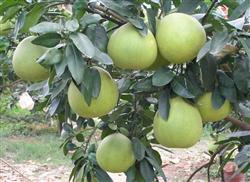
It is understood that since the 1980s, large-scale Shatian pomelo planting bases have been established successively across Meizhou, with economic benefits continuously increasing. Through many years of practice in growing Shatian pomelo, many farmers have greatly improved their cultivation techniques, but due to the large area and wide variety of pests and diseases, the number of newly emerging pest and disease species has continued to increase, posing a serious obstacle to the current development of high-quality, high-yield and high-efficiency pomelo production. Based on the occurrence patterns of pomelo pests and diseases, a set of disease control measures has been studied and summarized as follows:
1. Winter and spring orchard cleaning, keeping it clean and tidy
From December to February of the following year, temperatures are relatively low, and pests and diseases generally enter an overwintering state. During this stage, the focus should be on doing a good job of cleaning the pomelo orchard: first prune off pest-infested branches, dead branches, shaded branches and diseased leaves; then spray once with a pesticide to eliminate sources of disease and overwintering pests, such as lime sulfur mixture and resin soap. In early spring in February, before the spring shoots emerge, carry out a second orchard cleaning. Applying pesticide at this time can both control overwintering anthracnose and scab pathogens and also control pests such as scale insects.
2. Planting grass and retaining grass, rational intercropping.
Adopting the method of planting grass and retaining grass in the pomelo orchard plays a very good role in increasing the orchard's coverage rate, lowering the summer temperature of the orchard, raising humidity and preventing soil erosion. It can also provide abundant food and habitat for natural enemies, increasing the species and numbers of natural enemies and stabilizing the biological community. It is understood that in pomelo orchards planted with ageratum or green manure, the canopy temperature of pomelo trees in summer is 3-5°C lower than that of uncovered bare orchards, the relative humidity is about 5% higher, and the adult red spider mite population is reduced by 60%.
3. Removing buds and controlling shoots, breaking the pest and disease food chain.
The citrus leafminer is one of the serious pests during the new shoot stage of pomelo. It causes very little damage during the spring shoot stage, and only a small number of 2nd-3rd instar larvae can be seen causing damage in late March. It occurs most from May to October each year in summer and autumn. Especially for young trees that flush shoots 4-5 times a year, the damage is particularly severe. Therefore, emphasis should be placed on manual bud removal, removing scattered ones and keeping uniform ones, and concentrating shoot flushing. After 80% of the fruit trees in the whole orchard and 80% of the new shoots on each tree have flushed, release the shoots uniformly. Summer shoots should be released from May to early June, and autumn shoots before early August. In fertilization, focus on pre-shoot fertilizer and shoot-strengthening fertilizer. Pre-shoot fertilizer should be applied 10-15 days before shoot release, mainly with chemical nitrogen fertilizer; shoot-strengthening fertilizer should be applied 7-10 days after shoot release, mainly with phosphorus and potassium fertilizer. Then, according to the field pest situation, carry out pesticide spraying for control. Removing buds and controlling shoots has significant effects on controlling canker disease, anthracnose, aphids, citrus psyllids and other pests and diseases during the new shoot stage.
4. Strengthening cultivation management, enhancing tree vigor, and improving the tree's resistance to pests and diseases.
Pomelo trees have a high fertilizer demand, but people often apply mainly chemical nitrogen fertilizer while neglecting phosphorus, potassium and trace elements such as boron, magnesium and zinc, thus affecting both yield and quality. Therefore, formula fertilization based on soil conditions should be carried out for pomelo trees, applying fertilizer scientifically by supplementing whatever is deficient, rationally matching nitrogen, phosphorus and potassium and increasing the application of trace elements. This can not only improve yield and quality, but also enhance plant disease resistance and effectively reduce the occurrence and damage of many diseases. In recent years, due to fertilization reasons, soil compaction has worsened, and many plots of land clearly show whitening. For trace element fertilizer for pomelo trees, the key recommendation is Jindun, which not only supplements the trace elements needed by pomelo trees but also improves soil compaction and increases fertilizer efficiency. In addition, soil drought and insufficient fertilizer and water lead to weakened tree vigor and uneven new shoot flushing, often causing intensified damage from anthracnose, red spider mites, rust mites, citrus psyllids and other pests and diseases. Therefore, in dry seasons, pomelo orchards should be irrigated and fertilized in a timely manner, which can not only prevent the occurrence of many pests, diseases and physiological disorders, but also enhance tree vigor and improve resistance to pests and diseases.
5. Scientific use of pesticides, protecting and utilizing natural enemies.
Throughout the year, with warm spring, hot summer, cool autumn and cold winter, pomelo trees flush shoots, bloom, bear fruit and go dormant, which constitutes the seasonal changes of the biological population in the pomelo orchard and further causes rises and falls in the composition and numbers of the biological community. According to these changing patterns, pesticide application should be carried out according to control thresholds, selecting the correct timing and targeted pesticides. The main focus should be on four key control periods:
(1) From March to mid-May, the temperature is suitable. During this period, it is favorable for the invasion of diseases; pomelo orchards flush new shoots, providing abundant food, which is favorable for the occurrence of pests. Most pests and diseases show their first peak in this season, while the number of natural enemies of pests is relatively small and cannot control the damage of pests and diseases. This is also the best time to reduce the annual pest and disease base. During this period, chemical control is mainly adopted. The main pests and diseases include canker disease, anthracnose, scab disease, black spot disease, red spider mites, scale insects, leaf roller moths, flower bud maggots, citrus fruit gall midges, and weevils. In recent years, black spot disease and citrus fruit gall midge damage have been prominent, and control of this disease and this pest should be well carried out during this period. The key control period for black spot disease is from the flowering stage to the young fruit stage, that is, within 1 to 1.5 months after flower drop; for chemical control of citrus fruit gall midge, a combination of ground spraying and canopy spraying should be well carried out, and controlling the first generation is key, from late March to mid-April.
(2) From late May to June, mainly control red spider mites, rust mites and brown rot disease, and also control citrus leafminer, scale insects and anthracnose, etc.
(3) From July to September, the temperature is high, sunlight is strong, there is little rain in the early period and drought in the later period. Generally, pests have finished feeding and entered summer dormancy, the species of pests decrease and their numbers decline, while the numbers and species of natural enemies of pests continuously increase. In pomelo orchards with good control results in the spring stage, pesticide application can be discontinued, attention should be paid to protecting natural enemies, and fertilizer and water management should be strengthened to create an excellent pomelo orchard ecological environment and stabilize the natural enemy population. During this stage, because it is the period when red and rust spider mites damage the fruit and citrus leafminer damages summer and autumn shoots, field control should be strengthened. In pomelo orchards sprayed with Bordeaux mixture in spring, attention should be paid to checking the degree of red spider mite damage. At the same time, canker disease and anthracnose should be well controlled.
(4) From October to November, the climate is mild, and a second peak period of pest and disease occurrence appears. Although the pest population is relatively large at this time, the populations and numbers of various natural enemies are also very large, playing a significant inhibitory role on pests. Therefore, during this stage, the protection and utilization of natural enemies should be strengthened, pesticide application should be reduced as much as possible, and attention should be paid to checking the occurrence and damage of brown rot disease and citrus fruit gall midge. If citrus fruit gall midge-infested fruits are found, they should be removed in a timely manner, and fallen infested fruits should be picked up and centrally burned or deeply buried. When brown rot disease is found, pesticide control before fruit harvest should be strengthened.