-
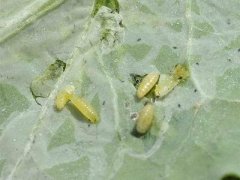
Damage symptoms of flower leafminer flies and identification of larval morphology
What are the damaging habits of the Liriomyza leafminer, and what does it look like? Do you know? Would you like to learn about it? Let's take a look together. Damaging habits: Adults lay eggs inside the leaf mesophyll, and the larvae first mine and feed beneath the epidermis on the light-facing side of the leaf, creating grayish-white feeding marks on the leaf.
-

What to Do About Boron Deficiency in Rapeseed? Symptom Identification and Control Methods
Boron Deficiency Symptoms in Rapeseed and Control Methods
-
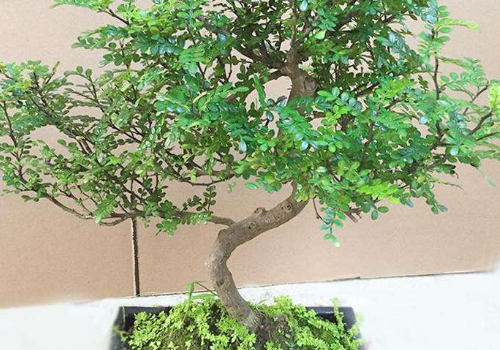
What to Do When Pepper Tree Leaves Turn Yellow and Drop? Common Disease Identification and Control
When watering the pepper tree, you must pay attention to the amount and frequency. What are the common diseases of the pepper tree? What to do when leaves turn yellow and drop: What are the common diseases of the pepper tree: Actually, the pepper tree has relatively few diseases, and anthracnose is the common one. In the early stage of anthracnose,
-

Symptom Identification and Chemical Control Methods for Guava Scab
What do the symptoms of guava scab look like, and how should it be treated? Do you know? Let's take a look together. Symptoms: When first infected, the lesions are round and slightly raised, with a rough, cracked surface like a scab, brown in color, with the edges a light brown or earthy yellow hue, large
-

Yunlin Cultural and Creative Premium Certification and Distinctive Space Shops Award Ceremony Held
The "Yunlin Cultural Creative Highlight" premium certification event in Yunlin County held its award ceremony and results exhibition opening press conference on the afternoon of the 17th. This year, a total of 13 premium certifications were announced, and for the first time, 20 Yunlin distinctive space shops were selected. In addition to inviting...
-
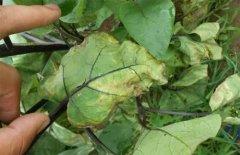
Eggplant Verticillium Wilt: Symptom Identification and Control Methods
Verticillium wilt is one of the major diseases in the growth of eggplant, and this disease is becoming more and more serious, and the worsening of this disease has also seriously affected the yield and quality of eggplant. Therefore, chemical control should be carried out according to the characteristics of the occurrence of this disease. How exactly should it be done
-
What classifications do tulips have? Understanding tulip variety classification in one article
There are many varieties of tulips, about ten thousand or more. Two main classification methods are introduced here: 1. Classification by flower shape variation. They can be divided into cup type: the corolla is cup-shaped, with representative varieties including Cottage tulip, Darwin tulip, and Darwin hybrid tulip; bowl type: the corolla is shallow dish-shaped and bell-shaped, with many small flowers, and the representative variety is water lily tulip; lily type: the petal tips are gradually pointed, and the corolla resembles a lily flower, with the representative variety being lily tulip; ball type: the corolla is spherical, and these are the double-flowered types among Cottage tulips and Darwin hybrid tulips. 2. Classification by early or late flowering.
-
Identification and Control Methods for Tulip Gray Mold
Tulip, also known as Dutch lotus and grass musk, originated in the high mountain regions of Iran and Turkey, developing characteristics adapted to wet and cold winters and dry and hot summers. It prefers warm, humid conditions, with cool and slightly dry summers, and is suited to sandy loam rich in humus with good drainage. Tulip is an important spring bulbous flower; short and sturdy varieties are suitable for spring flower beds, bright and eye-catching. Tall-stemmed varieties are suitable for cut flowers or for configuring flower borders, and can also be planted in clusters at the edge of lawns. Medium and short varieties are suitable for potted cultivation, embellishing indoor environments and adding a joyful atmosphere.
-
Symptom Identification and Control Methods of Rice Dwarf Disease
The symptoms are mainly distributed in the southern rice-growing areas. Also known as rice common dwarf disease, common dwarf, green dwarf, etc. After rice is infected from the seedling stage to the tillering stage, the plant becomes dwarfed, tillering increases, leaves are dark green and stiff, and in the later growth stage the diseased rice cannot head or set grain. Diseased leaf symptoms manifest as two types. In the white-spot type, dashed-line-like yellowish-white dotted streak spots parallel to the leaf veins appear on the leaves or leaf sheaths, most obvious at the base. The new leaves above the first diseased leaf all show dotted streaks, while the older leaves below generally do not. In the twisted type, under insufficient light conditions, the heart leaf emerges twisted
-
Symptom Identification and Control Methods for Tulip Mosaic Virus
[Alias] Tulip soft rot. [Distribution] Tulip mosaic virus, like tulip breaking virus, is widely distributed. Sometimes the virus causes a mixed infection together with tulip breaking virus, resulting in severe mosaic. [Symptoms] Yellow stripes or fine speckled spots appear on tulip leaves, while dark spots form on the petals; in severe cases the leaves rot. [Pathogen] The pathogen causing tulip mosaic virus is cucumber mosaic virus (CMV), with spherical particles.
条件筛选